Funding cuts to frontline health programmes in eastern Democratic Republic of Congo (DRC) have been linked to delays in detecting a deadly Ebola outbreak that is now spreading rapidly across the region.
According to the International Rescue Committee (IRC), this, in addition to the weakened surveillance systems that allowed transmission of the virus to go unnoticed for weeks, contributing to a sharp rise in infections.
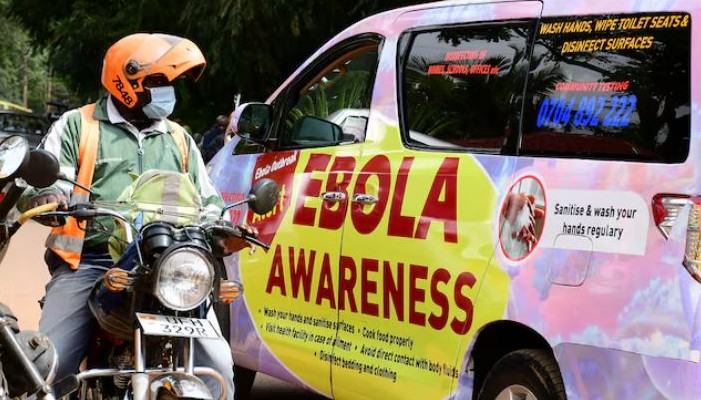
The latest outbreak, which has affected parts of eastern DRC and neighbouring Uganda, involves the rare Bundibugyo strain of Ebola, a variant that currently has no licensed vaccine or targeted treatment.
The IRC says suspected cases surged from 246 to 500 within just 96 hours, raising fears that the actual scale of infections could be much higher than current official figures indicate.
Before 2025, the US Government funded a wide range of outbreak preparedness and healthcare activities implemented by the IRC in eastern DRC.
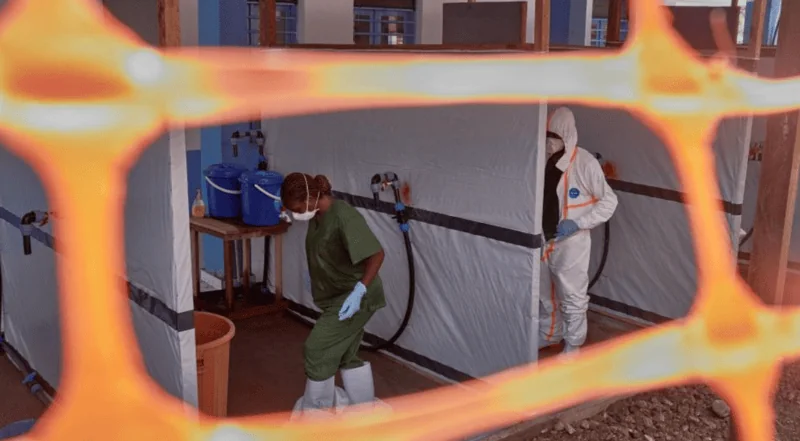
These included disease surveillance, treatment services, and the construction of critical infection prevention infrastructure such as handwashing stations, triage zones, waste management sites, showers and latrines.
However, most of the funding for non-governmental organisations ended in March this year, forcing the IRC to scale back operations in Ituri province from five health areas to only two.
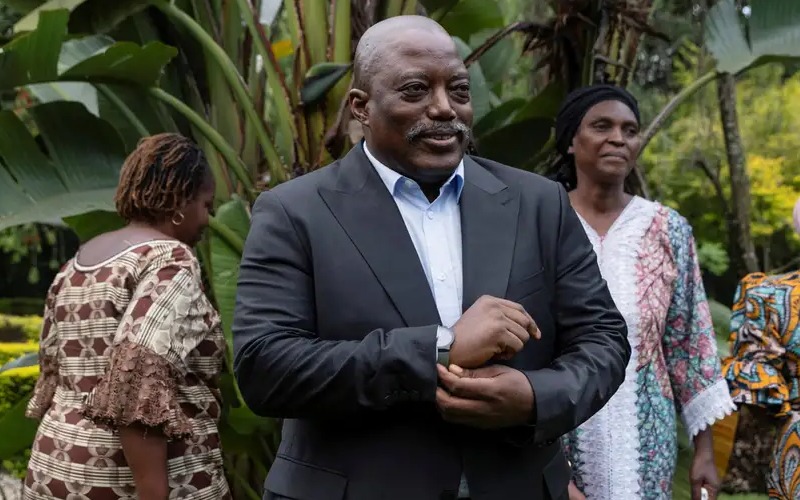
Heather Reoch Kerr, IRC’s Country Director for DRC, said the funding cuts have left the region dangerously exposed.
“The sharp rise in reported cases over the last few days reflects the reality that surveillance systems are now catching up with transmission that has likely been occurring for some time,” Reoch said.
“We fear the true scale of transmission may be significantly higher than current figures suggest, and we are likely to continue seeing case numbers rise over the coming two to four weeks. We are particularly concerned about geographic spread and are carefully monitoring high-risk locations in South Kivu, Uganda, and South Sudan.”
Additionally, the agency says years of underinvestment in fragile health systems, compounded by recent donor funding reductions, have left many facilities without protective gear, frontline staff support or adequate disease monitoring capacity.
The organisation notes that the reduction in donor-backed supplies, including personal protective equipment kits, has left many healthcare centres in affected regions operating without basic safeguards against infection.
The outbreak is unfolding against the backdrop of a prolonged humanitarian crisis in eastern DRC marked by insecurity, displacement and limited humanitarian access, factors that continue to complicate response efforts and heighten the risk of cross-border spread.
As global health leaders meet at the World Health Assembly this week, the IRC is calling on governments and donors to urgently increase investments in primary healthcare systems, surveillance networks and outbreak preparedness in conflict-affected countries.


































Comments
Sign in with Google to comment, reply, and like comments.
Continue with Google