Majority of teachers living paycheck to paycheck, struggling with burnout - KNUT report
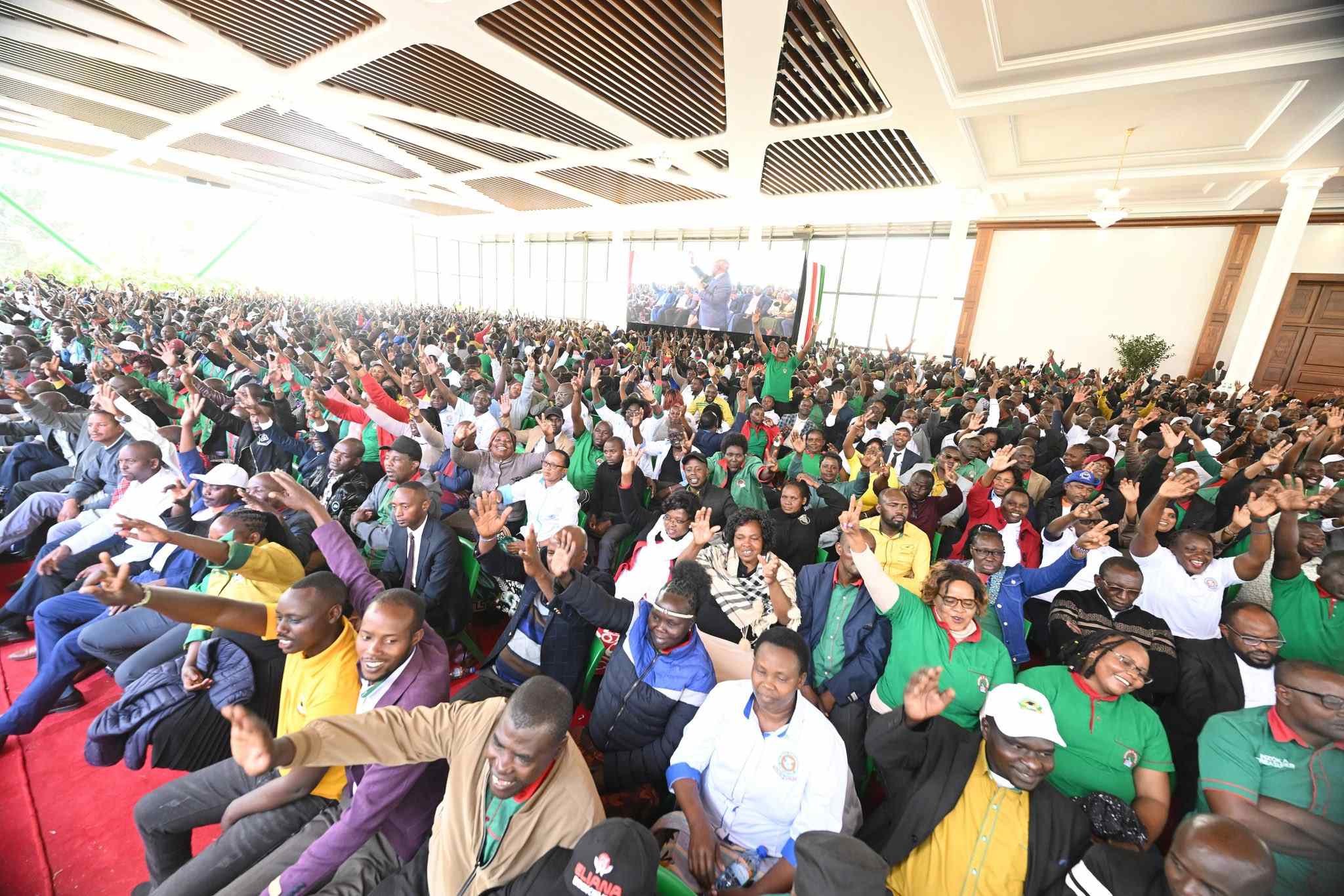
During the report's launch in Nairobi, Education Cabinet Secretary Julius Migos Ogamba acknowledged the concerns raised and reiterated the government’s commitment to improving the teachers' welfare.
More than half of teachers across the country are struggling to meet their monthly financial obligations without falling into economic strain, a new survey shows.
The survey conducted by the Kenya National Union of Teachers (KNUT) on Tuesday shows that educators are under intense financial pressure, coupled with rising levels of burnout and emotional distress.
According to the KNUT Teachers’ Wellness and Engagement Research Report, 97 per cent of teachers are living from paycheck to paycheck, 92 per cent are unable to cope with unexpected expenses, and 88 per cent are unable to service debts while maintaining their standards of living.
More To Read
- Over 60 teachers write to KUPPET seeking transfers following political tensions ahead of Ol Kalou by-election
- Deputy principals seek Parliament’s intervention to compel TSC to review stalled promotions
- Kenya introduces dual certification system for senior school learners to boost job readiness
- MPs push for increased education funding amid capitation, welfare gaps
- Teachers’ professional demographics
- Schools could adopt one uniform design as stakeholders move to cut costs for parents
Beyond financial strain, the report highlights growing emotional and psychological pressure among educators. It shows that 60 per cent of teachers are experiencing burnout, 18 per cent are already in financial distress, while 12 per cent have at some point had suicidal thoughts.
It also notes that four in five teachers are living under constant financial stress, with many lacking retirement plans or long-term financial safety nets, leaving them exposed to continued economic vulnerability.
During the report's launch in Nairobi, Education Cabinet Secretary Julius Migos Ogamba acknowledged the concerns raised and reiterated the government’s commitment to improving the teachers' welfare.
Latest Stories
- Orengo alleges political infiltration of peaceful protests, warns Kenya risks Haiti-style instability ahead of 2027
- President Ruto set to sign Finance Bill 2026 into law on Tuesday after divisive parliamentary vote
- Spain crush Saudi Arabia 4-0 as Lamine Yamal and Oyarzabal shine in World Cup statement win
- 𝐄𝐚𝐬𝐭𝐥𝐞𝐢𝐠𝐡 𝐕𝐨𝐢𝐜𝐞 𝐚𝐭 𝐍𝐢𝐧𝐞 - Gikomba Market fire leaves two dead as traders suffer heavy losses
Ogamba said the government is implementing a series of interventions aimed at addressing teacher shortages, improving working conditions and strengthening career progression through structured promotions.
He disclosed that Sh950 million has been allocated for retooling teachers under the Competency-Based Curriculum (CBC), while Sh2 billion has been set aside for promotions within the Teachers Service Commission (TSC) in the 2026/2027 financial year.
“Teachers are indispensable; the system will never thrive if the teacher isn’t thriving and is not fully engaged, as this affects learners. This is a reality we appreciate, and we will take measures to promote their wellness,” he said.
Ogamba noted that, unlike in previous years when promotions depended on the availability of vacancies, the government has now introduced dedicated funding to make the process more predictable, with further increases expected in future budgets.
He also stressed the urgency of addressing the challenges raised in the report, citing international examples such as Finland, where teaching is among the most respected and well-paid professions.
“We must think about what we should do to reduce those numbers. In Finland, the highest-paid professional is a teacher. We need to move our teachers from where they are to where they are supposed to be,” he said.
He emphasised that the success of Kenya’s education system is directly tied to the well-being and engagement of teachers. Ogamba reiterated that teachers remain central to education reforms and national human capital development.
He praised KNUT for consistently producing research-based reports that have helped shape policy debates in the education sector, including studies on the Competency-Based Curriculum, summative assessment and the placement of Junior Secondary School learners.
“Teachers have played a major role in the successful rollout of Competency-Based Education by adapting to new teaching approaches and managing education investments effectively,” he said, while also commending school principals for overseeing the construction and completion of 23,000 Grade 9 classrooms within a short period in 2024.
“The education system will only thrive if the teacher is thriving financially, physically and mentally,” Ogamba said.
He revealed that the government has recruited 100,000 teachers over the last three years to address staffing shortages and reduce workload pressures, saying the move has improved curriculum delivery and helped ease burnout among educators.
Other Topics To Read
Top Stories Today













































Comments
Sign in with Google to comment, reply, and like comments.
Continue with Google