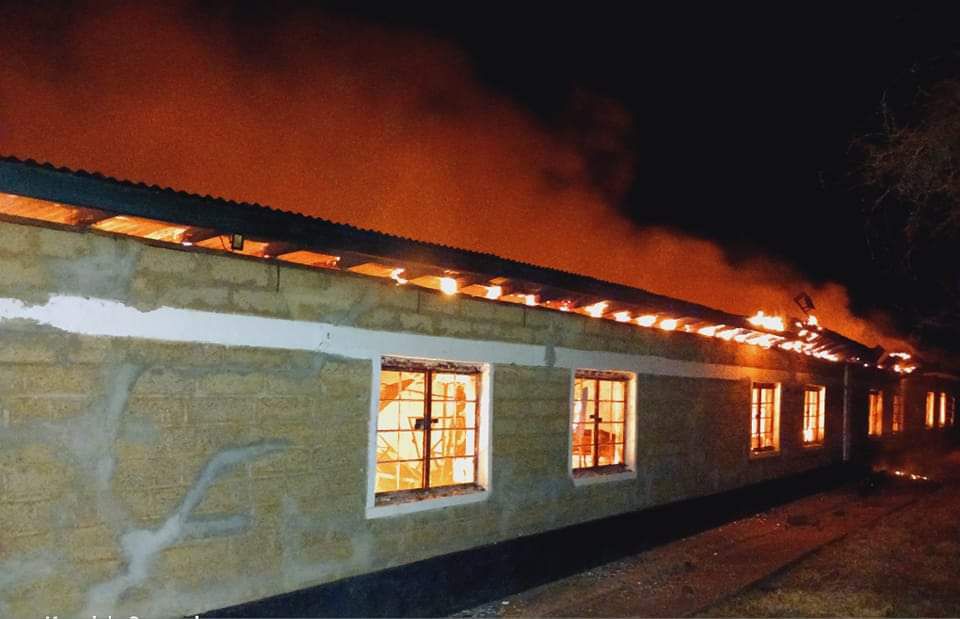
The recurring fire tragedies in Kenyan schools, including the fatal blaze at Utumishi Girls Academy that claimed 16 lives, has sparked fresh calls in Parliament to review boarding schools and the 100 per cent transition policy.
During debate on a motion in the National Assembly, legislators questioned the safety of the current school system, linking the repeated incidents to overcrowding in schools and rising pressure on learning facilities.
Emuhaya MP Omboko Milemba questioned the relevance of boarding schools, saying there was “something fundamentally wrong” with their design and management.
He linked the situation to increased enrolment under the 100 per cent transition policy, saying schools were becoming congested as they struggled to accommodate all learners joining secondary education.
“There is something wrong with the boarding schools; let’s do away with them. There is something wrong with the intake policy which has made boarding schools to be congested,” Omboko said.
Kisii Woman Representative Dorice Donya said Kenya should rethink the boarding school model, arguing that many of the tragedies involving learners take place in or around such institutions.
“We should not have boarding schools because we have had more deaths because of these boarding schools. You all remember, anytime our schools open, we are told a certain bus has caused an accident, causing safety issues for our learners,” Donya said.
Marakwet East MP Kangogo Bowen added that the country should re-examine the role of boarding schools, noting that such institutions are limited in many developed countries.
Marsabit Woman Representative Naomi Waqo called for clear strategies to protect learners from recurring fire incidents, including a review of boarding arrangements.
“As a nation, we need to address the issue of boarding schools so that we come up with clear strategies to protect our children from such incidents,” Waqo said.
Suba North MP Millie Odhiambo cautioned against focusing blame only on boarding schools, saying the incidents pointed to deeper social challenges affecting young people and society.
Igembe North MP Julius Taitumu linked the tragedy to declining moral values, saying it reflected weaknesses in the country’s social fabric.
Rarieda MP Otiende Amollo blamed overcrowding caused by inadequate infrastructure despite increased enrolment under the transition policy. He noted that all stakeholders, including the government and Parliament, had failed the learners who died and should take collective responsibility.
“When you look at the school, which is a high-end one, the dormitory was congested; there were beds on the corridors, there were beds next to the door; this 100 per cent transition is part of the problem,” Amolo said.
“We have all failed our children who perished. We failed them through the government, we failed them through policies and even as parliament, we are part of those who failed them. We must collectively apologise.”
National Assembly Speaker Moses Wetang’ula blamed parents for neglecting their role in instilling discipline, saying many had shifted responsibility to schools and digital devices.
“Parents feel once they have given their children smartphones, the problem is over, but is even the introduction of a bigger problem. There is hardly any parent who sits with their children to teach them the dos and don’ts of life,” Wetang’ula said.
Suba South MP Caroli Omondi said the incidents reflected a wider moral crisis and proposed the introduction of nationhood science as a subject in schools.
The debate has reopened long-standing questions on the future of boarding schools in Kenya.
In 2022, then Basic Education Principal Secretary Belio Kipsang announced plans to phase out boarding schools from Grade One to Grade Nine.
However, supporters of boarding schools maintain that they provide safe learning spaces for vulnerable children, including orphans and learners rescued from abusive homes, early marriages and domestic violence.













































Comments
Sign in with Google to comment, reply, and like comments.
Continue with Google