10,000 junior schools set for digital upgrade as government expands ICT integration
Listen to article

The initiative will provide schools with interactive smart boards and other digital tools to support learning and expand the use of technology in classrooms.
A total of 10,000 junior schools across the country will be equipped with digital learning technology under a new Government programme aimed at strengthening the Competency-Based Education curriculum and improving access to quality education.
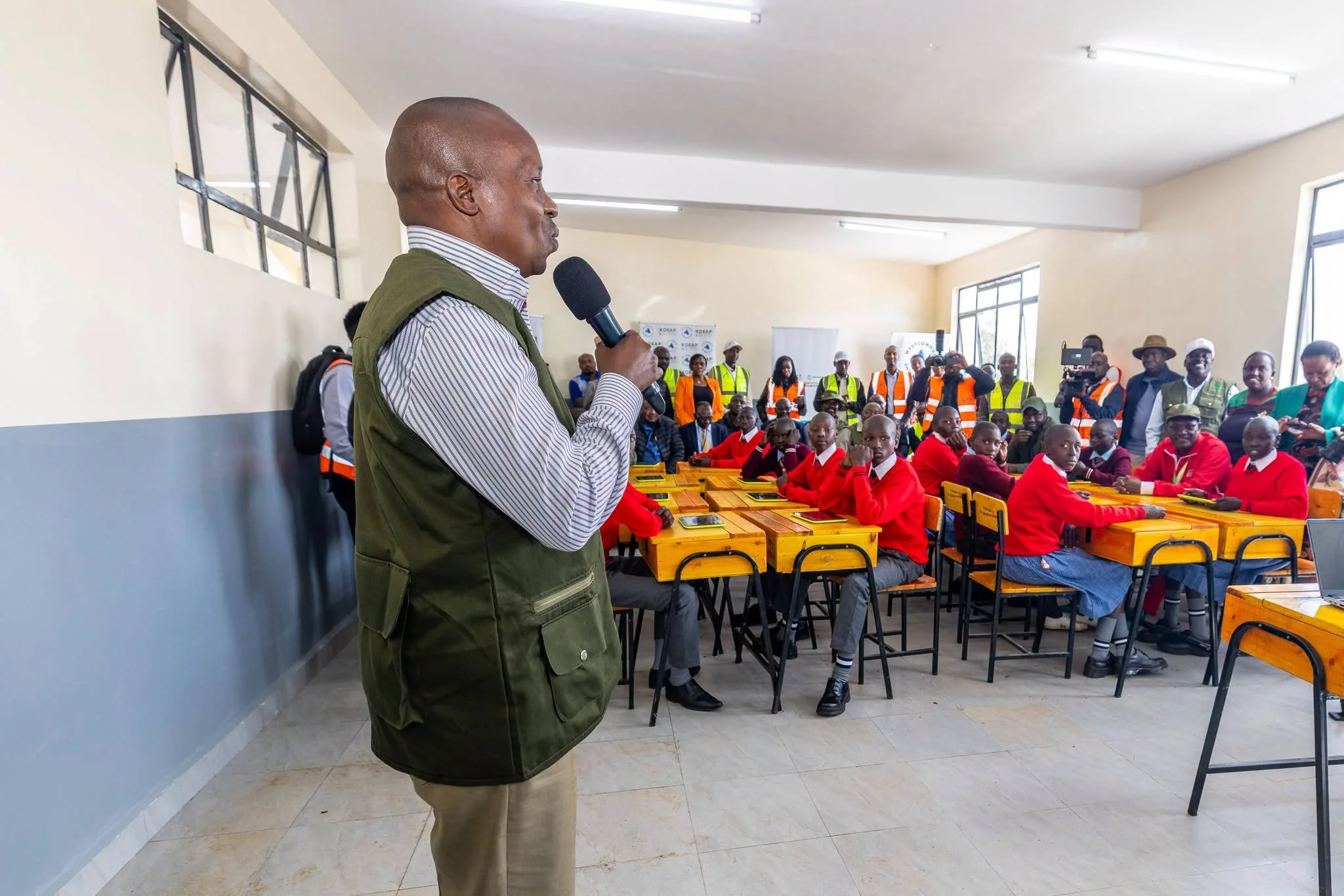
The programme was launched on Monday at Kaptarkok Junior School in Elgeyo Marakwet County, where Deputy President Kithure Kindiki witnessed a live demonstration of digitally connected classrooms. The initiative will provide schools with interactive smart boards and other digital tools to support learning and expand the use of technology in classrooms.
The event also highlighted the Government's broader digital infrastructure plans, including the rollout of 100,000 kilometres of fibre-optic cable, the establishment of 25,000 public Wi-Fi hotspots, and the setting up of 1,450 digital hubs across the country.
More To Read
- Parents oppose proposed secondary school fee hike, call for timely release of capitation funds
- KICD orders crackdown on vendors selling fake learning materials to schools
- Why teachers will be required to undergo new five-year training to renew licences
- President Ruto warns students against school unrest, says every choice has consequences
- School heads urge greater support as principals face expanding roles beyond academics
- Principals push for Sh87,000 fees for national schools, Sh83,622 for extra-county as funding crisis bites
As part of the demonstration, a teacher based at Kaptarkok Primary and Junior School delivered an Integrated Science lesson to learners in six schools across six counties, demonstrating how improved connectivity can enable learners in different parts of the country to take part in the same lesson.
The launch is part of ongoing efforts to integrate information and communication technology into junior school learning under the Competency-Based Education curriculum.
Thomas Bwaley, Director of Programmes and Standards at the Information and Communication Technology Authority (ICTA), said the project is centred on supplying digital learning devices to schools across the country.
Latest Stories
- President William Ruto’s preferred running mate in 2027
- Nairobi County sets record with Sh15.4 billion own-source revenue in FY 2025/26
- KNCHR demands arrests, prosecutions over violence and voter bribery ahead of Ol Kalou by-election
- Leaders condemn demolition of 170 houses in Changamwe despite court order
"Every junior school, the entire 20,000 plus junior schools at the end of this project will at least have one interactive smart board," Bwaley said.
He said Kaptarkok Junior School, St Joseph Comprehensive School in Ol Kalou, St Augustine Junior School in Mombasa and Kakamega Junior School are among the first schools to benefit from the programme.
He emphasised that the initiative is being implemented under the Kenya Digital Economic Acceleration Project, which is built around three key components.
"The first component is infrastructure and expanding reach of connectivity across the country to achieve the desired goal of the digital superhighway through rolling out 100,000 kilometres of fibre and establishing 25,000 public Wi-Fi hotspots and 1,450 digital hubs," he said.
He said the second component focuses on digitising government services by shifting public service delivery from paper-based systems to automated and paperless platforms.
"The third component is on digital skills, where this project that is supporting the Ministry of Education by providing interactive smart boards and laptops to every junior school is anchored upon," he said.
Bwaley said the programme is intended to ensure that learners have equal access to education regardless of where they live.
"The devices and integrating ICT tools will bridge the digital divide and take advantage of technology to ensure that the people in Mandera, people in Kaptarkok, people in Kakamega or in Siaya can achieve and learn equally as a student in Nairobi," he said.
He added that the project has also supported the Kenya Institute of Curriculum Development (KICD) in preparing digital curriculum content for Grades Seven, Eight and Nine, allowing learners to access learning materials wherever they are.
The launch at Kaptarkok Junior School placed Elgeyo Marakwet at the centre of a national demonstration of connected learning as the Government continues rolling out digital infrastructure and expanding the use of ICT in education across the country.
Top Stories Today














































Comments
Sign in with Google to comment, reply, and like comments.
Continue with Google