The government has unveiled an ambitious new phase of the redevelopment of Nakuru's Afraha Stadium, with the iconic venue set to undergo one of the country's most comprehensive sports infrastructure upgrades as preparations for the 2027 Africa Cup of Nations (AFCON) gather momentum.
The project forms part of a nationwide programme aimed at ensuring Kenya is ready to co-host the continental showpiece alongside Uganda and Tanzania, while also creating modern sporting facilities that will continue serving local communities long after the tournament concludes.
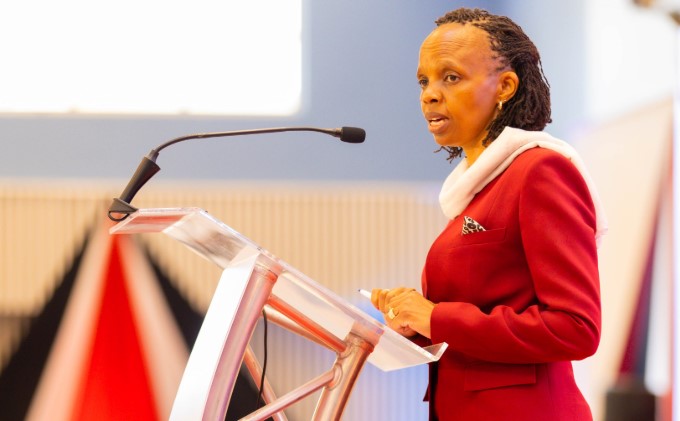
The Principal Secretary for Internal Security and National Administration, Raymond Omollo, said the redevelopment, being undertaken by the Kenya Defence Forces (KDF), is designed to transform Afraha Stadium into a world-class venue capable of hosting international football and athletics events.
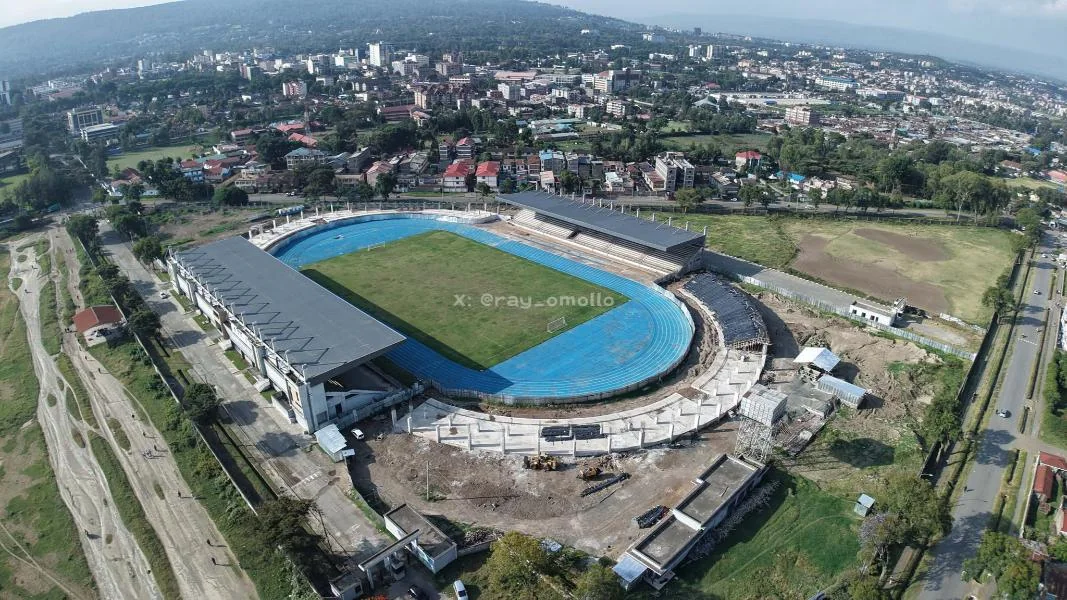
Among the most significant upgrades is a major expansion of the stadium's seating capacity. The venue, which currently accommodates approximately 8,200 spectators, will be enlarged to between 13,000 and 15,000 seats during the current phases of construction, with long-term plans to increase capacity to 20,000.
The redevelopment extends far beyond additional seating. Modern spectator pavilions are being constructed, high-mast floodlights installed to facilitate night matches, and an all-weather tartan athletics track developed alongside a football pitch that will meet international competition standards.
The project also includes improved sanitation facilities, secure parking areas and other supporting infrastructure aimed at enhancing both athlete and fan experience.
Speaking on the progress of the works, PS Omollo said the government views sports infrastructure as a key pillar in Kenya's AFCON hosting plans.
"Upon completion, the facility will strengthen Nakuru's status as a regional sports hub, nurture local talent and stimulate sports tourism and economic growth. The State Department for Internal Security and National Administration continues to support the project through security coordination and inter-agency collaboration and will play a key role in ensuring the effective management, protection and sustainability of the facility for the benefit of the region and beyond," said PS Omollo.
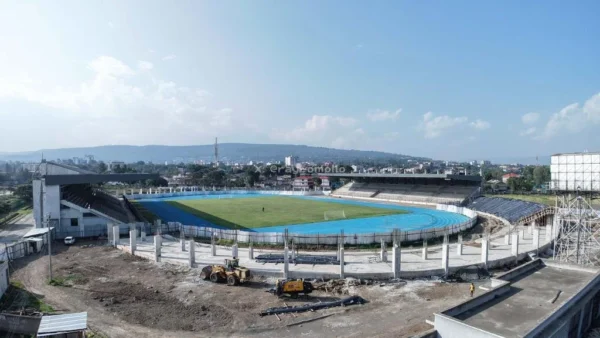 Side view of Afraha Stadium. (Photo: PS Raymond Omollo)
The latest works build on the first phase of redevelopment, which was funded through the World Bank-supported Kenya Urban Support Programme (KUSP) at a cost of Sh650 million.
That phase delivered key structural improvements, including rehabilitation of the playing surface and drainage system, construction of the main pavilion, upgrading of the athletics track, refurbishment of spectator terraces and installation of modern facilities for players, match officials and the media.
Although the government has not disclosed the budget for the ongoing phase, the scale of the redevelopment signals one of the largest stadium investments currently underway outside Nairobi.
For Nakuru, the transformation represents more than just an infrastructure project.
Afraha has been one of Kenya's most recognisable football venues for decades, serving as the home ground of four-time league champions Ulinzi Stars while regularly hosting FKF Premier League fixtures and national athletics competitions.
However, the stadium has remained largely inactive for top-flight football since redevelopment began. The last FKF Premier League match played at the venue came on January 30, 2021, when Ulinzi and KCB played out a goalless draw before the facility was closed to allow renovation works to commence.
Once completed, the revamped stadium is expected to restore Nakuru's position as one of Kenya's leading sporting centres, capable of attracting major domestic and international competitions while boosting sports tourism and creating new economic opportunities for the region.
Afraha's redevelopment is also part of a broader national strategy to deliver facilities that meet Confederation of African Football (CAF) standards ahead of AFCON 2027.
Across the country, construction and renovation works are progressing simultaneously at Migori Stadium, Thika Stadium, Moi Stadium Kisumu, Kericho Green Stadium and Gusii Stadium, while the 60,000-seat Raila Odinga Stadium remains the flagship project expected to host some of the tournament's biggest matches.









































Comments
Sign in with Google to comment, reply, and like comments.
Continue with Google