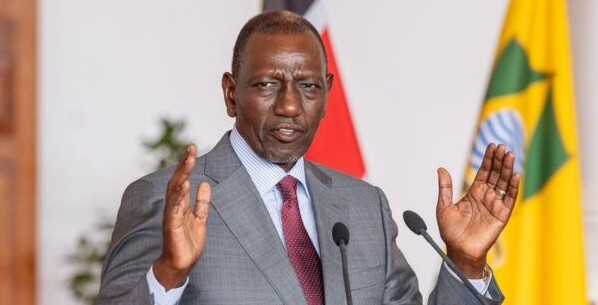
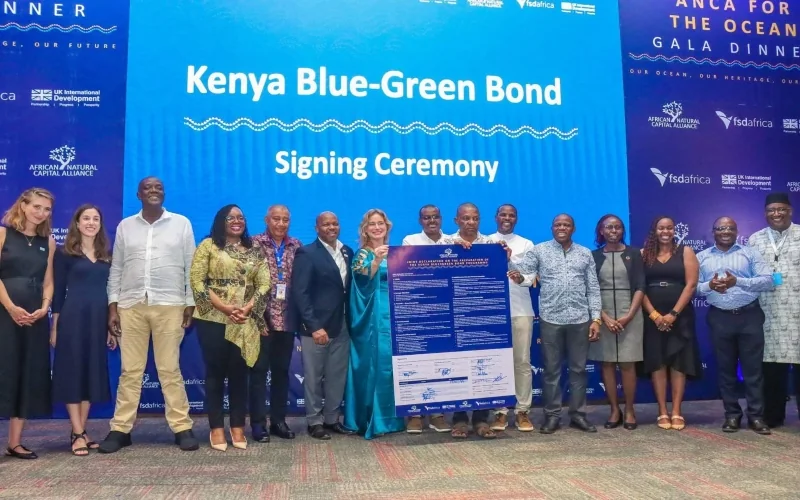
President William Ruto on Thursday presided over the closing ceremony of the 11th Our Ocean Conference in Mombasa, marking the end of a global summit whose resolutions are expected to shape future action on marine conservation, sustainable development and the growth of the blue economy.
The President was joined by the President of Zanzibar and Chairman of the Revolutionary Council, Dr Hussein Ali Mwinyi, as Kenya concluded the first edition of the international conference to be held on African soil.
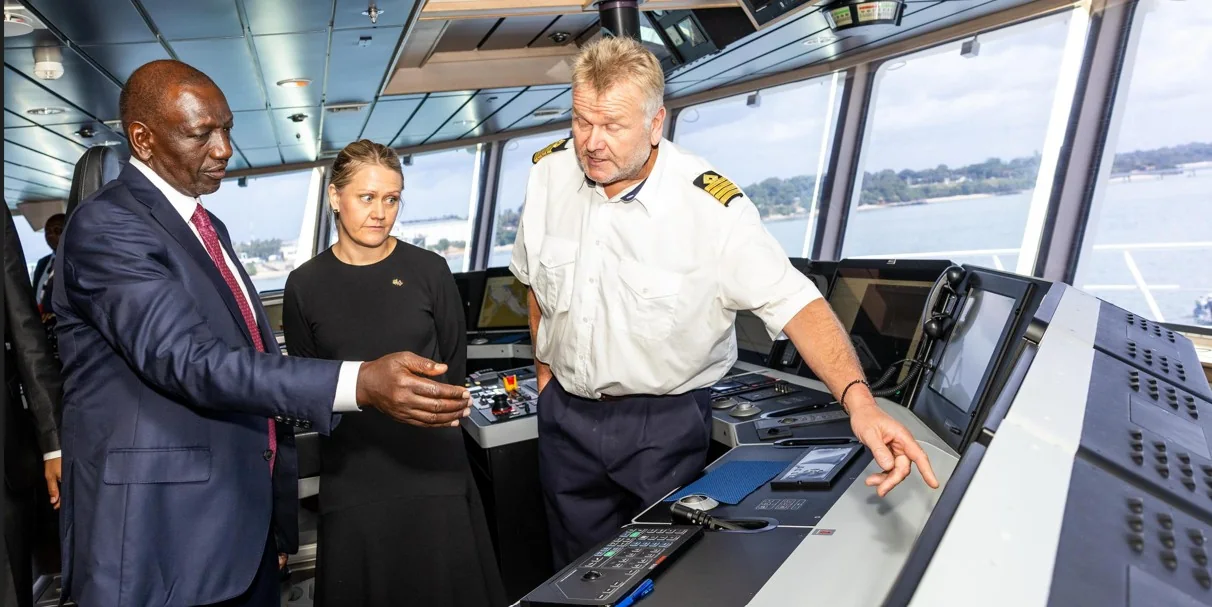
During the ceremony, President Ruto toured the Dr Fridtjof Nansen, a state-of-the-art marine research vessel owned by the Kingdom of Norway, operating under the United Nations flag and managed by the Institute of Marine Research.
“We remain focused on our commitment to advancing the blue economy as a strategic pillar for enhancing food security, creating jobs and expanding economic opportunities for young people. The vessel’s scientific work will expand our understanding of the vast resources within our oceans, strengthening knowledge on marine productivity, sustainability, and effective resource management,” he said.
“Equally important is the collaboration between the vessel’s research team and Kenyan scientists, which will enhance local capacity, advance maritime research, and contribute to the sustainable development of our ocean economy.”
Held in Shanzu, the three-day conference brought together heads of government, scientists, conservation organisations and development partners to tackle pressing challenges facing the world's oceans, including climate change, illegal fishing, marine pollution and the sustainable use of marine resources.
The conference culminated in the adoption of the Mombasa Declaration, a commitment aimed at strengthening international cooperation on fisheries governance and combating illegal, unreported and unregulated fishing.
The summit also attracted prominent global conservation advocates, including actress Kate Walsh, who attended as an ambassador for Oceana. During her visit, she engaged with coastal communities and called for greater involvement of local populations in decisions affecting marine resources and livelihoods.
Leaders from Kenya's coastal region said hosting the conference created opportunities for economic growth, investment and skills development.
Kwale Woman Representative Fatuma Masito said bringing the conference to Africa had given the continent a stronger voice in global discussions on ocean governance, climate financing and the challenges facing coastal communities.
Jomvu MP Badi Twalib said Mombasa experienced an economic boost from hosting thousands of delegates, with local businesses benefiting from increased demand in the hospitality and service sectors.
He added that discussions on maritime training and certification partnerships with countries such as South Korea and Saudi Arabia could open up new career opportunities for young people in the maritime industry.
Likoni MP Mishi Mboko called for stronger measures to combat marine pollution, particularly plastic waste, while urging continued protection of fish breeding grounds to secure the future of coastal livelihoods.
The leaders also supported efforts to improve fisheries infrastructure and promote value addition, saying a stronger fisheries sector would increase incomes for coastal communities and make a greater contribution to Kenya's economy.
As the conference concluded, attention shifted to the implementation of the commitments made in Mombasa.
Coastal leaders said the summit's success would ultimately be measured by whether the agreements reached translate into meaningful action on marine conservation, job creation and sustainable economic growth.
The conference has further cemented Kenya's position as a key player in global discussions on ocean governance, with its outcomes expected to influence future policies on coastal development and the blue economy.















Comments
Sign in with Google to comment, reply, and like comments.
Continue with Google