The Regional Maritime Security Architecture (RMSA) Policy Brief is emerging as a key framework for regional security cooperation as maritime threats increase and geopolitical competition intensifies across the Indian Ocean.
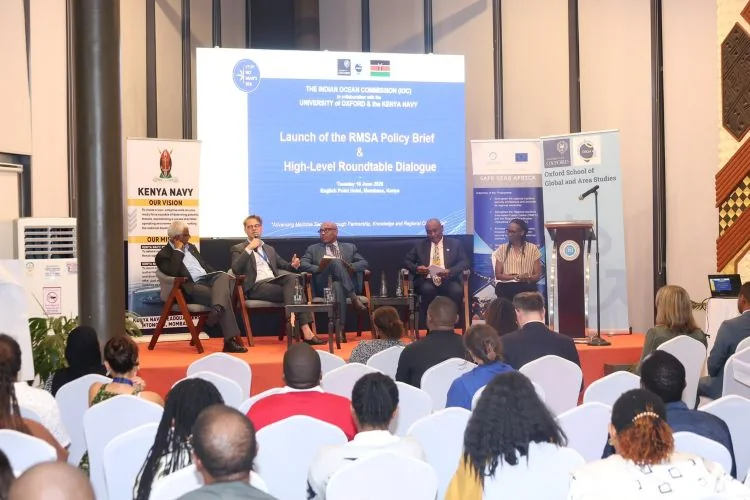
The 2026 RMSA Policy Brief was launched on Tuesday evening on the sidelines of the 11th edition of the Our Ocean Conference (OOC11) in Mombasa County.
The document builds on the inaugural policy brief published in 2019, expanding its focus to include operational coordination, information sharing and maritime surveillance across the Western Indian Ocean (WIO). It positions member states as increasingly active contributors to maritime security and governance in the region.
The Western Indian Ocean, which connects the Red Sea, the Gulf of Aden and the wider Indian Ocean, serves as a strategic corridor for global trade, energy flows and economic development.
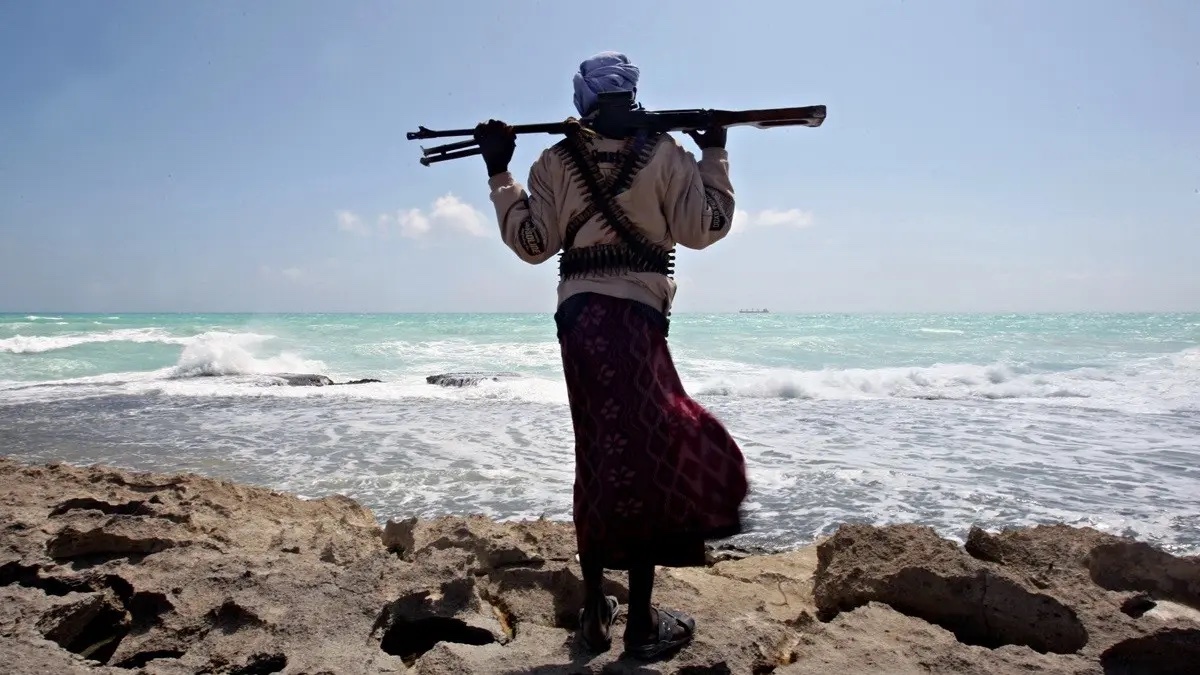
Through the RMSA, member states aim to transform the region from a zone vulnerable to piracy, illegal fishing, illicit trafficking, transnational maritime crime and environmental threats into one with stronger maritime capabilities and security cooperation.
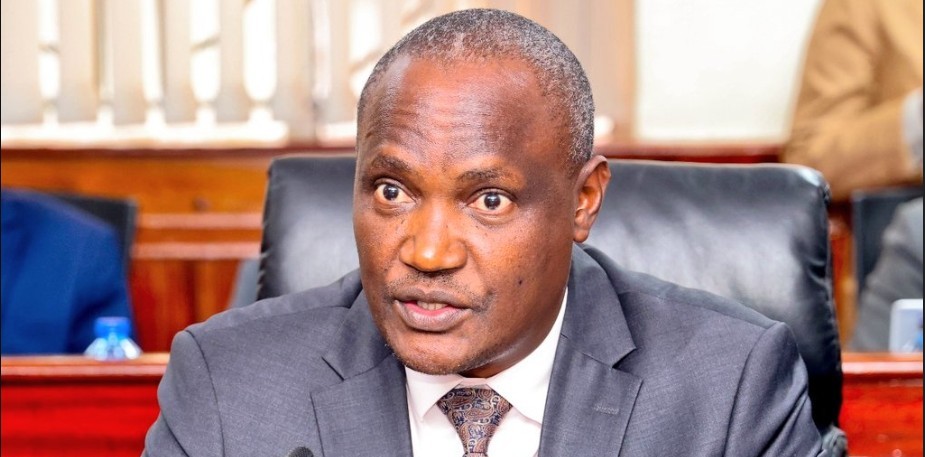
Speaking during the launch, Kenya Navy Fleet Commander Major General Paul Otieno said the RMSA has significantly improved maritime domain awareness and strengthened coordination of operations at sea.
"These achievements demonstrate the value of regional cooperation and our growing capacity to address shared maritime challenges together. For Kenya, the Regional Maritime Security Architecture represents more than a security framework. It is a practical expression of our shared commitment to safeguarding maritime resources, protecting the blue economy, and promoting peace, stability, and prosperity throughout the Western Indian Ocean," he said.
The RMSA is governed by seven signatory states — Comoros, Djibouti, France/La Réunion, Kenya, Madagascar, Mauritius and Seychelles — and remains open to broader regional and international partnerships.
As of January 2026, Western Indian Ocean states had committed 43 surface and air assets and conducted 45 maritime operations in collaboration with partners including the European Union Naval Force (Operation Atalanta), India, the United States and the United Kingdom.
Despite these gains, the policy brief identifies several persistent challenges, including limited real-time vessel monitoring, weak intelligence and tracking capabilities, shortages of assets and trained personnel, underdeveloped legal frameworks, and incomplete national maritime coordination centres.
To address these gaps, the RMSA relies on two key institutions: the Regional Maritime Information Fusion Centre (RMIFC) in Madagascar, which provides intelligence-led maritime domain awareness, and the Regional Coordination of Operations Centre (RCOC) in Seychelles, which coordinates operational responses at sea. Together, they form an integrated regional system that links intelligence gathering with operational action, supported by national coordination centres.
Major Gen Otieno noted, however, that the rapidly evolving maritime security environment requires long-term planning and adaptability.
"The maritime domain is evolving rapidly, shaped by technological advances, environmental pressures, and changing geopolitical dynamics. Our policies and institutions must evolve accordingly. This is why research-informed maritime governance is so important. Evidence-based analysis enables policymakers and practitioners to better understand emerging risks, identify opportunities, and develop sustainable solutions," he urged.
Kate Sullivan de Estrada, one of the authors of the policy brief, said the updated document reflects growing recognition of Western Indian Ocean states as active architects of regional security solutions rather than passive recipients of external support.
"Through institutions like the RMSA, they can develop shared understandings of maritime threats, build regional solidarity, and increase their influence in shaping the security agenda," she added.





































Comments
Sign in with Google to comment, reply, and like comments.
Continue with Google