Is Nominated Senator Karen Nyamu justifying Kenya Kwanza killings?
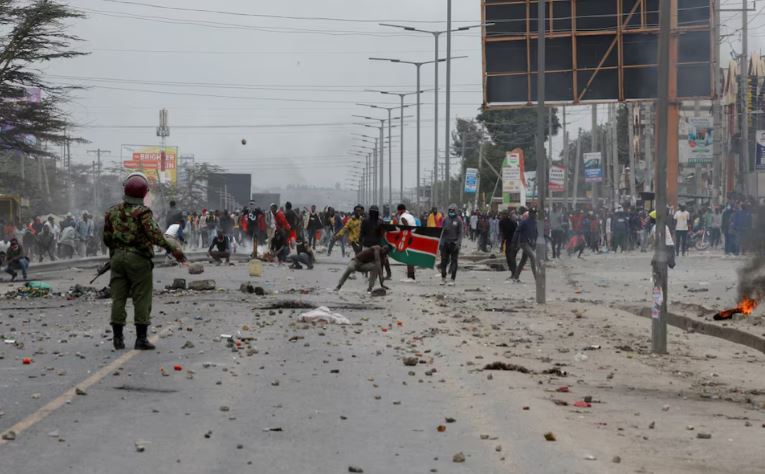
Taking to her Facebook account on Tuesday, Nyamu said the killing of young Kenyans during protests has occurred throughout Kenya’s history, terming the current focus on deaths under Ruto's administration as 'selective amnesia' and accusing politicians of 'hypocrisy'.
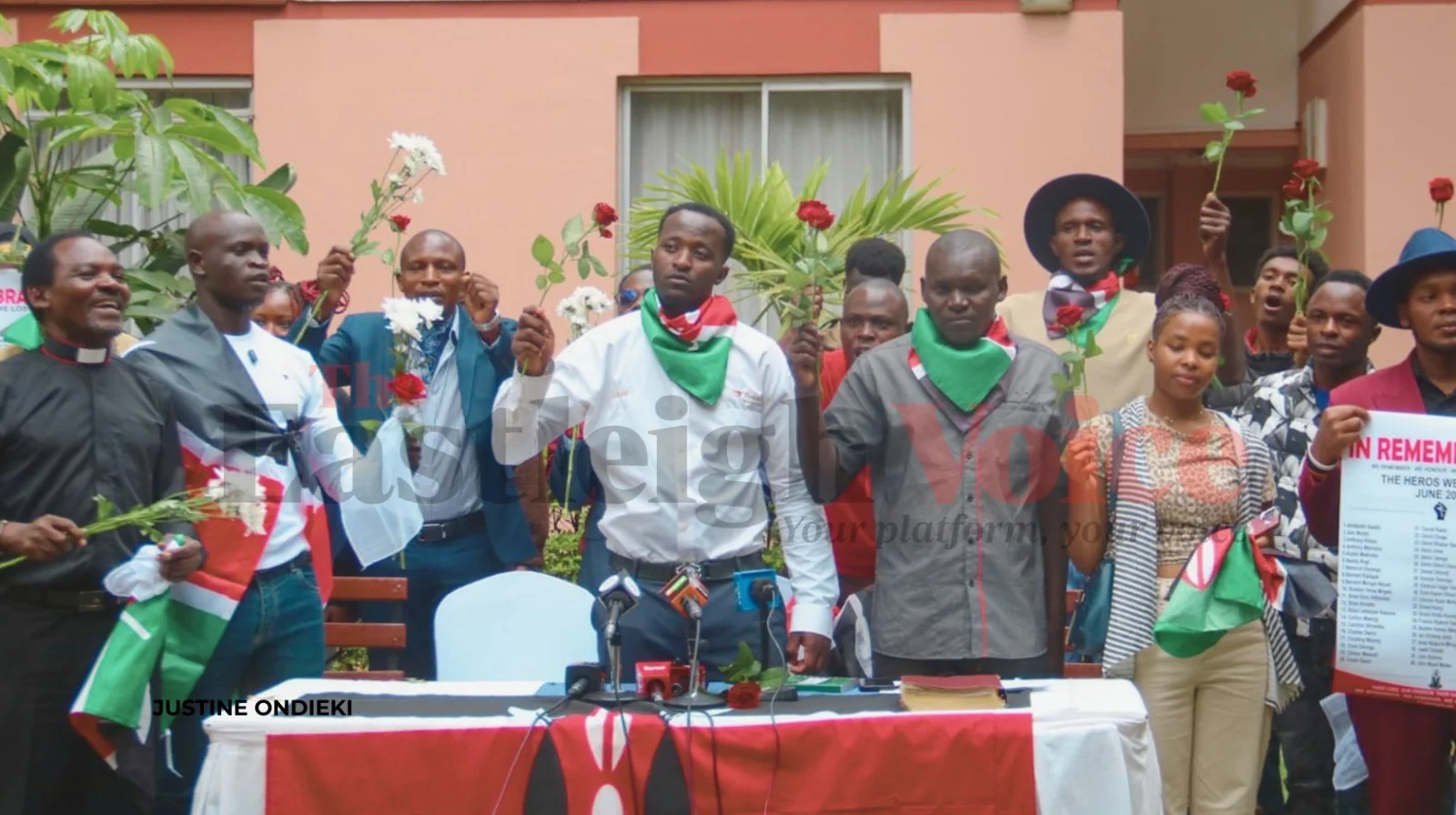
As Kenya prepares to mark another anniversary to honour victims of youth-led protests on June 25, 2026, a Facebook post by Nominated Senator Karen Nyamu has sparked debate after she suggested that the deaths of protesters are not unique to President William Ruto’s administration, arguing that past governments have also been linked to loss of lives during demonstrations and crackdowns.
Taking to her Facebook account on Tuesday, Nyamu said the killing of young Kenyans during protests has occurred throughout Kenya’s history, terming the current focus on deaths under Ruto's administration as 'selective amnesia' and accusing politicians of 'hypocrisy' for expressing outrage over recent cases while allegedly ignoring similar incidents in previous governments.
“People have died in every protest and under every administration in Kenya’s history. Let’s stop the selective amnesia,” Nyamu wrote.
More To Read
- Gachagua warns Gen Z against June 25 protests, alleges state‑planned chaos
- Rights groups, protest victims unveil security plan for June 25 anniversary
- June 25th is not a public holiday, government says as it urges Kenyans to report to work
- Opposition accuses state of threatening bereaved families ahead of June 25 protest memorials
- Orengo alleges political infiltration of peaceful protests, warns Kenya risks Haiti-style instability ahead of 2027
- June 25 memorial protests: Police vow action against those disrupting peace
The nominated senator argued that the deaths of protesters did not begin under the current government, listing incidents she attributed to different administrations since independence.
According to Nyamu, more than 50 people were killed during the administration of former President Jomo Kenyatta, including school children during the 1969 Kisumu Massacre.
She also cited the administration of former President Daniel arap Moi, where she said more than 100 people were killed during Saba Saba protests and university crackdowns.
Latest Stories
- Ruto signs Finance Bill 2026 into law, clearing path for Sh4.8 trillion budget implementation
- Gachagua urges Gen Z to skip June 25 protests, warns of possible violence
- Drone strikes shut down critical services in Sudan's El Obeid
- 348 protest victims to receive Sh448.7 million in compensation in first phase of reparations programme
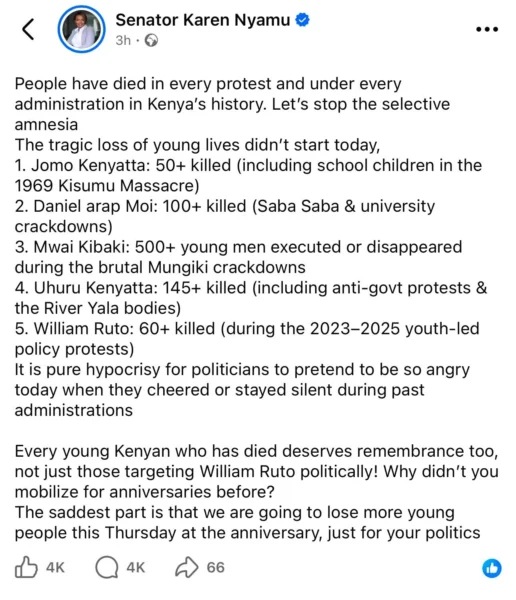
During former President Mwai Kibaki’s tenure, Nyamu claimed that more than 500 young men were executed or disappeared during the Mungiki crackdowns.
She further stated that more than 145 people were killed during former President Uhuru Kenyatta’s administration, including deaths linked to anti-government protests and the River Yala bodies.
Nyamu also noted that more than 60 people have died during the 2023–2025 youth-led policy protests under President Ruto’s administration.
She noted that all young Kenyans who have lost their lives deserve to be remembered, arguing that recognition should not only focus on those whose deaths have been linked politically to President Ruto’s government.
“It is pure hypocrisy for politicians to pretend to be so angry today when they cheered or stayed silent during past administrations,” she said.
“Every young Kenyan who has died deserves remembrance too, not just those targeting William Ruto politically! Why didn’t you mobilise for anniversaries before?”
She also highlighted that the planned June 25 anniversary protests could result in more deaths, claiming that some people were using the demonstrations for political reasons.
“The saddest part is that we are going to lose more young people this Thursday at the anniversary, just because of your politics,” she said.
Experts who spoke to The Eastleigh Voice and requested anonymity said Nyamu’s statement could be interpreted as an attempt to shift focus from the current government’s responsibility by comparing recent protest deaths with incidents from previous administrations.
The experts said while deaths linked to past governments should not be ignored, using historical cases to respond to current concerns risks reducing accountability for present-day actions.
"That framing does exactly what her words deny doing. It normalises death. By placing the 60+ Kenyans killed during the 2023–2025 Kenya Kwanza protests in the same list as historical tragedies, she removes context, accountability, and urgency. The message is clear: deaths are inevitable, they have always happened, so stop singling out this administration," an expert said.
They added that acknowledging past injustices should not be used to dismiss concerns raised by families of recent victims, who are seeking justice and accountability for their loved ones.
The experts said the question facing leaders should be how to prevent future deaths during demonstrations rather than comparing the number of lives lost under different administrations.
Top Stories Today



























Comments
Sign in with Google to comment, reply, and like comments.
Continue with Google