Why Taiwan remains off limits in Kenya’s foreign policy
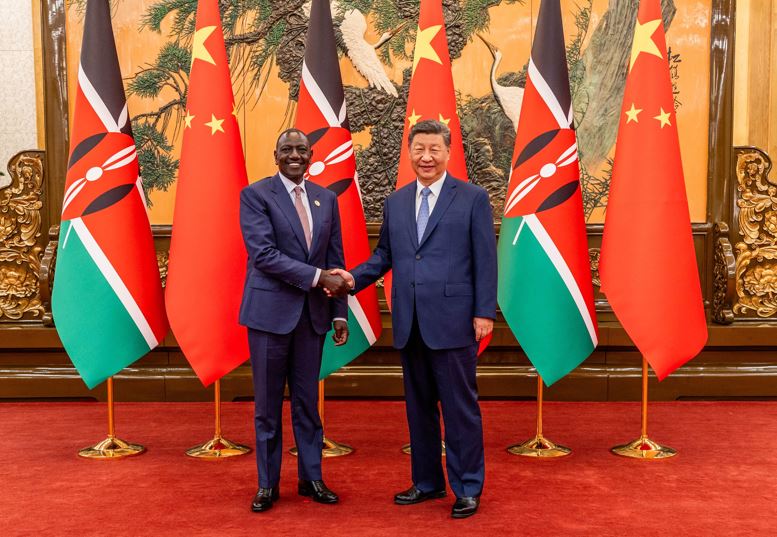
Kenya’s approach to Taiwan is best understood as a product of strategic calculation. The country has little incentive to challenge Beijing on an issue China considers its foremost foreign policy priority, and considerable incentive to demonstrate compliance.
The recent denial of entry to two Taiwanese nationals seeking to attend the Our Ocean Conference in Mombasa was not an anomaly. It was the predictable outcome of a foreign policy doctrine that Kenya has spent decades institutionalising, and which successive administrations have treated as non-negotiable.
Contrary to claims that Nairobi merely buckled under Chinese pressure, Kenya’s approach to Taiwan is best understood as a product of strategic calculation. The country has little incentive to challenge Beijing on an issue China considers its foremost foreign policy priority, and considerable incentive to demonstrate compliance.
Three factors explain why Kenya will continue to act decisively whenever Taiwan-related questions arise: a codified diplomatic commitment, a powerful economic rationale, and an increasingly rigid administrative practice.
More To Read
- Ruto departs for Europe tour in bid to deepen trade ties and attract investment
- Ruto’s anti-coup rhetoric vs reality: Madagascar junta leader's Nairobi visit sparks diplomatic questions
- Ivory Coast to open embassy in Nairobi as presidents Ruto and Ouattara deepen ties
- Taiwan’s President Lai returns via long detour after surprise Eswatini visit, defies China pressure
- Taiwanese President Lai reaches Eswatini after flight disruption, China issues sharp rebuke
- Kenyan envoys present credentials as Ruto strengthens global diplomacy
Kenya formally recognises the People’s Republic of China as the sole legitimate government representing China and regards Taiwan as part of Chinese territory. This position is not merely implied. It is explicitly stated in Kenya’s Sessional Paper No. 1 of 2025 on Foreign Policy, which identifies adherence to the One-China Principle as a cornerstone of relations with Beijing.
The commitment has been repeatedly reinforced by President William Ruto’s administration. During Ruto’s state visit to Beijing in April 2025, the two countries issued a joint communiqué in which Kenya reaffirmed its support for the One-China Principle and opposition to Taiwanese independence.
Since assuming office, the Ruto administration has publicly restated this position on multiple occasions, leaving little room for ambiguity.
Latest Stories
- Sh31.2 billion worth of government projects stalled across multiple sectors - Auditor General
- ODM kicks out Edwin Sifuna as party secretary-general in major leadership shake-up
- Rights groups split over KNCHR’s refusal to publish names of police brutality compensation beneficiaries
- Kenyans can now download and print birth certificates online under new government plan
The Taiwan question occupies a unique place in Chinese foreign policy. While Beijing is often willing to tolerate disagreement on trade, investment, or even security matters, Taiwan is viewed as a sovereignty issue touching on territorial integrity and national reunification.
For Chinese policymakers, recognition of the One-China Principle is not simply another diplomatic position; it is the foundation upon which all bilateral relations are built.
This is where economics enters the equation.
China remains one of Kenya’s largest trading partners, a major creditor, and a key source of infrastructure financing. Projects such as the Standard Gauge Railway and the Nairobi Expressway have cemented Beijing’s role in Kenya’s development agenda.
Kenyan exporters have also benefited from China’s tariff-free market access arrangements for African countries that recognise Beijing, opening opportunities for products such as tea, coffee, and avocados.
For Nairobi, the calculation is straightforward. There are tangible economic benefits attached to stable relations with China and limited economic gains associated with upgrading engagement with Taiwan.
Challenging Beijing on Taiwan would introduce risks into one of Kenya’s most consequential bilateral relationships while offering little strategic upside.
Critics in Western capitals and Taiwan argue that such decisions illustrate China’s growing ability to export its domestic political disputes abroad. They point to incidents across Africa and elsewhere where Beijing has reportedly lobbied governments to deny access, restrict travel, or limit official engagement involving Taiwanese representatives.
Yet even Taiwan’s most important international partners demonstrate caution on the issue. The United States, despite being Taiwan’s principal security backer, does not formally recognise Taiwan as a sovereign state and has increasingly calibrated high-level Taiwanese transits through American territory in an effort to manage tensions with Beijing.
The lesson for smaller states is clear: if Washington itself carefully navigates the Taiwan question, countries such as Kenya have even greater incentives to do so.
The result is that Kenya’s One-China policy has evolved from a diplomatic principle into an administrative practice.
Foreign Affairs Principal Secretary Korir Sing’Oei recently stated that the appearance of a Taiwanese passport holder in an official Kenyan forum represented a system error and emphasised that such individuals would not participate in formal state meetings convened by the Kenyan government.
His remarks reflected a significant hardening of policy. While Taiwanese passport holders were previously admitted for tourism and commercial purposes, Nairobi is increasingly unwilling to permit any activity that could be interpreted as conferring official or quasi-official status.
This trajectory is not new. In 2016, Kenya deported Taiwanese nationals to mainland China, triggering international controversy but signalling where Nairobi’s red lines lay. The Mombasa incident, therefore, represents continuity rather than change.
For Kenya, Taiwan is not a space for strategic hedging. Nairobi may balance relations between Washington and Beijing across trade, security, and diplomacy, but the Taiwan question remains one area where ambiguity is largely absent.
The reason is ultimately economic as much as diplomatic. Kenya has concluded that the costs of crossing Beijing to Taiwan are real, immediate, and measurable, while the benefits are uncertain and limited. As long as that calculation holds, Nairobi’s doors will remain firmly shut.
Top Stories Today
Trending









































Comments
Sign in with Google to comment, reply, and like comments.
Continue with Google