Fire after fire, investigations are launched, statements are issued, and then silence follows: no arrests, no answers, no closure.
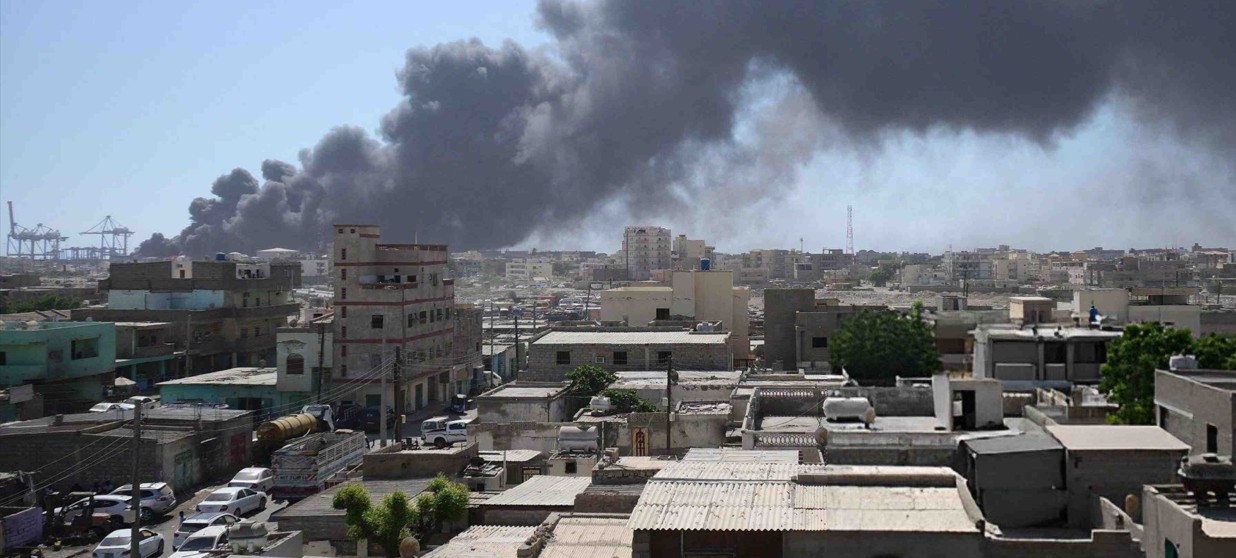
At Gikomba Market, that silence now feels heavier than the smoke that once hung over its twisted metal and burnt timber. As traders shovel away ash and salvage what remains of their stalls, a familiar pattern keeps repeating: devastation, promises of inquiry, rebuilding — and then another blaze.
This time, after a Sunday inferno gutted large sections of the market and reduced goods worth millions of shillings to rubble, frustration has turned into uneasy questions whispered across the ruins.
Who is burning Gikomba? When will investigations finally yield answers? And will anyone ever be held accountable?
For many traders, these are no longer distant questions for authorities; they are urgent fears shaping every return to work, every rebuilt stall, and every night the market falls silent again.
For more than 20 years, Bernard Wandera has followed the same routine.
Before sunrise, he heads to Gikomba Market, moving through rows of second-hand clothing stalls, carefully selecting jackets and other items, buying in bulk, sending them for ironing and finishing, and reselling them to customers in South B.
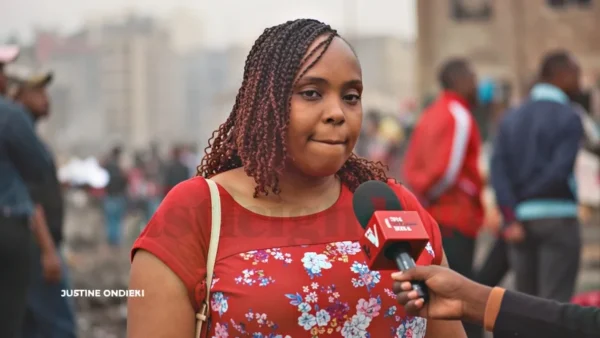 Mary Nyambura, a trader in Gikomba, speaking to The Eastleigh Voice. (Photo: Justine Ondieki)
It is a business that has not only sustained him but also educated his children and provided stability for his family.
But after yet another destructive fire at Kenya’s largest open-air second-hand market, Wandera now stands among blackened stalls and piles of ash, uncertain about the future.
“I came here intending to buy stock like I always do, but everything had changed overnight,” he said.
Like many traders and buyers who rely on the market, he says Gikomba is more than a commercial centre; it is a source of survival.
“This market feeds many families. It creates employment and contributes to the economy. When something like this happens, it affects thousands of people directly and many others indirectly,” he said.
The latest fire, which traders say broke out overnight and was exacerbated by a delayed response, once again left a trail of destruction, consuming merchandise worth millions and disrupting the livelihoods of countless small-scale entrepreneurs.
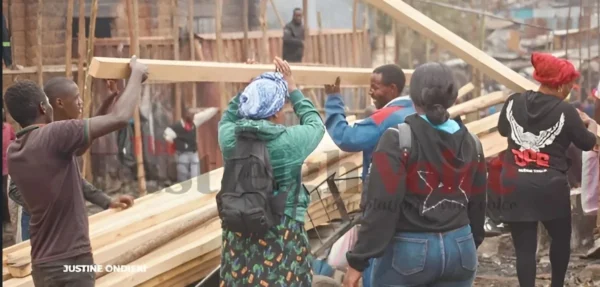 Traders ferrying building materials in Gikomba. (Photo: Justine Ondieki)
As the smoke cleared and traders returned to assess the damage, frustration was evident across the market.
Many questioned why the fires continue to recur despite repeated promises of improved safety measures.
Wandera believes the government must move beyond temporary interventions and invest in long-term solutions.
According to him, rebuilding should focus on modern market structures, while ensuring fees and taxes remain affordable for traders.
“If permanent stalls are built, they should remain affordable because higher costs eventually affect all traders and customers,” he said.
He also wants authorities to prioritise security and emergency preparedness.
Among his recommendations are a functioning fire station near the market, increased police presence at night, and stronger investigations whenever fires occur.
“We cannot continue experiencing the same problem every year without understanding the cause,” he said.
His concerns reflect a broader frustration among traders who say recurring fires have created fear and uncertainty, with many alleging foul play.
Some believe stronger investigations could provide answers and restore confidence.
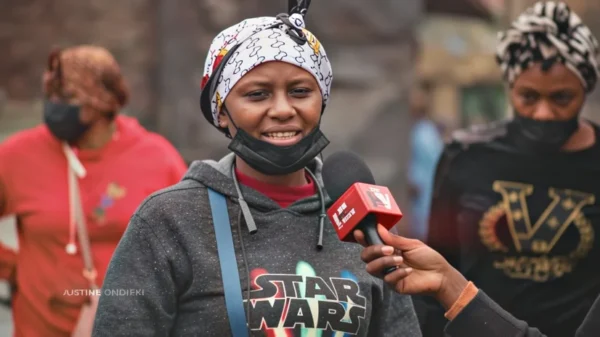 Mary Nyambura, a mother of five and a trader in Gikomba. (Photo: Justine Ondieki)
For traders like Mary Nyambura, however, the issue goes beyond investigations.
Her immediate concern is survival.
Standing near what remained of trading spaces, she described the emotional and financial toll of repeated losses.
Nyambura supports five children, including triplets, through her work at Gikomba.
She says every fire pushes families deeper into hardship.
“There is always another fire, and every time people suffer,” she said.
“We are trying to educate our children and provide for our families, but each time we make progress, something pulls us back.”
The latest incident has left her uncertain about where to begin rebuilding.
She says many traders operate without savings or financial buffers, relying entirely on daily earnings.
“We have not received support. We are trying to survive, but people need help to recover and continue working,” she said.
Her voice mirrors the experience of many informal workers whose businesses run on narrow margins.
At Gikomba, some traders say they earn only a few hundred shillings in profit per day despite long hours and difficult conditions.
That income, however small, supports rent, school fees, transport, and food for entire households.
For Mary Njeri, who has sold ladies’ chiffon tops at the market for nearly two decades, the repeated fires raise difficult questions.
She remembers closing her stall and expecting business to resume normally the next day. Instead, she returned to devastation.
“We left after work as usual and later found that everything had been destroyed,” she said.
She believes emergency response systems need urgent strengthening.
According to traders, fires sometimes start small but spread rapidly before effective intervention.
“There has been talk about improving response systems and even building facilities to support emergencies, but traders still feel vulnerable,” she said.
The losses extend beyond physical stock.
For many businesses, fires disrupt customer trust and existing orders.
Online thrift seller Sharon Juma experienced this firsthand.
She had customer orders lined up and was expecting payments when the fire broke out.
“We had customers waiting for deliveries, and suddenly we could not fulfil those orders,” she said.
“It is painful because people work hard to build trust with clients.”
Sharon says many entrepreneurs invest heavily in stock and depend entirely on sales to survive.
According to her, the latest losses are devastating for young business owners trying to grow through digital platforms.
“People have lost so much money. We are praying for recovery and hoping these incidents do not happen again,” she said.
Like others, she called for stronger preventive measures and better support for affected traders.
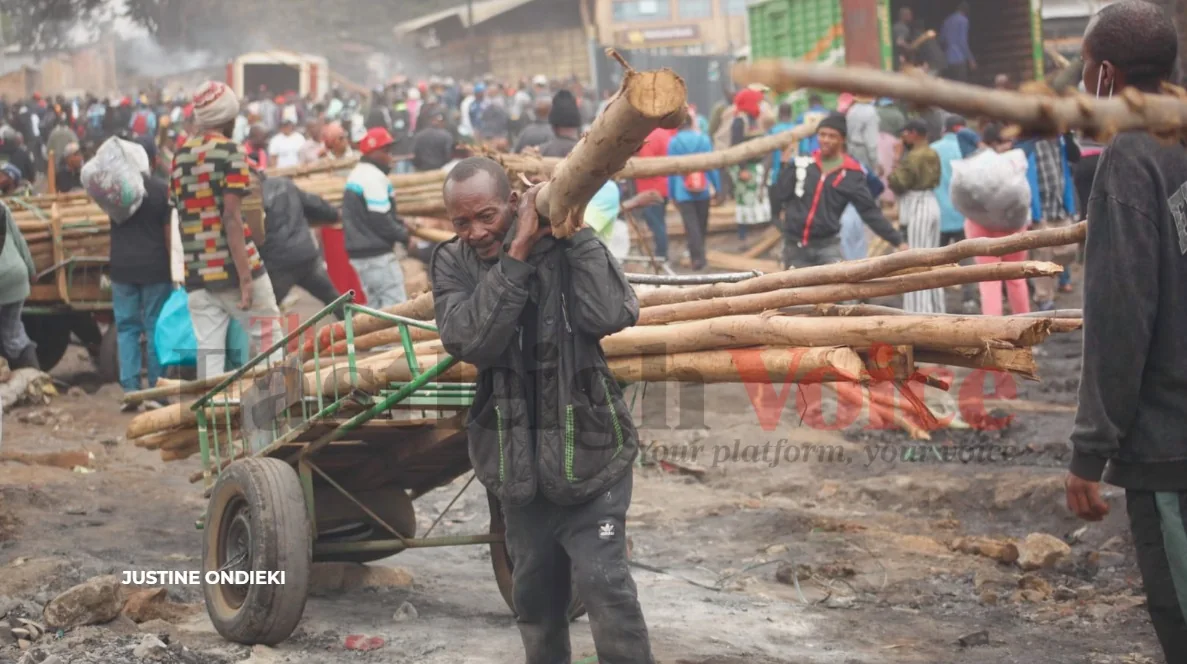
Nearby, rebuilding had already begun.
Wooden structures were going up again, and business conversations slowly resumed.
Among those returning was Shedrack Juma, a trader dealing in dresses and jeans.
He said he learned about the fire through a phone call before later seeing videos circulating online.
When he arrived, he discovered his business had also been affected.
“This is not the first time people are rebuilding after a fire,” he said.
“Every time this happens, traders come back because they have no alternative.”
Shedrack worries that future rebuilding plans could become unaffordable for small traders.
Many do not own spaces and operate as tenants.
Without affordable structures, he fears some businesses may never recover.
“People cannot stop working and wait for solutions. They need spaces they can afford because this is how they survive,” he said.
His main concern is the response from firefighters, which he describes as sluggish and poorly equipped. He says the fire spread rapidly and engulfed large sections of the market, unlike previous incidents that were contained more quickly.
“This one was too sluggish. Why would firefighters come without water? What is the use?” he asks.
He also says some traders risk losing their spaces permanently, amid allegations that land grabbers are taking advantage of the destruction to occupy affected areas.
Despite repeated setbacks, the resilience of Gikomba’s traders remains visible.
By midday, some had already cleared debris and resumed small-scale operations. Others gathered to discuss recovery and support each other.
Yet beneath that resilience lies exhaustion.
For years, traders have adapted, rebuilt, borrowed, and restarted after every disaster.
This time, many say they want something different: not just recovery, but lasting change — better security, stronger fire prevention systems, faster emergency response, affordable infrastructure, and accountability.
For thousands who depend on Gikomba every day, rebuilding alone is no longer enough.
They want assurance that the next fire will not once again erase everything they have worked for.
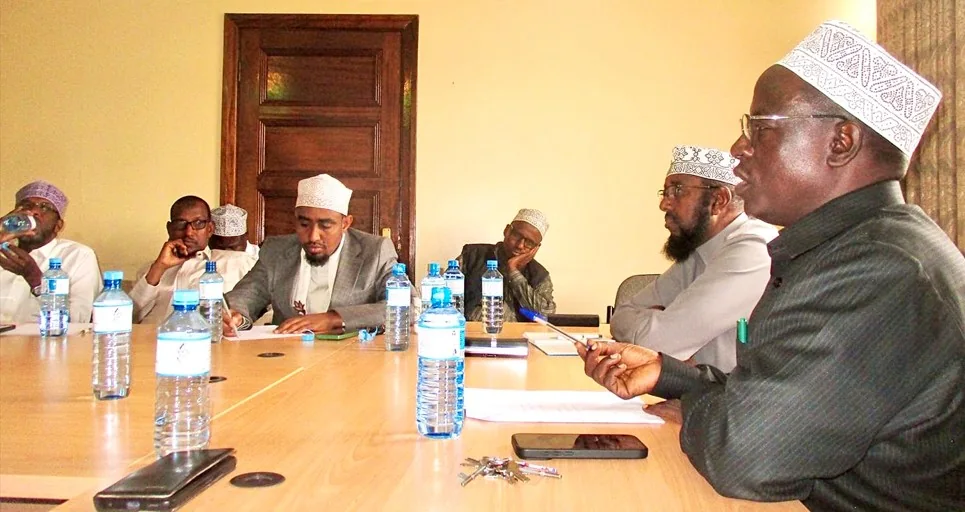
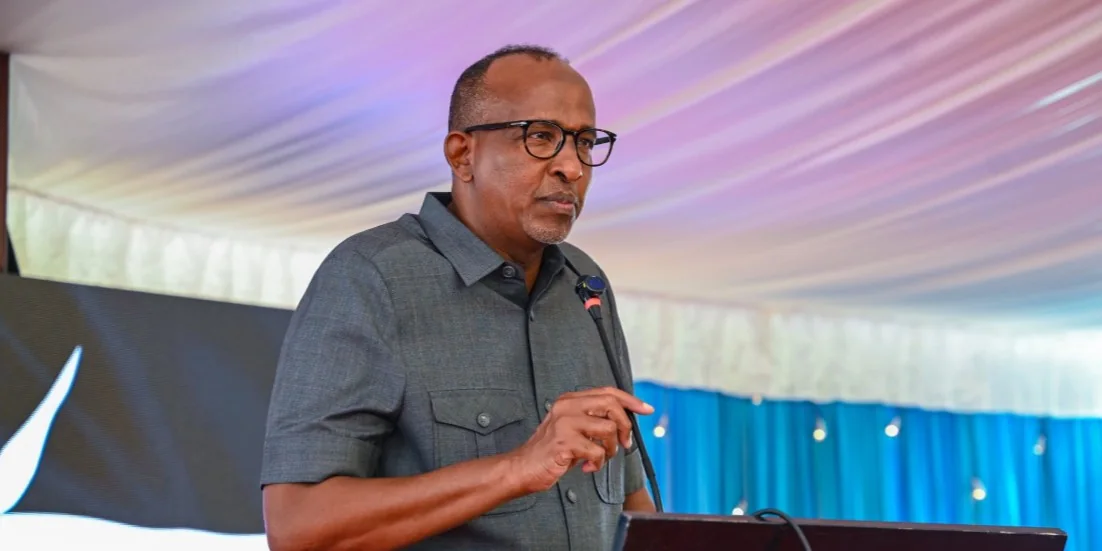
Kamukunji MP Yusuf Hassan described Sunday’s Gikomba Market fire as the worst tragedy in the market’s history, saying leaders have agreed to deploy police officers to secure the area and protect traders’ property.
In a statement on Sunday, Yusuf said the decision was reached during an emergency meeting convened after the early morning blaze, which killed three people, injured 17 others, and destroyed goods worth billions of shillings.
“Gikomba Market has endured repeated unexplained fire outbreaks. Sadly, today’s incident is the largest conflagration the market has ever seen, causing massive losses to traders and their families,” Yusuf said.
He said the deployment is intended to safeguard remaining property as recovery efforts begin, noting that the market remains highly vulnerable.
He also called for urgent intervention from both the national and county governments to support traders whose livelihoods were wiped out.
Nairobi Governor Johnson Sakaja has assured traders at Gikomba Market that none will be displaced following the devastating early-morning fire.
In a statement on Sunday, Sakaja said the county government is rolling out urgent recovery and rebuilding measures after the blaze tore through the market, disrupting livelihoods in one of Nairobi’s key economic centres.


















Comments
Sign in with Google to comment, reply, and like comments.
Continue with Google