Pope Leo XIV’s visit to Lampedusa, Italy, on Saturday morning has cast a spotlight on the fate and risks taken by millions of immigrants in their attempt to get to Europe.
Lampedusa is a small island in southern Italy close to the Tunisian coast that acts as the first landing point for many people crossing the Central Mediterranean route in search of safety, peace and better opportunities.
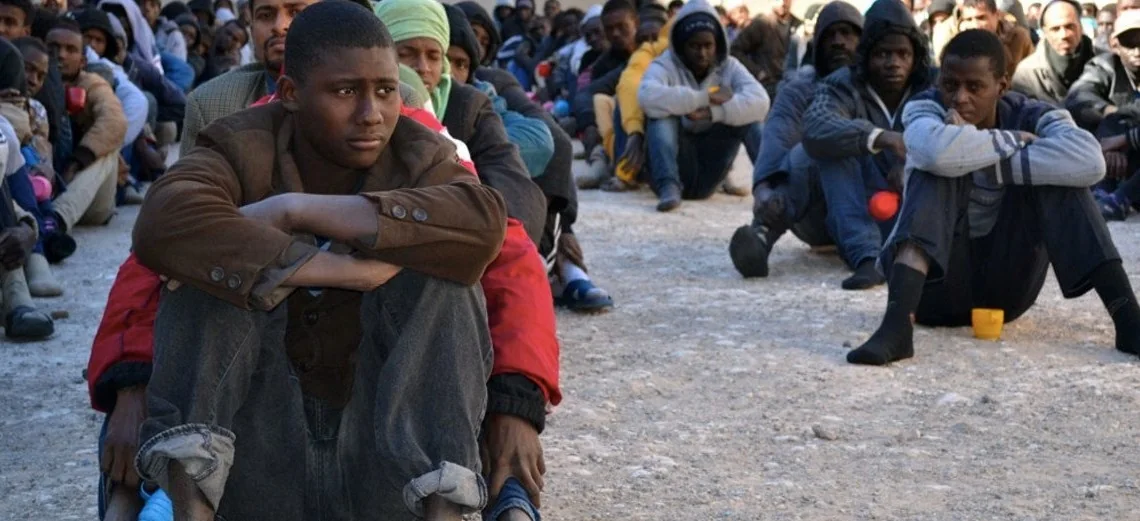
Here, migrants travelling from Libya and Tunisia, who are lucky to have survived the harsh realities of crossing the Mediterranean, considered one of the deadliest migratory routes, as many die as they use overcrowded and unseaworthy boats to cross the sea on their way to the Island.
Others are rescued by humanitarian vessels or the Italian Navy before making landfall, often on this island.
Reports estimate that close to 100,000 use the route annually, with some arriving bearing wounds, sometimes due to the journey and at times due to violence on their journeys.
According to the UN migration agency, IOM, the migrants using this route mainly come from North Africa's Libya and Tunisia and, to a lesser extent, from the coasts of Algeria, Türkiye, and Lebanon.
Migrants from Sub-Saharan Africa use Libya and Tunisia as transit nations in their long journey towards Europe.
“Since the early 2000s, this route has been used by people from countries in Western and Central Africa, the Horn of Africa, and the Middle East, but, in recent years, more movements of migrants from Bangladesh, Pakistan, and Tunisia have been observed. Although nationals from the Syrian Arab Republic were common on this route for several years up to 2024, there has been a stark decline in their presence in 2025 due to the Syrian political transition and related shifts in asylum policies in countries of arrival and transit,” IOM notes.
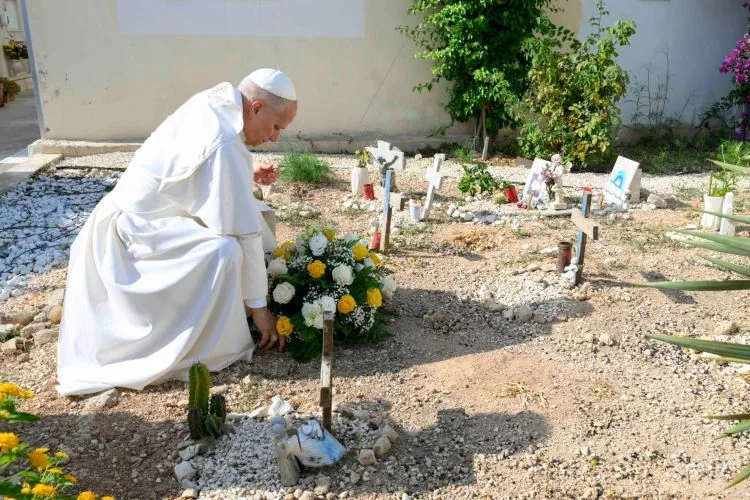
After arriving on the Island, the Head of the Catholic Church visited the cemetery of the island, stopping at the tombs of the migrants, including children who lost their lives trying to reach European shores, where he spent some time in prayer and placed a wreath of flowers.
He then passed through the ‘Gateway to Europe’ monument, a memorial for migrants who have died at sea and which reflects light and so acts as a beacon of hope for those who arrive.
A brief on his tour adds that he also greeted some migrants and spent some time looking out at the windy sea before him, where many have made the dangerous journey from North Africa to Europe.
The arrival marks the beginning of his pastoral visit to the southern Italian island at the crossroads of migration routes from North Africa to Europe.
He is further expected to visit the Favaloro Pier, where he will meet some migrants and bless a plaque which dedicates the pier to Pope Francis.
The Vatican says Pope Leo’s visit echoes that of Pope Francis, who came to the island for his first pastoral visit outside of Rome on July 8, 2013.
Lastly, before returning to Rome, Pope Leo XIV will celebrate Mass and greet the local authorities, children and volunteers.



































Comments
Sign in with Google to comment, reply, and like comments.
Continue with Google