What the World Cup hydration breaks reveal about who governs men’s football
What the World Cup hydration breaks reveal about who governs men’s football
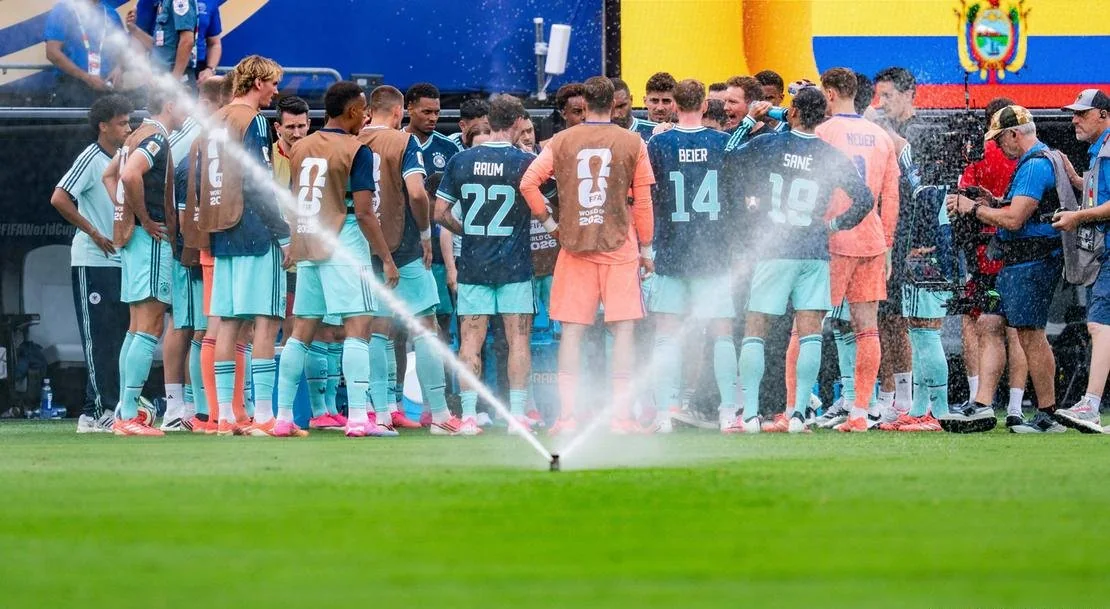
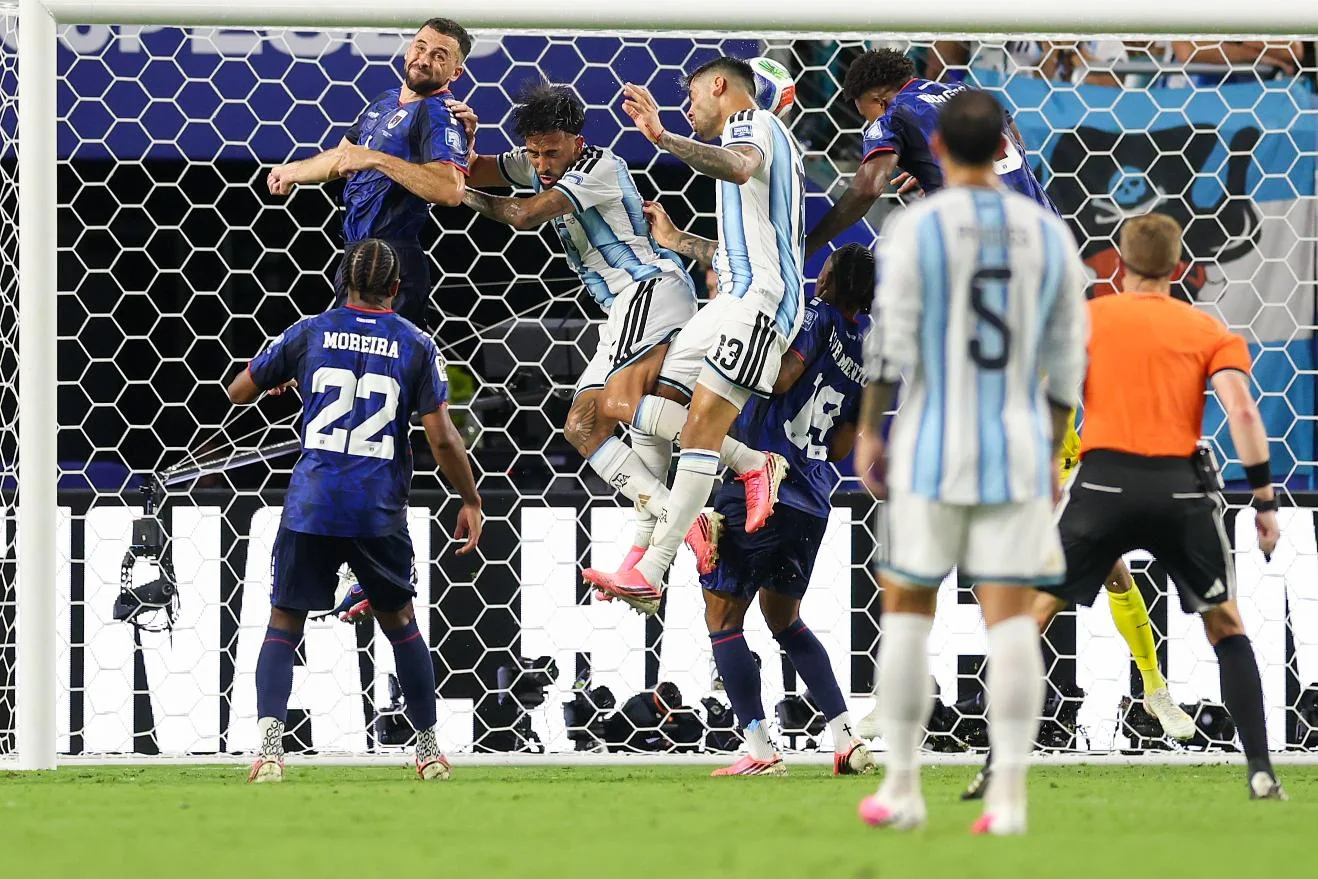
Coaches have been using the hydration breaks to make tactical changes. (Photo: Bahho Kara/Kirchner-Media/IMAGO via DW)
Listen
Read this story aloud
Listen to the clean text version of this article.
Ready
1 min listen
Audio reading is not supported on this browser.
A measure introduced for safety has now evolved into a permanent feature that alters how the beautiful game is played, while conveniently creating additional predictable advertising slots in every match.
22 minutes into Canada’s group match against Qatar on June 18, the home crowd began to boo. They weren’t questioning a referee decision, nor a move by the opposition, but the mandatory three-minute player break for water. Canada was already cruising to a 6-0 win; the irritation was aimed squarely at the interruption.
The scientific basis of these breaks is genuine. Researchers have warned that around a quarter of matches at this World Cup could be played in heat exceeding the safety limits recommended by the players’ union, Fifpro. As such, these breaks, when required, are a welcome measure from a player welfare point of view.
Crucially, however, they have become mandatory across all 104 matches of the World Cup, standardised and scheduled to the minute and applied regardless of temperature or setting. They are being enforced on a moderate 20°C evening or even inside an air-conditioned stadium.
England manager Thomas Tuchel criticises the mandated hydration breaks.
This uniformity has united critics rarely found on the same side. Uruguay’s coach Marcelo Bielsa said hydration breaks add nothing to the game. England manager Thomas Tuchel said they change the identity of a match and break its momentum. The Guardian called them “ad breaks” that nudge football towards a four-quarter, American rhythm.
The critics have a point. A measure introduced for safety has now evolved into a permanent feature that alters how the beautiful game is played, while conveniently creating additional predictable advertising slots in every match.
Infantino is technically right that FIFA earns nothing from them directly, but the extra value these hydration breaks offer could make the broadcasting rights more lucrative to sell next time around.
What control does FIFA have over its own event?
The unease runs deeper than the loss of match momentum or tactics. At a pre-tournament press conference in Mexico City on June 10, BBC journalist Dan Roan asked Infantino directly whether he had “lost control of his own tournament”. Infantino responded by telling reporters to “chill and relax”.
The hydration break is emblematic of a wider pattern: FIFA is assertive over its product, but increasingly restricted over the conditions around it.
Similarly, Iran’s squad was forced to sleep in Mexico and crossed the border only on match days. Meanwhile, fans from Haiti, Iran, Côte d’Ivoire and Senegal, all qualified nations, were kept out by stringent travel bans that exempted players but not supporters.
FIFA, it seems, cannot guarantee universal access. It largely chooses not to challenge the sovereign powers on which the tournament depends.
Pundits question the value of mandated hydration breaks.
These governing issues have also been seen in the ticket pricing. For the first time, FIFA has used dynamic, demand-led pricing, paired with its own official resale platform. Ordinary group matches have carried four-figure price tags.
The global game is at risk of being unaffordable and inaccessible for many. FIFA appears to be tightening its grip on what it can monetise, even as the event threatens to slip from its control in other aspects.
The environmental impact of the tournament makes this limit plainest. FIFA can choose venues, schedule matches, and add cooling protocols, but it cannot shrink a continent. Researchers expect most of the tournament’s emissions to come from travel, chiefly flights, with one estimate near 7.8 million tonnes of CO₂e. Reusing existing stadiums helps, but a 48-team, 104-match tournament across 16 cities and three countries still runs on aviation.
To say FIFA is simply greedy ignores how authority is distributed; to say football is merely being “Americanised” - premium-priced, broadcast-friendly, cut into quarters - describes the symptom, not the mechanism. FIFA’s authority seems to have become selective. It is expansive over the match-day product, ticketing and global attention, but absent, or unwilling, over borders, affordability and climate.
These tensions are likely to intensify. The 2030 World Cup will be co-hosted across six countries and three continents; the 2034 edition has been awarded, effectively uncontested, to Saudi Arabia – a state with both the capital to stage a tournament and the sovereign power to set every condition around it.
The world’s game is now hosted globally and increasingly handed to governments able to fund and provide political guarantees. The question for the next decade is not whether Fifa governs the World Cup, but which parts of it Fifa still governs - and which now belong to the states and markets it depends on.

































Comments
Sign in with Google to comment, reply, and like comments.
Continue with Google