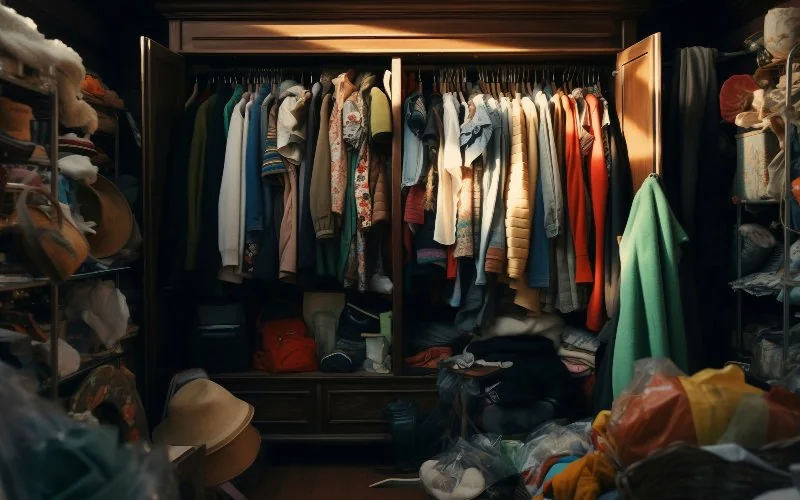
A cluttered wardrobe can make getting dressed every morning feel like a challenge. Overflowing shelves, forgotten clothes and items that no longer fit often leave people feeling overwhelmed, even when they have plenty to wear.
However, decluttering your closet doesn't have to mean throwing everything away. Instead, it is about organising your belongings, keeping what serves you and creating a wardrobe that reflects your current lifestyle.
Whether you are tackling a packed wardrobe for the first time or simply looking to refresh your space, experts recommend taking a systematic approach rather than trying to organise everything in one sitting:
1. Start by emptying the entire closet
The first step is to remove everything from your wardrobe. Empty shelves, drawers and hanging rails completely so you can clearly see what you own.
This process often reveals duplicate items, forgotten purchases and clothes hidden at the back of the closet.
Cleaning the wardrobe before putting anything back also helps create a fresh start
2. Sort items into clear categories
Separate clothing into groups such as tops, trousers, dresses, jackets, shoes, bags and accessories.
Then create four piles:
Keep
Donate
Sell
Recycle or discard
Having designated categories makes decision-making easier and prevents unnecessary clutter from returning.
3. Ask yourself honest questions
If you're unsure whether to keep an item, consider asking:
Have I worn this in the last year?
Does it fit comfortably?
Is it damaged beyond repair?
Would I buy this again today?
Does it suit my current lifestyle?
If the answer is "no" to most of these questions, it may be time to let the item go.
4. Keep only what fits your lifestyle
Many wardrobes contain clothes for past jobs, old hobbies or occasions that rarely happen.
Instead of holding onto clothing "just in case", prioritise pieces you actually wear regularly.
Special occasion outfits can stay, but multiple versions of rarely worn items may simply take up valuable space.
5. Organise by category and colour
Once you have decided what to keep, return items neatly by category.
Many professional organisers also recommend arranging clothes by colour, making it easier to find outfits and spot gaps in your wardrobe.
Matching hangers can also create a cleaner, more organised appearance
6. Try sorting out seasonal clothing separately
Heavy coats, bulky sweaters and hot summer accessories don't need to occupy the everyday wardrobe space during warmer months.
Vacuum storage bags or labelled containers can help store seasonal items until they are needed again.
7. Don't forget shoes and accessories
Shoes, handbags, belts and scarves can quickly create clutter.
Keep only pairs that are comfortable and in good condition, and use shelves, clear boxes or organisers to maximise available space.
8. Follow the "one in, one out" rule
A simple habit can help keep your wardrobe organised long-term: for every new clothing item you buy, consider donating or selling one you no longer wear.
This prevents wardrobes from gradually becoming overcrowded again
9. Schedule regular decluttering sessions
Closets naturally accumulate clutter over time.
Setting aside 15 to 30 minutes every few months to review your wardrobe can help maintain an organised space without requiring a major overhaul.
The benefits go beyond the organisation
A decluttered closet can save time during busy mornings, reduce unnecessary shopping, make laundry easier to manage and help people appreciate the clothes they already own.
By starting with small, manageable steps, even beginners can transform an overcrowded wardrobe into a practical, organised space that makes getting dressed simpler every day.















































Comments
Sign in with Google to comment, reply, and like comments.
Continue with Google