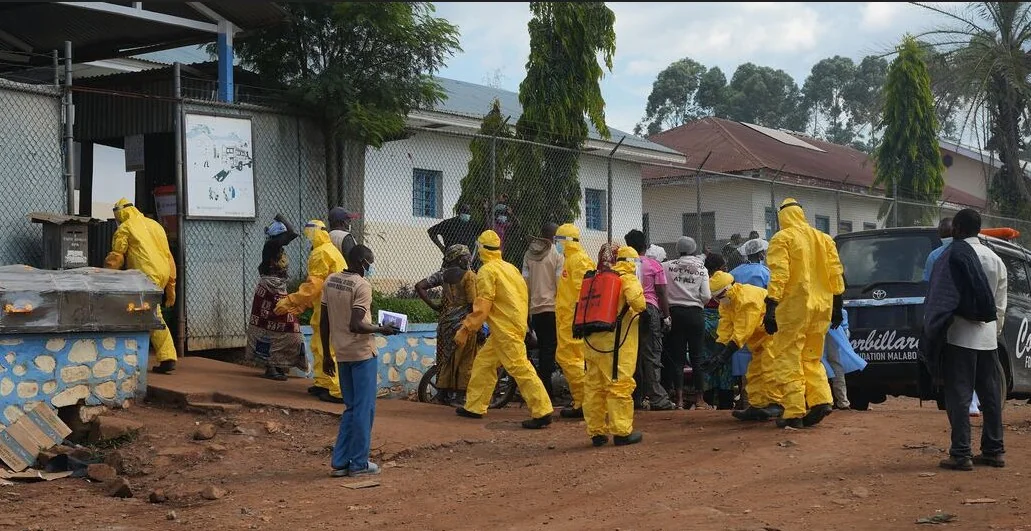
The Ebola outbreak in the Democratic Republic of the Congo has reached Kisangani, a major transport hub linking the country’s east and west, raising fears of wider transmission along key transport corridors, including the Congo River.
In an update on Tuesday, the United Nations Office for the Coordination of Humanitarian Affairs (OCHA) said response efforts were being intensified after the virus spread into two additional provinces, Haut-Uele and Tshopo.
The confirmation of cases in Kisangani, a city of more than 1.6 million people, marks a significant development in an outbreak that has steadily expanded beyond its original epicentre.
As of July 12, Congolese health authorities had recorded 1,963 confirmed Ebola cases across Ituri, North Kivu, South Kivu, Haut-Uele and Tshopo provinces.
The UN’s Senior Ebola Coordinator, Julien Harneis, visited Kisangani alongside the Congolese Minister of Health, Africa Centres for Disease Control and Prevention (Africa CDC) officials and the World Health Organisation (WHO) to reinforce provincial response efforts.
According to OCHA, surveillance, laboratory testing, treatment and community engagement have all been expanded in recent weeks.
Health teams are now investigating 85 per cent of reported alerts, while 80 per cent of identified contacts are being traced and monitored.
Testing capacity has also increased with 11 decentralised laboratories capable of processing up to 250 samples daily.
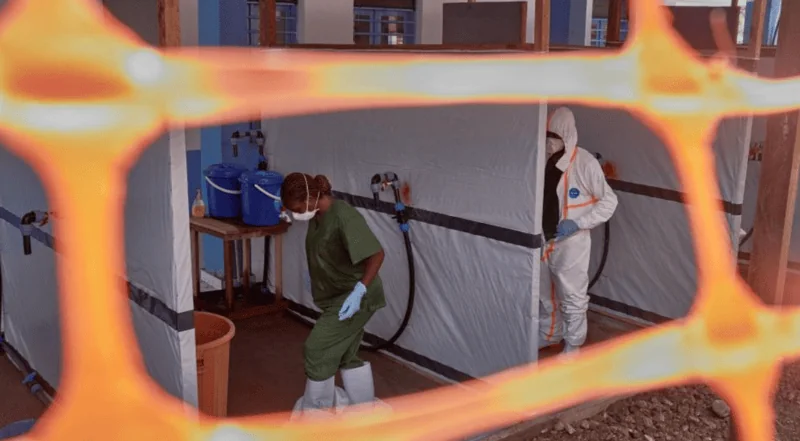
Treatment infrastructure has expanded to 22 Ebola treatment centres and seven transit centres, providing more than 700 beds across affected areas.
Despite the progress, insecurity continues to undermine response efforts in eastern Congo.
OCHA said at least four civilians were killed and several others abducted during an armed attack in Beni territory, North Kivu, over the weekend, forcing further population displacement and complicating humanitarian access.
The agency urged all parties to guarantee the safety of health workers and humanitarian personnel operating in affected communities.
There was, however, encouraging news from South Kivu, where authorities have recorded 49 consecutive days without a new confirmed Ebola case, more than twice the virus’s maximum incubation period.
The province remains under heightened surveillance as officials assess whether transmission has been interrupted.
The latest developments come as African governments and international partners scale up efforts to contain what has become the continent’s second-largest Ebola emergency in recent years.
Aid agencies warn that preventing further spread through major transport networks will be critical to bringing the outbreak under control.






































Comments
Sign in with Google to comment, reply, and like comments.
Continue with Google