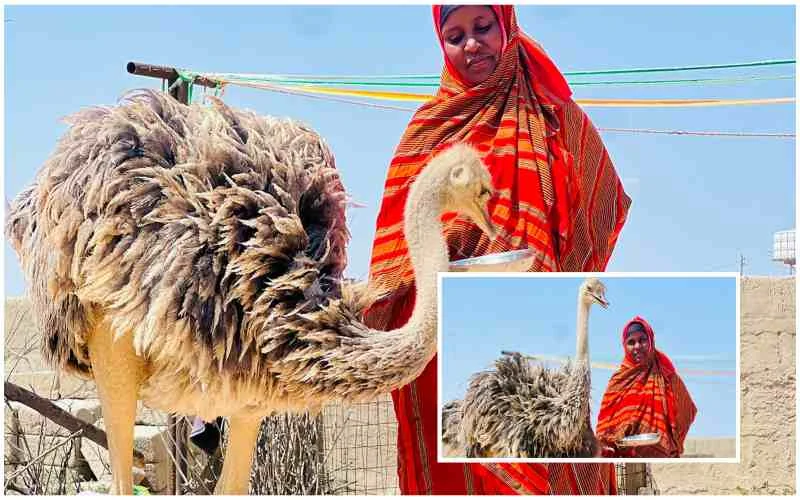
A woman in Wajir West was left in tears after Kenya Wildlife Service (KWS) officers took away a Somali ostrich she had raised from a young chick, bringing to an end a bond that had lasted for more than a year.
The emotional scene unfolded at Abdia Ali Ibrahim’s home in Ademasajida village, where KWS officers had gone to collect the protected bird after learning it was being kept at the homestead. As the ostrich was led away, Abdia struggled to hide her emotions, saying the bird had become part of her family after she rescued and cared for it during a severe drought.
"I love this bird. She is part of my family," she said between sobs. "I raised her with love, commitment and sacrifice during the drought. I would still prefer to keep her, but the law will not allow it. It is painful to see her gone."
Abdia found the ostrich when it was believed to be only a few days old during the prolonged drought that affected northern Kenya, leaving many wild animals and livestock dead. The chick had been abandoned, and she decided to take it home.
Despite facing food shortages herself, she fed the bird, protected it and watched it grow into a fully grown ostrich. She named it Aisha, and over time, the bird became a familiar sight around the homestead, moving freely and living alongside the family.
As Aisha matured, KWS determined that the bird belonged to a protected wildlife species and could not legally remain in private custody without the required licences. The Service said the ostrich would be moved to a wildlife sanctuary where it would live with other ostriches and support conservation breeding efforts.
Although KWS officers commended Abdia for saving the bird’s life, they explained that the law required it to be placed in an appropriate wildlife habitat.
A video showing Abdia saying goodbye to Aisha has since attracted widespread attention online, with many Kenyans expressing sympathy and praising her for rescuing the bird.
The incident has also sparked discussion over whether people who rescue wild animals should be allowed to apply for licences to continue caring for them where it is safe and practical.
Hotelier Mohamed Hersi argued that Kenya already has a legal framework for licensing some wildlife and questioned whether Abdia could have been allowed to keep the ostrich under such an arrangement.
"Kenya already has a licensing pathway for exactly this kind of relationship between citizen and wildlife," he wrote.
Garissa Woman Representative Amina Udgoon Siyad praised Abdia’s compassion and said her actions deserved recognition.
"This mother did not just raise an ostrich; she nurtured it with love until it became family," she said. "As a woman leader, I am deeply touched by her humanity. Such kindness deserves to be recognised."
She also pledged to personally reward Abdia for rescuing and caring for the bird.
Journalist and psychologist Adow Jubat said the woman’s reaction reflected the pain that comes from losing a companion after forming a close emotional attachment.
"This woman rescued the ostrich when it was just two days old and raised it until adulthood," he said. "Losing anyone or anything with whom you have formed a deep emotional bond can trigger grief."








































Comments
Sign in with Google to comment, reply, and like comments.
Continue with Google