I had always associated the rich scent of oud with Indian films and visits to Somali homes. It was one of those fragrances that lingered in the air long after you left.
But it wasn't until I visited BBS Mall in Nairobi's Eastleigh that I became curious about it.
Before you even step into many of the shops, the aroma greets you. Small towers of burning oud sit outside storefronts and along the corridors, filling the mall with a calming, woody fragrance.
It isn't an occasional scent; it is part of the atmosphere whenever you come to Eastleigh. That was the moment I wanted to know more about what people simply called "oud."
What exactly is oud?
Also known as agarwood, aloeswood or gaharu, oud is one of the world's most valuable natural fragrances.
Unlike most woods, oud is not naturally fragrant.
It forms when certain species of Aquilaria trees, native to Southeast Asia, become infected by a naturally occurring fungus. As the tree defends itself, it produces a dark, aromatic resin that slowly saturates the heartwood.
Over many years, this resin transforms ordinary wood into the richly scented material known as oud.
Because only a small percentage of wild trees naturally produce this resin, genuine oud has long been considered rare and highly prized; therefore, there are many synthetic (manufactured) ones in the market that smell like the original.
Historically, agarwood has been harvested in countries including India, Bangladesh, Cambodia, Vietnam, Laos, Thailand, Malaysia and Indonesia.
Today, much of the world's commercial oud comes from sustainably managed plantations where trees are carefully inoculated to encourage resin formation without relying on wild forests.
A fragrance older than many civilisations
Historical records suggest agarwood has been traded for more than 2,000 years.
It appears in ancient Sanskrit texts, traditional Chinese medicine, Japanese incense ceremonies and Arabic writings.
Traders carried it along the ancient Silk Road and maritime trade routes linking Asia, the Middle East and East Africa’s Somali, Kenyan and Tanzanian coast.
Today, countries across the Gulf region remain among the largest consumers of premium oud.
Across cultures, oud has never been valued simply because it smells pleasant. For many people, burning oud marks important moments in daily life.
In many Somali, Arab and Gulf households, burning oud before guests arrive is more than a way to fragrance a room; it is a symbol of hospitality, respect and generosity.
Oud also helps neutralise household odours: Burning oud can help mask cooking smells, smoke and other lingering odours.
Family members may gently pass their clothes or scarves through the aromatic smoke so the fragrance lingers on the fabric, a tradition associated with cleanliness, careful grooming and preparing for special occasions such as weddings, Eid celebrations and family gatherings.
Although widely practised in many Muslim communities, the custom is cultural rather than a religious obligation, and the use of agarwood also dates back centuries in Hindu, Buddhist and East Asian traditions.
In some parts of Asia and the Middle East, oud smoke has traditionally been used to help keep mosquitoes and other insects away.
In parts of India, agarwood is also burned during religious ceremonies, meditation and prayer.
In Japan, it forms part of Kōdō, often translated as "the Way of Incense," a centuries-old art that treats appreciating incense as a cultural practice similar to the tea ceremony.
Medicinal uses
For centuries, agarwood has also featured in traditional medicine.
Practitioners of traditional Chinese medicine have used it to ease digestive complaints, reduce nausea and promote relaxation.
May help reduce stress: Preliminary studies suggest compounds found in agarwood may have calming effects on the nervous system.
In Ayurvedic medicine, it has traditionally been used to support digestion and calm the mind.
Across parts of Southeast Asia and the Middle East, oud has also been used in traditional remedies for coughs, breathing discomfort and stress.
Modern scientific research has identified several bioactive compounds in agarwood, and studies are investigating its potential antioxidant, anti-inflammatory and antimicrobial properties.
The rich, woody aroma of oud is widely used in aromatherapy to create a sense of calm. Many people burn it during meditation, prayer or after a long day to help them unwind.
The many forms of oud
It exists in several forms, including;
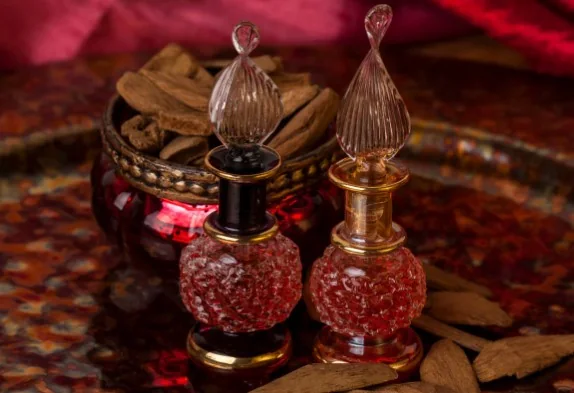
• Natural agarwood chips burned over charcoal or electric incense burners.
• Bakhoor, which consists of wood chips soaked in fragrant oils and blended with spices before being burned.
• Oud essential oil, one of the world's most expensive perfume ingredients.
• Perfumes and fragrance sprays containing natural or synthetic oud notes.
• Incense sticks and cones.
• Concentrated perfume oils applied directly to the skin.
Although oud is often burned as incense, the two are not the same. Oud is the dark, fragrant resin-rich wood that forms inside Aquilaria trees after they become infected by a naturally occurring fungus.
Incense, on the other hand, is a general term for any aromatic material, such as resins, woods, herbs, spices or plant powders, that is burned to release a pleasant-smelling smoke.
In other words, oud is a specific natural substance, while incense is a category of fragrant materials and products. Genuine oud can be burned as incense, but not all incense contains oud.
Although oud oil is now produced more widely than in the past, genuine oud remains extremely valuable. Its rarity, combined with the large amounts of resin-rich agarwood and time-intensive distillation required to produce the oil, means authentic products often sell for exceptionally high prices.


















































Comments
Sign in with Google to comment, reply, and like comments.
Continue with Google