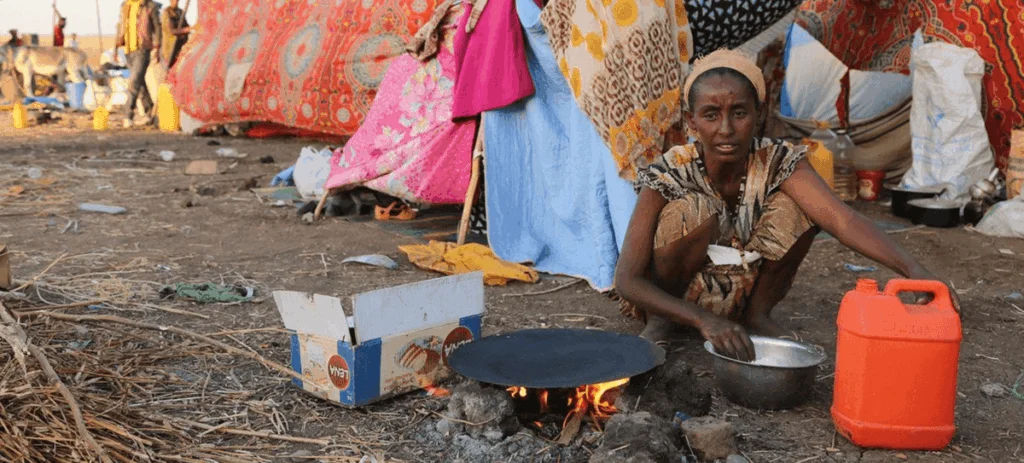
Ethiopia has been excluded from the 2026 Global Report on Food Crises (GRFC) after failing to provide updated acute food insecurity data meeting the report’s technical standards, even as separate projections indicate the country will remain among the world’s largest humanitarian food crises through mid-2026.
The joint report by the Food and Agriculture Organisation of the United Nations and World Food Programme said Ethiopia was among 18 countries and territories where either no acute food insecurity data were available, or existing data failed to meet the GRFC’s technical requirements, including consensus-based estimates.
The report notes that Ethiopia had been included in the 2025 edition, representing more than 27 million people facing high levels of acute food insecurity in 2024 alongside four other countries and territories, but “no updated estimates were available for 2025”.
It attributes the growing data gaps to “a combination of factors, including challenges to obtain authorisation to collect or share data, limited funding and a lack of priority for data collection.”
Warning of a broader deterioration in global food security monitoring, the latest GRFC says the 2026 edition has “the lowest number of countries and territories with acute food insecurity data meeting GRFC technical requirements in ten years.”
“The integrity of the data systems underpinning the GRFC is increasingly at risk. Protecting and investing in food security and nutrition information systems is critical to safeguard evidence-based decision-making.”
It also cautions that its estimate of 266 million people facing high levels of acute food insecurity globally in 2025 should not be interpreted as an improvement, stressing that the lower figure “mainly reflects a reduction in the number of countries covered” because of missing data, including from Ethiopia.
Despite Ethiopia’s exclusion from the global analysis, however, the latest outlook from the Famine Early Warning Systems Network projects the country will remain among the five countries with the largest populations requiring urgent humanitarian food assistance by July 2026.
The agency estimates 15.0–15.9 million people, or 10-15 per cent of the population, will face Crisis (IPC Phase 3) or Emergency (IPC Phase 4) levels of acute food insecurity, accounting for more than 10 per cent of global food assistance needs across FEWS NET-monitored countries.
It warns that while food assistance needs are projected to decline modestly from last year, Ethiopia’s outlook remains fragile due to the risk of renewed drought, conflict-related access constraints and humanitarian funding shortfalls.
Furthermore, FEWS NET has also warned that Ethiopia faces renewed climatic risks as emerging El Niño conditions are expected to disrupt rainfall across East and the Horn of Africa later this year.
While the March-May rainy season delivered generally favourable agricultural conditions across much of the country, rainfall in southeastern Ethiopia fell to as low as 45 per cent of average, and previous El Niño episodes with similar conditions resulted in below-normal maize and sorghum harvests, particularly in eastern Amhara, Tigray, and northeastern Oromia.
The agency warned that if El Niño continues to develop, it could suppress the crucial June–September Kiremt rains across Ethiopia, increasing the risk of reduced crop production and worsening food insecurity.
Similar warnings have been issued by the IGAD Climate Prediction and Applications Centre, which forecasts a high probability of below-normal rainfall across large parts of Ethiopia during the main rainy season, raising concerns over another climate-induced shock amid already fragile humanitarian conditions.
Humanitarian response efforts in Ethiopia are already under significant strain due to severe funding gaps. In June, UNICEF warned of mounting humanitarian pressures as conflict, displacement, climate shocks, and economic hardship continue to deepen vulnerabilities across the country, noting that its 2026 humanitarian appeal remains 81 per cent unfunded.
In its latest Humanitarian Situation Report covering March and April 2026, the UN agency said insecurity in several parts of Ethiopia continues to disrupt livelihoods and restrict humanitarian access. This, it added, is hampering the delivery of aid to vulnerable communities at a time when needs remain high and widespread.














































Comments
Sign in with Google to comment, reply, and like comments.
Continue with Google