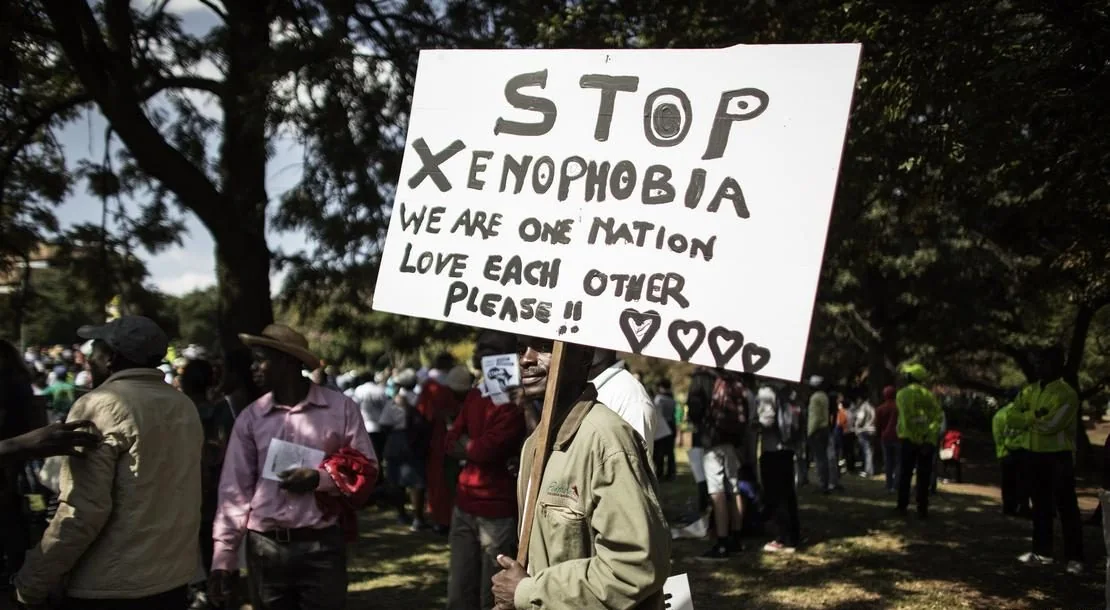
South Africa’s major labour federations have pushed back against rising anti‑immigrant sentiment, arguing the issue is politically driven.
In a statement released Wednesday during a media briefing on growing immigration tensions, organisations under the National Economic Development and Labour Council (NEDLAC) urged the state to address economic and governance failures instead of scapegoating foreign workers.
“We recognise the deep frustration of millions of South Africans facing unemployment, poverty, inequality, crime and deteriorating public services. These are real and legitimate grievances. However, South Africa's economic crisis was not created by migrants. It is rooted in economic stagnation, deindustrialisation, mass unemployment, corruption, austerity, weak governance and the failure to build an economy that serves the majority,” the Council noted.
They pointed out that the surge in anti‑migrant sentiment appears increasingly coordinated and politically driven, aimed at dividing the working class and diverting attention from the real causes of poverty, unemployment, inequality and collapsing public services, while also portraying South Africa negatively as xenophobic and violent to the international community.
“Migrants must not be made scapegoats for failures they did not create. Removing foreign nationals from workplaces, communities, or public spaces will not reopen factories, repair municipalities, strengthen public healthcare or create sustainable jobs. The frustrations of local communities must be addressed by fixing the economy, creating decent work and rebuilding the state,” they highlighted.
The Council, comprised of the Congress of South African Trade Unions (COSATU), the Federation of Unions of South Africa (FEDUSA), South African Federation of Trade Unions (SAFTU) and National Council of Trade Unions (NACTU), stressed it is firmly opposed to the unlawful employment of undocumented migrants.
They called for the prosecution of employers who knowingly hire vulnerable workers to pay lower wages, evade labour laws, avoid collective agreements and weaken collective bargaining, describing such practices as central to the current crisis.
“These employers exploit both South African and migrant workers and deliberately deepen divisions within the working class. They must be investigated, prosecuted and subjected to meaningful penalties. The law must focus not only on undocumented workers, but also on those who profit from their vulnerability,” the Council emphasised.
The federations also faulted government failures in border management, labour inspection, Home Affairs systems, corruption and underfunding of frontline institutions for contributing directly to public frustration.
“The enforcement of immigration, labour and criminal laws is the responsibility of the democratic state and its authorised institutions alone. No individual, organisation or self‑appointed structure has the right to stop people in the streets, demand identity documents, raid workplaces, close businesses or prevent people from accessing public services,” they warned, condemning vigilantism, unlawful detention, forced removals and ethnic profiling.
They further underscored support for lawful and coordinated migration management, including the National Labour Migration Policy, noting Employment Services Legislation must provide a credible long‑term framework for regulating foreign nationals’ employment and prosecuting employers who deliberately break the law.
The legislation, they cautioned, will mean little without effective implementation and properly capacitated institutions.
“We therefore emphasise the urgent need for a coordinated regional and continental development programme to address the deep inequalities and uneven economic development that persist across Africa. Unless these structural disparities are tackled, migration from less developed countries to relatively more developed economies, such as South Africa, will continue. This pattern of migration, combined with high unemployment, poverty, inequality and inadequate public services, fuels the anti‑migrant sentiments that have become increasingly prevalent in South Africa today,” the Council noted.







































Comments
Sign in with Google to comment, reply, and like comments.
Continue with Google