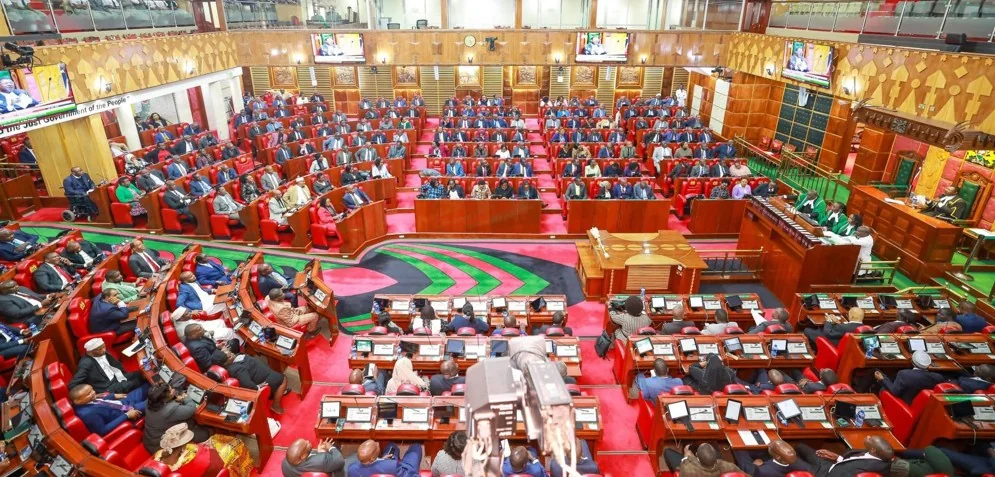
Election reforms, budget legislation and constitutional amendment Bills are set to dominate the National Assembly’s agenda when sittings resume next week, as lawmakers race to pass key laws required ahead of next year’s General Election and meet constitutional deadlines.
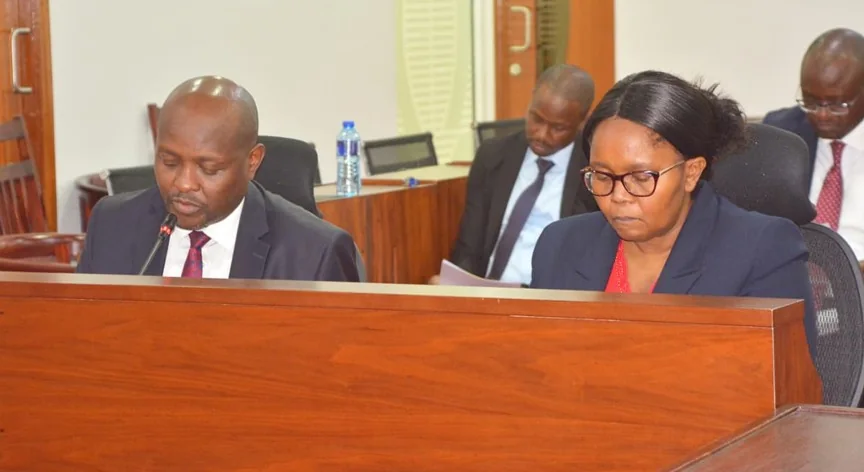
Members of the National Assembly will return for the second part of the Fifth Session on Tuesday, with priority expected to be given to electoral reforms proposed by the Independent Electoral and Boundaries Commission (IEBC). The Justice and Legal Affairs Committee is expected to table its report after reviewing the commission’s proposals.
The IEBC has urged Parliament to conclude all election-related legislation by August 31 to allow sufficient time for preparations for the General Election.
The proposed reforms are in line with the long-standing practice of finalising changes to election laws at least one year before a General Election, as recommended by the Kriegler Commission Report. A similar approach was adopted during the 11th Parliament, when electoral reforms passed in 2016 were enacted more than a year before the polls.
Among the proposals before lawmakers is the repeal of Section 20 on breaches of the Electoral Code of Conduct. The IEBC also wants the responsibility for handling election offences to become an exclusive function of the commission, instead of the Office of the Director of Public Prosecutions.
The Justice and Legal Affairs Committee has also been reviewing a proposal to amend Clause 19 (8A) of the Elections Laws (Amendment) Bill. The amendment would require anyone seeking nomination to a county assembly through a political party to be a registered voter in that county.
Several other Bills are also lined up for consideration during the Fifth Session, including the Kenya Revenue Authority (Amendment) Bill, 2026, the Strategic Goods Control Bill, 2026, and the County Governments Election Laws (Amendment) Bill (Senate Bill No. 2 of 2024).
The Kenya Revenue Authority (Amendment) Bill, 2026 seeks to strengthen tax administration, improve operational efficiency and enhance revenue collection by amending the Kenya Revenue Authority Act.
The Strategic Goods Control Bill, 2026, seeks to establish a legal framework for regulating, controlling and monitoring strategic goods, technology and related services to help Kenya meet its international non-proliferation and security obligations.
The County Governments Election Laws (Amendment) Bill (Senate Bill No. 2 of 2024) seeks to amend the Elections Act and the County Governments Act to provide for the nomination of members to county assemblies representing marginalised groups.
With only 13 months remaining before the General Election, the House is working against time to pass key legislation before lawmakers leave to campaign.
To meet that deadline, House leadership has resolved to prioritise budget-related legislation, electoral laws and constitutional amendment Bills that have a direct bearing on the elections.
Parliament must also consider and approve the debt management strategy, budget estimates and key financial legislation, including the Division of Revenue Bill, the County Allocation of Revenue Bill, the Appropriation Bill, the Supplementary Appropriation Bill and the Finance Bill.
Lawmakers are expected to work within constitutional and legal timelines to complete the budget cycle for the next financial year, with the allocations also expected to provide the resources required by the IEBC to conduct the General Election.
The 13th Parliament is expected to adjourn sine die after completing its legislative business ahead of the General Election.
The decision to focus only on critical legislation follows lessons from previous Parliaments, particularly the 10th Parliament, when some lawmakers lost their seats after remaining in Nairobi to complete parliamentary business while their opponents campaigned in their constituencies.
Speaking during this year’s National Assembly legislative retreat in Naivasha, Clerk of the National Assembly Samuel Njoroge said the House intends to release members early by limiting its agenda to essential legislative business.
“By mid-June, around June 18, we plan for a ‘sine die’ recess so that members are able to go out and campaign. We learnt from the lessons of the 10th Parliament that when we hold members back to do parliamentary business while your competitors are on the ground, we disadvantage you,” Njoroge said.
Meanwhile, the Constitution of Kenya (Amendment) Bill, 2025, is awaiting consideration by the Senate after it was passed by the National Assembly in July last year.
The Bill seeks to entrench the National Government Constituencies Development Fund, the Senate Oversight Fund and the National Government Affirmative Action Fund in the Constitution.
The proposed law aims to address long-standing challenges affecting the implementation of the three funds. It is also expected to support continued access to key national government services while strengthening affirmative action measures.

































Comments
Sign in with Google to comment, reply, and like comments.
Continue with Google