Presidential candidates in the 2027 General Election could spend a maximum of Sh4.435 billion if Parliament approves new campaign financing regulations proposed by the Independent Electoral and Boundaries Commission (IEBC), with the proposals also setting expenditure limits for political parties and candidates contesting other elective positions.
The draft regulations seek to regulate campaign financing across all elective positions by introducing spending ceilings based on factors such as population, geographical size and the cost of reaching voters in different electoral areas.
Under the proposed rules, political parties participating in the 2027 General Election would have an overall spending limit of about Sh17.7 billion. The amount includes Sh5.6 billion for ward campaigns, Sh5.2 billion for constituency campaigns and Sh2.44 billion for county campaigns.
The commission has identified transportation, media advertising and branding, campaign materials and payments to agents among the expenses that will be allowed during the campaign period.
IEBC said the proposed limits were developed after assessing the cost of running campaigns at different elective levels while considering the varying conditions across electoral areas.
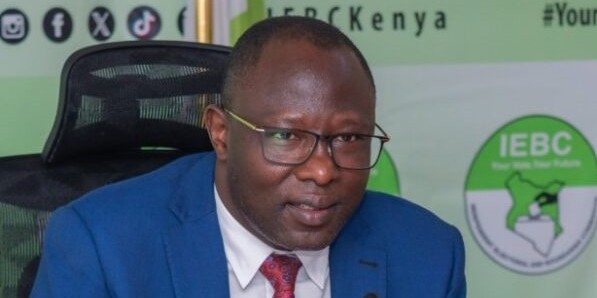
IEBC Chairperson Erastus Ethekon said the commission used a model that estimates average campaign costs while factoring in the minimum fixed expenses required by candidates seeking elective positions.
“The proposed regulations aim to strengthen accountability in the management of campaign funds by candidates and political parties,” Ethekon said in a public notice.
The commission said the presidential spending limit was arrived at after considering two approaches. The first involved calculating all allowable costs linked to a presidential campaign to determine the total average cost, while the second considered the average cost of campaigns at lower electoral levels, including wards, constituencies and counties.
“The commission adopted the second approach, due to the availability of average cost at the lower electoral levels,” Ethekon said.
IEBC calculations show the presidential limit was estimated using campaign costs across the 47 counties, constituencies and wards, resulting in an average spending limit of Sh4.435 billion.
The proposed limits also vary for gubernatorial, senatorial and women's representative candidates depending on the size and population of electoral areas.
Candidates seeking the three county positions in Turkana County would have the highest proposed campaign spending limit of Sh123 million. Higher ceilings have also been proposed for candidates in Nairobi, Marsabit and Wajir because of their large geographical areas.
North Horr Constituency in Marsabit County has a proposed spending limit of Sh94 million.
On the other hand, candidates in constituencies with smaller geographical coverage, including Tetu in Nyeri County, Kilgoris in Narok County and Kibra in Nairobi County, would have expenditure limits of below Sh25 million.
For constituency seats, candidates would be allowed to spend between Sh17.5 million and Sh123 million, depending on the size and population of the constituency, while ward candidates would have limits ranging from Sh2.5 million to Sh20 million.
The commission said the differentiated limits are meant to reflect the varying costs involved in reaching voters across the country.
The latest proposal marks the second attempt by IEBC to regulate election campaign spending after its first effort in 2016 failed.
The commission’s Gazette notice on election spending limits was suspended by the National Assembly after Parliament amended the Election Campaign Financing Act and delayed implementation until after the 2017 General Election.
Article 88(4)(i) of the Constitution gives IEBC the mandate to regulate the amount of money spent by or on behalf of a candidate or political party during elections.
The Election Campaign Financing Act, 2013, also allows the commission to regulate campaign funding during elections and referenda and set financial limits.
In 2016, IEBC proposed a campaign spending limit of Sh5.2 billion for presidential candidates in the 2017 General Election and Sh15.03 billion for political parties.
The commission also proposed that donations from a single source to a political party should not exceed 20 per cent of the party’s total contribution limit, which was about Sh3.006 billion.
At the time, candidates seeking governor, senator and women's representative seats had a proposed maximum campaign expenditure limit of Sh432 million, while parliamentary candidates in highly populated constituencies were capped at Sh33 million. Ward candidates in areas with high populations were limited to Sh10.3 million.
The new draft regulations also introduce rules on campaign contributions, financial disclosures, monitoring and record-keeping.
IEBC said sections of the Election Campaign Financing Act give it powers to set rules on expenditure limits and financial regulations during the campaign and election period.
Section 12 of the Act requires the commission to prescribe limits on total contributions, contributions from a single source, paid-up media coverage and loans forming part of campaign contributions at least 12 months before a General Election.
Section 19 requires IEBC to identify authorised campaign expenses, including costs of campaign venues, publicity materials, advertisements, campaign personnel, transportation and other justifiable expenses.
The commission has given Kenyans until the close of business on July 15 to submit their views on the proposed regulations.
IEBC said public participation will help shape a framework that promotes fair competition among candidates while improving transparency in campaign financing.














Comments
Sign in with Google to comment, reply, and like comments.
Continue with Google