Sudan, South Sudan, the Democratic Republic of Congo (DRC) and Nigeria are among the ten countries driving the world’s worst hunger crisis, as 266 million people faced acute food insecurity in 2025, a new global report has shown.
The report, released on Friday by UN agencies, the European Union and other partners, shows that hunger has become more widespread and more persistent, affecting 47 countries in total.
The 2026 Global Report on Food Crisis adds that 266 million people struggled to access enough food in 2025, a figure that is nearly double the level recorded in 2016.
According to the report, while the main driver of the crisis is conflict, which is responsible for more than half of all severe hunger cases, economic pressure, climate shocks and displacement are making the situation harder to recover from once it begins.
“Acute food insecurity today is not just widespread – it is also persistent and recurring,” said UN Food and Agriculture Organisation (FAO) Director-General Qu Dongyu, warning that the crisis has become structural rather than temporary.
Alongside the aforesaid African nations, the ten most affected countries also include Afghanistan, Bangladesh, Myanmar, Pakistan, Syria and Yemen. Together, they account for about two-thirds of all people facing high levels of acute hunger.
According to the report, the ongoing conflict in Sudan has pushed parts of the country into famine, with entire communities cut off from food supplies and humanitarian access, leaving survival dependent on irregular aid deliveries that often cannot reach those most in need.
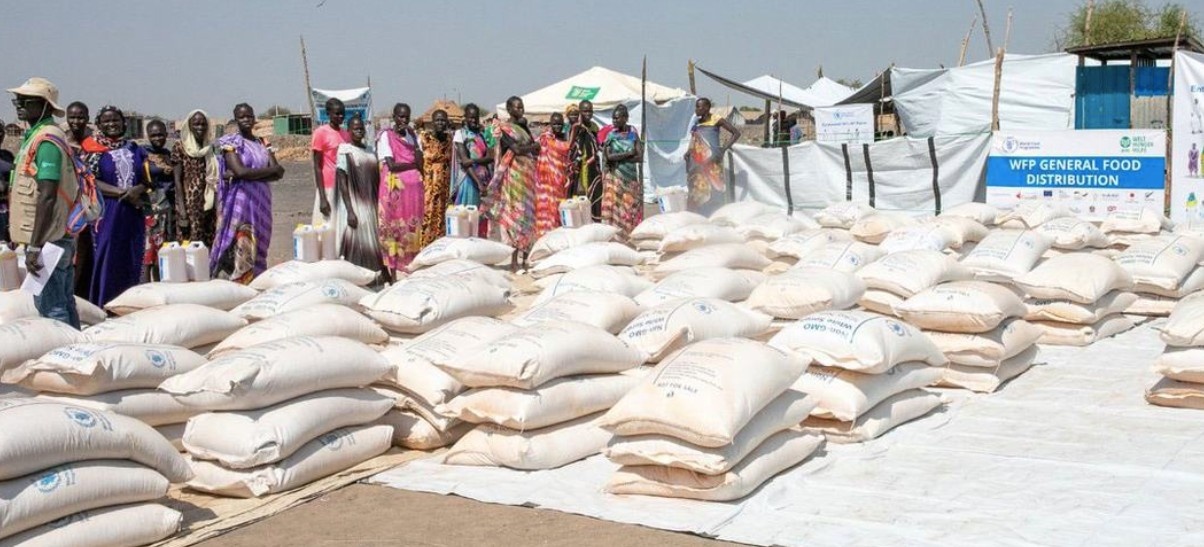
Similarly, South Sudan continues to face a deeply fragile food situation, where years of conflict, flooding, and economic pressure have left millions dependent on food assistance
“In 2025, Afghanistan, South Sudan, the Sudan and Yemen ranked among the largest food crises globally, in both relative and absolute terms,” the report reads.
The report also shows that repeated cycles of violence in the east of the DRC have forced families to flee multiple times, with each wave of displacement stripping them of farmland, income and stability, deepening long-term dependence on emergency food aid.
Similarly, insecurity in the north of Nigeria, combined with rising food prices, is making it increasingly difficult for families to afford basic meals, creating pressure that continues to spread across vulnerable communities.
Across all affected countries, the report says 39 million people were in emergency levels of hunger in 2025, meaning they are just one step away from famine conditions, while the most severe levels of hunger have also risen sharply compared to 2016.
Children remain among the most affected, with the report estimating that 35.5 million were acutely malnourished last year, including nearly 10 million suffering from severe wasting, a condition that leaves them extremely vulnerable to disease and death even from common infections.
“More than 80 per cent of people facing high levels of acute food insecurity lived in protracted crisis contexts (33 countries/territories), where recurrent shocks and structural vulnerabilities continue to drive persistent food insecurity,” the report reads.
According to the agencies, without a shift in approach, the world risks becoming locked into a cycle of deepening crises, with hunger no longer a temporary emergency but an increasingly persistent feature of global instability.













































Comments
Sign in with Google to comment, reply, and like comments.
Continue with Google