Group C took a decisive turn at the 2026 FIFA World Cup on Friday as Morocco edged Scotland 1-0 in Boston before Brazil responded in style with a 3-0 victory over Haiti in Philadelphia, leaving the section delicately poised heading into the final round of matches.
Morocco’s win, powered by another early moment of brilliance from Ismael Saibari, briefly sent the Atlas Lions to the top of the standings and underlined their growing authority in the group. But Brazil later matched them on four points after finally clicking into gear against Haiti, with Matheus Cunha producing the cutting edge Carlo Ancelotti’s side had badly lacked in their opening draw.
By the end of the day, Brazil sat top of Group C on goal difference, Morocco were level on points in second, Scotland remained in the hunt on three points, and Haiti became the first side in the group to be eliminated.
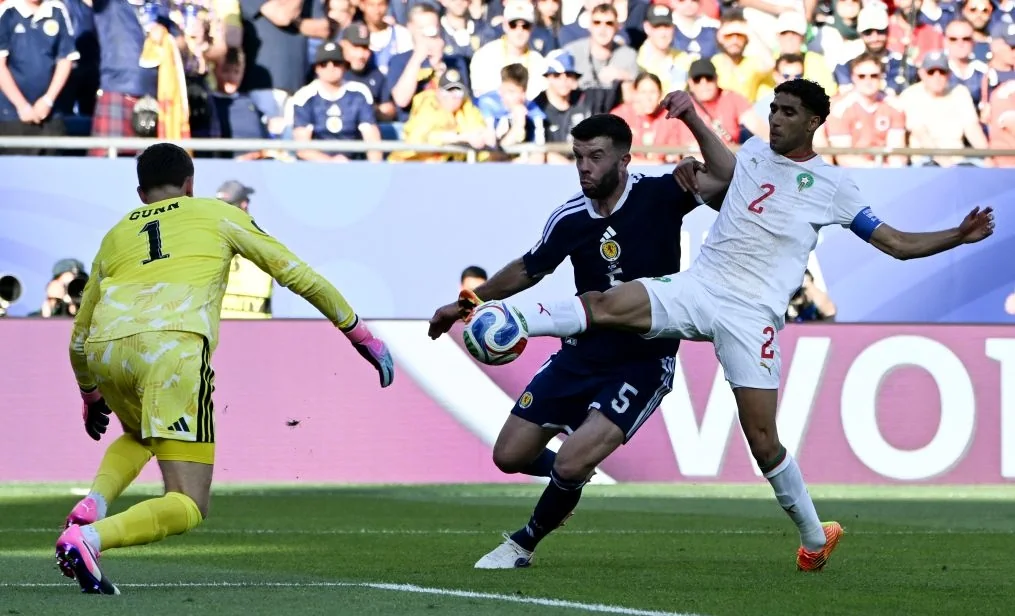
Morocco set the tone early in Boston, needing just over a minute to break Scotland’s resistance. Brahim Diaz spotted Ismael Saibari’s clever run behind the defence and floated a measured pass over the top. Saibari did the rest, racing through before hammering a finish beyond Angus Gunn and into the roof of the net to hand the North Africans a dream start.
The goal, timed at 72 seconds, was not only the fastest of the tournament so far but also continued Saibari’s fine form after his strike in Morocco’s opening draw against Brazil. It was another reminder of the attacking threat and composure Morocco carries in transition, particularly when Brahim and Saibari combine in space.
That early breakthrough allowed Morocco to settle into the contest and dictate long spells of possession, with Scotland struggling to recover from their sluggish start. The Atlas Lions looked the more composed side throughout much of the opening half, controlling territory and forcing Scotland to chase shadows for periods, even if clear openings were limited after the goal.
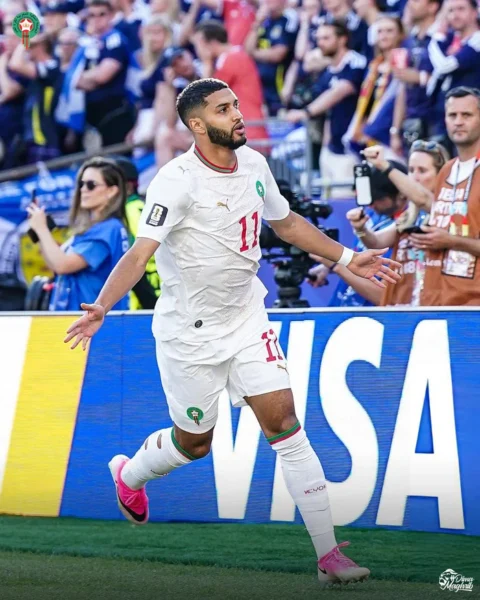 Morocco's Ismael Saibari. (Photo: Morocco/X)
Scotland’s best chance before the interval arrived in stoppage time when Andy Robertson delivered a teasing cross towards John McGinn at the back post, but the midfielder could not stretch far enough to turn the ball home. It was a warning to Morocco that the contest was far from over, though the African side remained the more polished of the two.
After the restart, Morocco continued to threaten a second goal that would have put the game beyond Steve Clarke’s men. Saibari almost had it when Bilal El Khannouss drove forward and slipped a dangerous ball into the area, with the PSV midfielder’s effort taking a touch and crashing against the bar. Moments later, El Khannouss himself went close at the near post from an Achraf Hakimi corner, only for Gunn to produce a sharp save to keep Scotland alive.
Despite Morocco’s control, Scotland gradually grew into the final quarter of the match and finished strongly. John McGinn, Ben Doak and Scott McTominay all tried to drag the Tartan Army level as the pressure finally shifted toward the Moroccan half. McTominay had a penalty appeal waved away after going down under a challenge inside the area, while substitute Lyndon Dykes added physical presence in the closing stages as Scotland threw bodies forward in search of an equaliser.
But Morocco stood firm. Their back line, well marshalled under late pressure, held off the Scottish surge to secure a result that could prove vital in the race for a place in the round of 32. The win moved the Atlas Lions onto four points from two matches and left them well placed heading into their final group fixture against Haiti.
If Morocco’s triumph was built on early incision and control, Brazil’s later victory over Haiti was a story of long-awaited fluency and Matheus Cunha’s ruthlessness in front of goal.
Under pressure to respond after an underwhelming 1-1 draw with Morocco in their opener, Brazil were far sharper from the outset in Philadelphia. Ancelotti handed Cunha a start, and the Manchester United forward repaid that faith with a first-half double that effectively settled the contest before the break.
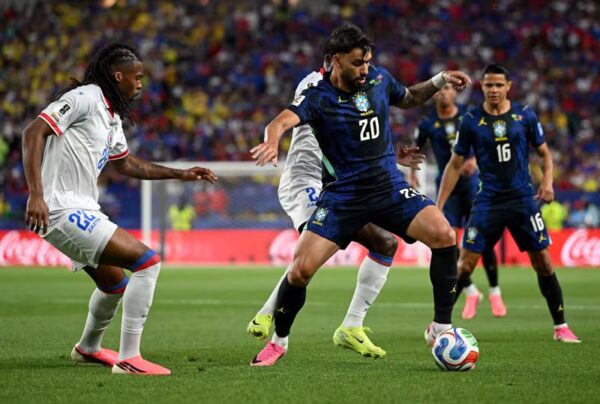 Brazil exploited Haiti clinically. (Photo: FIFA)
Brazil thought they had made the perfect start when Raphinha found the net early on, only for the effort to be ruled out for offside. But the warning signs for Haiti were clear. Vinicius Junior, lively throughout, was causing constant problems down the left and in the half-spaces, while Brazil’s midfield began to find the tempo that had been missing in their opening match.
The breakthrough came in the 23rd minute. Vinicius drove at the Haitian defence and forced goalkeeper Johny Placide into a save, but the rebound fell kindly for Cunha, who reacted quickest to stab home his first World Cup goal and put Brazil in front.
That goal lifted the Selecao. With Haiti now forced to step out a little more, spaces began to open, and Brazil exploited them clinically. Cunha doubled the lead in the 36th minute after Vinicius slipped a perfectly weighted pass into his path. The forward took it in stride and rifled a powerful left-footed finish high into the net, giving Placide no chance and giving Brazil the control they craved.
Haiti, appearing at the World Cup for the first time since 1974, had shown admirable resilience in their narrow defeat to Scotland in the opening round, but here they were increasingly stretched by Brazil’s movement and technical quality. The Caribbean side battled gamely and tried to remain compact, yet they struggled to contain Vinicius and Cunha once Brazil found their rhythm.
The third goal arrived in first-half stoppage time and effectively ended the contest as a competitive affair. Vinicius, already instrumental in the first two goals, added his own name to the scoresheet with a composed finish to cap a slick Brazilian move and send the five-time champions into the dressing room with a commanding 3-0 lead.
That should have been the cue for Brazil to chase an even heavier win, especially with goal difference potentially crucial in a tight group, but the second half never reached the same intensity. Haiti switched shape and competed with greater freedom after the interval, while Brazil eased off considerably, controlling possession without the same urgency or incision that had marked their first-half display.
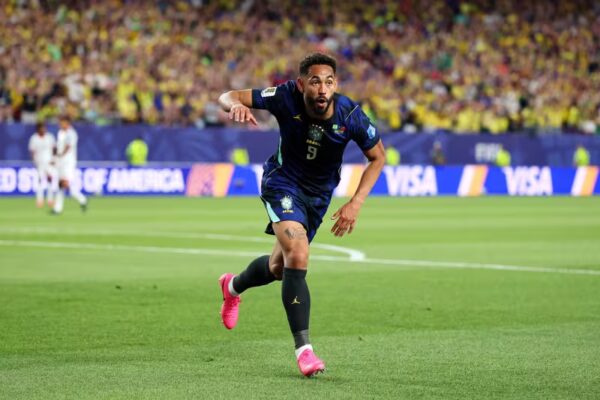 Brazil's Matheus Cuhna. (Photo: FIFA)
Ancelotti’s men still looked comfortable and never seemed in danger of surrendering their advantage, but they also passed up the chance to put the result beyond all mathematical debate in the standings. Haiti, to their credit, showed more adventure after the break and prevented the scoreline from growing uglier, though they lacked the quality to truly test Alisson.
There was also a concern for Brazil after Raphinha was forced off injured in the first half, a setback the South Americans will hope is not serious with a decisive clash against Scotland still to come.
Still, the result was exactly what Brazil required. After a flat opening performance against Morocco, this was a more convincing showing in front of goal, with Cunha taking centre stage and Vinicius again proving decisive. Brazil’s front line looked sharper, more direct and far more dangerous whenever it accelerated, and those improvements were enough to carry them to their first win of the tournament.
The consequences of Friday’s results are significant. Haiti, after back-to-back defeats, are out of contention. Scotland, despite their loss to Morocco, remain alive on three points and will know a result against Brazil could yet take them through. Morocco has put itself in a strong position but still needs to finish the job against Haiti, while Brazil now hold a slender edge at the top of the group and can seal their passage when they face Scotland in the final round.
For Morocco, Saibari’s emergence as one of the early stars of the tournament has provided fresh belief that their run to the semi-finals in Qatar was no one-off. For Brazil, Cunha’s timely intervention may have solved one of Ancelotti’s early selection dilemmas. And with Scotland still capable of upsetting the order, Group C remains one of the most finely balanced sections at this World Cup.




































Comments
Sign in with Google to comment, reply, and like comments.
Continue with Google