World Bank warns limited role in global standards holding back developing nations
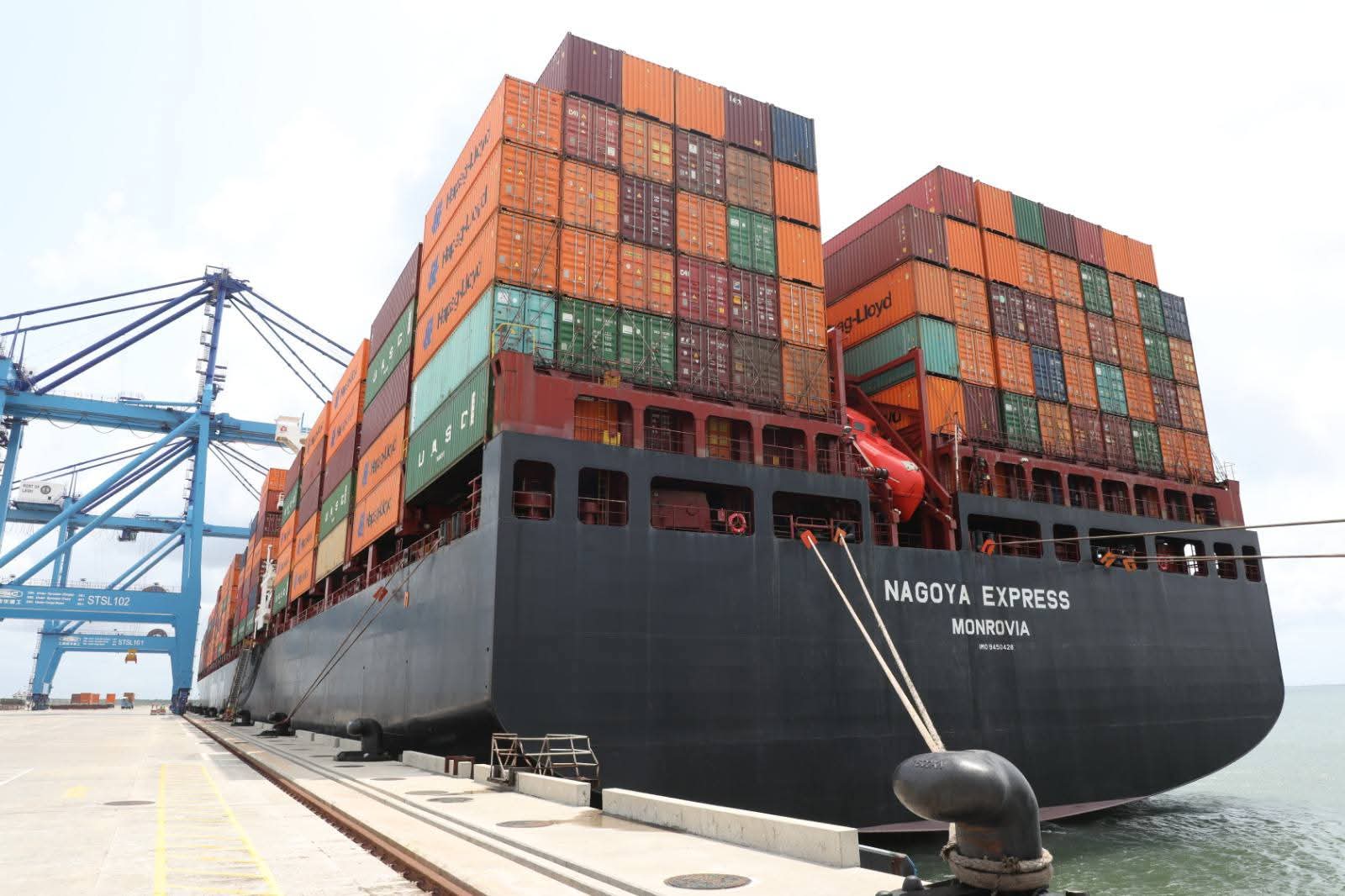
Compliance with these standards is essential not only for export growth but also for technology diffusion, environmental protection and resilient public services.
Developing countries are being left behind in shaping global standards, a scenario that threatens their priorities for growth, the World Bank has said.
According to the World Bank, while standards are critical in driving trade, innovation, health, and governance, lower-income nations are often absent from the processes that determine them.
More To Read
- Africa’s imports surge as East Asia leads exports in global trade expansion - report
- World Bank warns political interference weakening Kenya’s state-owned enterprises
- WHO calls for urgent action to achieve universal health coverage by 2030
- African countries take lead in push toward universal health coverage for 1.5 billion people by 2030
- Developing countries’ debt servicing cost hit 50 year high on high interest
- Ruto backs IMF partnership as key to Kenya’s debt, economic reforms
“On average, they sit on less than one-third of the technical committees that determine global standards at the International Organisation for Standardisation (ISO),” the lender says in its standards for development report.
This absence effectively forces them to adopt the priorities of developed economies, which are not suitable for their interests.
“Absence amounts to acquiescing to the priorities of advanced economies. When lower-income countries do not participate, they relinquish vital opportunities to advance their priorities. They forgo crucial options to speed up job creation and economic growth.”
The lender pegs their minimal participation on the lack of resources and expertise.
Standards, developed since the turn of the century, among other nontariff measures, are central to modern commerce and governance.
The World Bank classifies standards into three categories: measurement standards, which ensure accuracy; compatibility standards, which enable interoperability; and quality standards, which define acceptable performance.
Across governance, health, environment, and the economy, adherence to these standards has proven to improve efficiency, transparency and outcomes.
In governance, standards provide the hidden wiring of effective states.
Globally, the World Bank says the uneven application of governance standards, including merit-based recruitment, continues to impede administrative efficiency.
Environmental standards, meanwhile, are key to sustainable development, but the World Bank says it must balance ambition with affordability.
Standards are also essential in health and education. Quality standards in these sectors prevent wastage of investments and improve outcomes.
For instance, high-quality early childhood interventions yield long-term returns, while health standards can prevent avoidable deaths in low- and middle-income countries.
By codifying service delivery and staff requirements, standards lock in gains that boost human capital.
Overall, adopting standards in an economy promotes growth but is constrained by costs and weak quality infrastructure.
The lender estimates certification costs up to $425,000 (Sh54.8 million) per firm in developing countries, and shortages of auditors and testing facilities hinder compliance.
It, thus, emphasises that standards are most effective when implemented with a realistic approach, calling on Low- and middle-income countries to first adapt international standards to local conditions, gradually align with them, and eventually participate in authoring standards themselves.
“Standards can help break the vicious circle of low quality created by low demand, weak institutions, and limited compliance capacity.”
Notably, global appetite for standards has surged, now affecting 90 per cent of global trade, up from 15 per cent in the late 1990s.
More than half of the 20,000 standards issued over the last seven decades by ISO have been created since 2000, according to the report.
In 2024 alone, key global standard-setting bodies issued more than 7,000 standards.
Top Stories Today