A week-long standoff between the National Assembly and the Senate over county funding ended on Tuesday after the Mediation Committee on the Division of Revenue Bill, 2026, agreed on an equitable share allocation of Sh428 billion for counties and restored a clause aimed at protecting the funds from cuts caused by revenue shortfalls.
The breakthrough followed seven rounds of negotiations involving members of both Houses of Parliament and consultations with the National Treasury, bringing an end to tense discussions that had threatened to delay the passage of key legislation guiding revenue sharing between the national government and the 47 counties.
The agreement also reinstated Clause 5 of the Bill, which is meant to shield county allocations from arbitrary reductions in the event of national revenue underperformance, a move legislators said was critical to ensure predictable funding for devolved units.
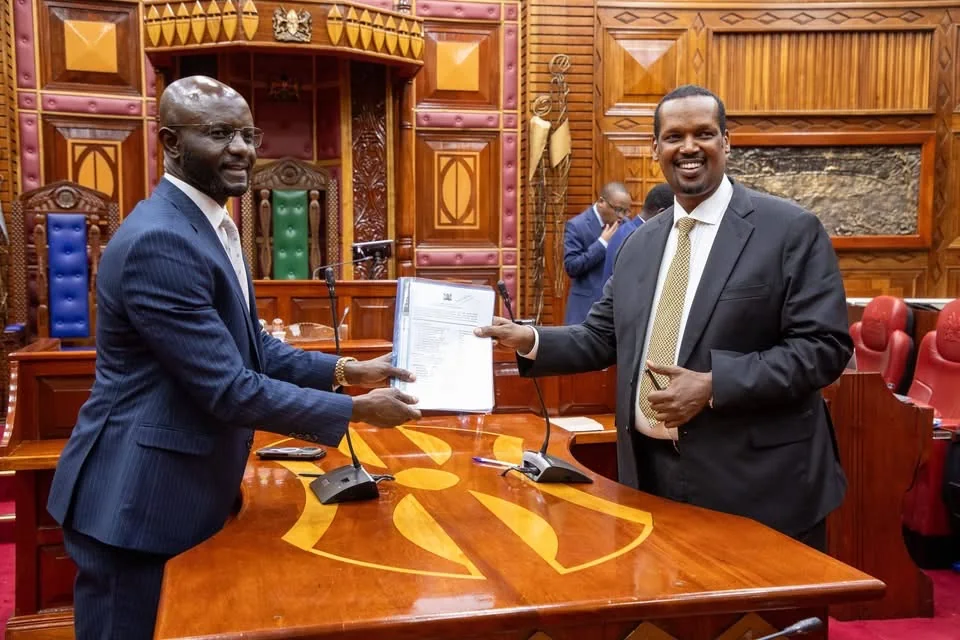
Announcing the outcome, co-chairperson of the Mediation Committee and chairperson of the National Assembly Budget and Appropriations Committee, Samuel Atandi, confirmed that Sh428 billion would be the final figure.
“The Sh428 billion is the very best we can offer on the table. Even if we adjourned, nothing much would change after that break... We have justified our numbers, and we cannot increase fiscal space any further. I plead that you take the money, shake hands and sign off on the mediated version of the Division of Revenue Bill, 2026,” Atandi said.
He maintained that the National Assembly had already stretched available fiscal space and urged senators to accept the compromise and conclude the mediation process.
“After consultations, we have been able to create room for Sh2 billion, bringing the total shareable revenue to counties to Sh428 billion,” Samburu West MP Naisula Lesuuda said.
According to the committee, the additional Sh2 billion was identified after a brief consultation with the National Treasury and technical experts from the Parliamentary Budget Office, who pointed to areas within recurrent expenditure that could be adjusted without affecting ongoing development projects.
Atandi said development funding was left untouched due to ongoing critical projects across the country. “We did not touch the development vote because there are very critical projects that are ongoing and must be funded.”
He added that the National Assembly was unwilling to increase the figure further, even suggesting that the mediation process could collapse if no agreement was reached.
“This is our very best. If the Senate can’t take it, then I will be happy if this mediation process collapses. I am very happy for this process to stall. I plead with senators to take this offer as the final allocation to counties,” he said.
During the negotiations, tensions emerged over the gap between the Senate and National Assembly positions, with the Senate pushing for Sh440 billion while the National Assembly initially proposed Sh425 billion before settling on the final Sh428 billion.
Senate representatives urged for more flexibility, with co-chairperson Ali Roba asking for a middle ground. “Is there any chance that the National Assembly can come and meet us halfway?” Ali posed.
He said the mediation process had been difficult but necessary, describing it as part of efforts to balance competing national interests.
“Political mediation is about getting the best possible outcome from the least favourable circumstances. Our colleagues have demonstrated that what we have reached is like milking a stone. We may not have achieved the ideal outcome, but we have made progress,” he said.
“It has been a very difficult but cordial engagement with the objective of pushing the country forward. Mediation happens in one of the most difficult settings. We need to finish processing the Division of Revenue Bill so that we can process the County Allocation of Revenue Bill and get the disbursement schedule on time to unlock funds for counties.”
Some senators pushed for a slightly higher figure, with Narok Senator Ledama Ole Kina suggesting a compromise of Sh430 billion and indicating willingness to take personal pay cuts to support additional funding for counties.
“I am ready to take a pay cut if it will help secure the additional Sh4 billion for counties,” Ole Kina said. “It is true that mediation is about achieving a compromise. But I find it difficult to agree because our role is to protect the interests of counties.”
He welcomed the inclusion of Clause 5, noting it would strengthen safeguards for county funds, while also calling for stricter oversight in line with constitutional provisions.
“Let’s take this Sh428 billion. I am happy that we have agreed on Clause 5,” he said.
Other members of the committee supported the compromise, saying it balanced national and county needs.
Senator Eddy Oketch praised the negotiations but emphasised accountability at the county level.
“I want to applaud the National Assembly for pushing us on accountability. As much as we are fighting for funds to counties, we as the Senate need to hold county governors to account and prevent misappropriation,” Oketch said.
Senator Mohammed Faki said the deal would stabilise county operations but expressed hope that other pending allocations would also be addressed.
“This afternoon we have agreed on Sh428 billion, but we hope to receive conditional allocations and the deficit of the Equalisation Fund to ensure counties remain running,” he said.
The Division of Revenue Bill, 2026, outlines how nationally raised revenue is shared between the national government and county governments. The dispute arose after the National Assembly approved Sh420 billion for counties, while the Senate amended the Bill and increased the figure to Sh454.7 billion, leading to the formation of the Mediation Committee.
The Commission on Revenue Allocation had earlier proposed Sh459 billion for counties in the 2026/27 financial year.
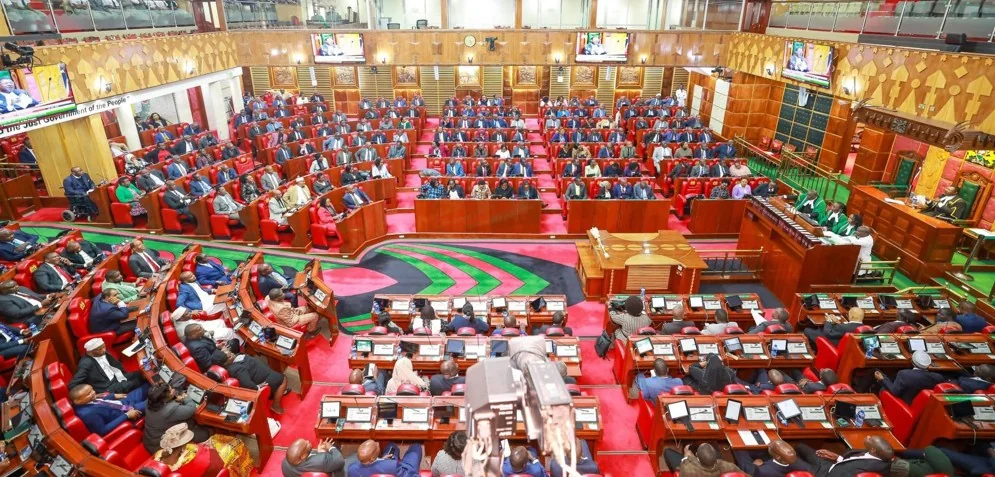
Following the agreement, the National Assembly Budget and Appropriations Committee and the Senate Finance and Budget Committee will table their reports in their respective Houses for consideration.
Under the Constitution, counties are entitled to at least 15 per cent of nationally raised revenue based on the most recent audited accounts approved by Parliament.


















Comments
Sign in with Google to comment, reply, and like comments.
Continue with Google