An internal government review has found that Kenya remains vulnerable to an Ebola outbreak due to major gaps in patient care, isolation facilities, emergency funding and response logistics, despite making significant progress in disease surveillance.
The assessment, conducted by the Bundibugyo Virus Disease Incident Management System under the Ministry of Health's Kenya National Public Health Institute, found that while the country has strengthened surveillance, contact tracing and laboratory testing, it still lacks the capacity to effectively manage and sustain a large-scale Ebola outbreak.
When the emergency response began in May, Kenya's overall preparedness for the Bundibugyo Virus Disease outbreak stood at 66 per cent.
Case management emerged as the weakest area, scoring just 36 per cent, highlighting serious shortcomings in the country's ability to care for Ebola patients. Infection prevention and control scored 25 per cent, logistics 49 per cent and preparedness at points of entry 60 per cent.
The assessment, however, recorded strong performance in several key areas. Contact tracing scored 100 per cent, rapid response teams 90 per cent and laboratory capacity 87 per cent. Public awareness, risk communication and safe and dignified burials each scored 75 per cent.
Despite these gains, the report said Kenya still has significant gaps in holding, temporary and permanent isolation facilities, noting that a comprehensive assessment of the country's isolation capacity is still underway.
It also identified shortages of personal protective equipment, testing kits and infection prevention supplies. In addition, emergency funding remains difficult to access at both the national and county levels, while some emergency operations centres lack adequate capacity.
The review further noted that delays in importing health products and technologies continue to hamper preparedness efforts.
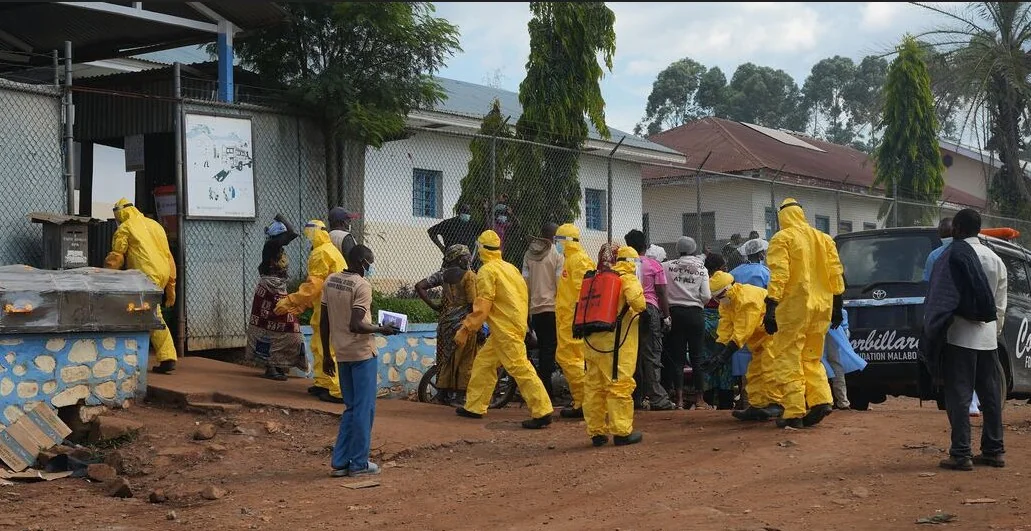
At key border crossings, including Malaba in Busia County, Lwakhakha in Bungoma County and Suam in Trans Nzoia County, poor internet connectivity has disrupted traveller screening. These border points are considered particularly vulnerable because they receive large numbers of travellers from Uganda, where confirmed Ebola cases have been reported.
The findings come as Kenya remains on high alert following outbreaks of the Bundibugyo strain of Ebola in the Democratic Republic of the Congo and Uganda.
According to the Ministry of Health's Emergency Preparedness and Response weekly situation report covering June 21 to June 28, Kenya remains at high risk of Ebola because of the ongoing outbreaks in neighbouring countries.
The report notes that the World Health Organisation declared the outbreak a Public Health Emergency of International Concern on May 16, while the Africa Centres for Disease Control and Prevention later classified it as a Public Health Emergency of Continental Security.
The outbreak has spread across 35 health zones in three provinces in the Democratic Republic of the Congo, with 28 health zones continuing to report active transmission.
As of June 28, the Democratic Republic of the Congo had recorded 1,328 confirmed cases, 379 deaths and 195 recoveries. A total of 9,968 contacts were under follow-up, with an 81.3 per cent contact follow-up rate. Uganda had reported 20 confirmed cases, 15 recoveries and two deaths, while France had confirmed one imported case.
The report said Kenya has classified 13 counties as very high risk, 12 as high risk and the remaining 22 as medium risk based on population movement and proximity to affected areas.
“Very High Risk: Counties sharing a border with Uganda and South Sudan or serving as international travel hubs (including Nairobi). High Risk: Counties with significant population movement through Points of Entry (land borders and airports). Medium Risk: Counties near high-risk counties with potential spillover due to cross-county interaction,” reads the report.
To strengthen preparedness, Kenya had investigated 119 Ebola alerts and tested 122 samples by July 7, all of which returned negative results.
The samples were collected from Nairobi, Uasin Gishu, Garissa, West Pokot, Bungoma, Kiambu, Busia, Kisumu, Nyeri, Nakuru, Kilifi, Mombasa, Nyamira, Wajir, Laikipia, Trans Nzoia and Kajiado.
Screening has also been introduced at 15 points of entry, where more than 199,000 travellers have been screened.
The government has assembled a standby response team comprising 343 personnel, including 102 veterans of the 2014–2016 West Africa Ebola outbreak, 51 graduates of the Field Epidemiology and Laboratory Training Program, 118 members of the Africa Volunteer Health Corps and 72 personnel trained in the Basic Public Health Emergency Management programme.
More than 3,161 healthcare workers at both national and county levels have also been briefed on Ebola response measures.
Moi Teaching and Referral Hospital has prepared a 20-bed isolation unit that can be expanded to 50 beds, while Kenyatta National Hospital has an eight-bed isolation unit for initial response.
Assessments of quarantine, holding and isolation facilities have also been completed in the country's 25 highest-risk counties.
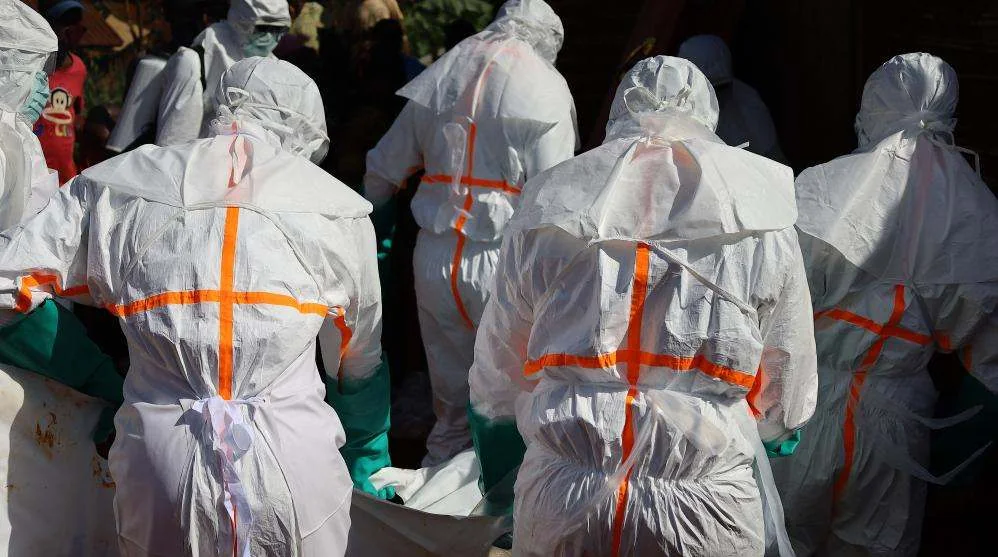
Personal protective equipment has been supplied to Kenyatta National Hospital, Busia County and Kakuma refugee camp, while response supplies have been delivered to 16 points of entry.
The report states that the World Health Organisation has supplied the Kenya National Public Health Institute with two Viral Haemorrhagic Fever diagnostic kits capable of testing up to 1,000 suspected Ebola cases. The kits were delivered to the National Public Health Laboratory Services.
The Ministry of Health and the World Health Organisation have also trained Ebola case management teams across the country.
Between June 23 and June 26, the WHO supported training for 37 clinicians and infection prevention officers from Nakuru and Makueni counties at Naivasha Sub-County Hospital.
Kenya now has 10 trained case management teams ready for deployment. These include two regional teams based in Nairobi and Eldoret, four county teams in Nairobi, Nakuru, Makueni and Busia, and four hospital-based teams at Kenyatta University Teaching, Referral and Research Hospital, Kenyatta National Hospital, Moi Teaching and Referral Hospital and MP Shah Hospital.
An additional 80 healthcare workers have also been trained in case identification, triage and clinical case management.
The country has further prepared 241 surge personnel on standby, comprising 51 graduates of the Field Epidemiology and Laboratory Training Program, 118 members of the Association of Volunteers in Health Corps and 72 personnel trained in Basic Public Health Emergency Management, ready to support any Ebola response if needed.

































Comments
Sign in with Google to comment, reply, and like comments.
Continue with Google