For years, the sharp whistle, shouted destinations, and familiar calls for fare payments have been defining features of Nairobi's matatu culture.
But for John, a conductor on the Kangundo Road route, that familiar role is slowly disappearing from the city's public transport system.
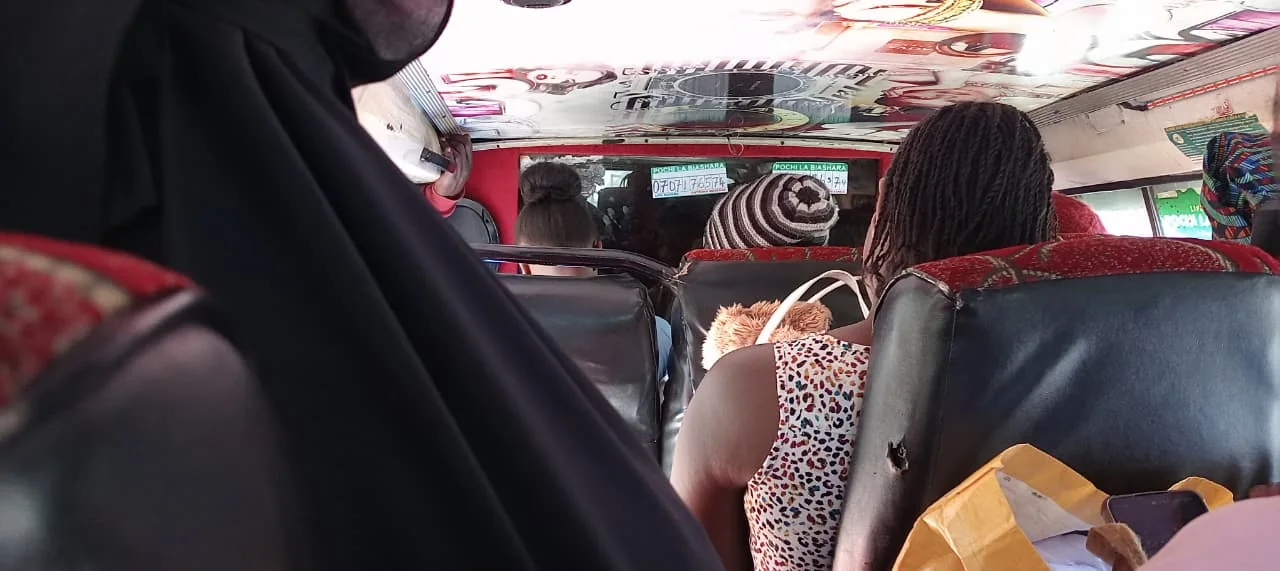
On a recent trip aboard a 14-seater matatu, John found himself in an unfamiliar situation.
Of all the passengers on board, only one paid the fare in cash. Everyone else used mobile money, leaving him with very little to do.
With a mix of humour and concern, John joked that he could soon be out of a job.
“I will be sacked just like my other fellows,” he said.
Behind the joke lay a genuine concern. The once indispensable role of the makanga—collecting fares, calling out destinations, assisting passengers and coordinating with drivers—is increasingly being replaced by digital payment systems and changing commuter habits.
John's experience is becoming increasingly common on several matatu routes across Nairobi, where passengers now prefer paying through mobile money platforms. As a result, conductors are increasingly reduced to little more than passenger guides.
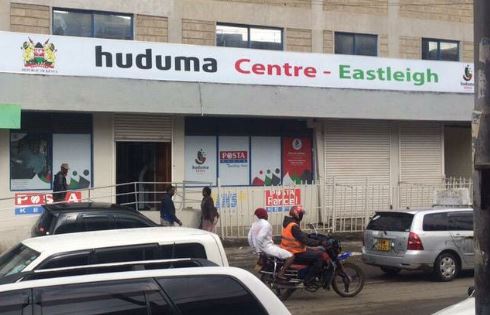
The shift is already evident along the busy CBD-Eastleigh route.
Many public service vehicles on the route no longer have conductors. Instead, drivers receive fares through mobile payment systems before the journey begins, while passengers simply inform the driver when they want to alight.
Wasike, a driver operating along the route, says the change has made conductors unnecessary in some vehicles.
“Nowadays most passengers know where they are going. They pay through M-Pesa, and when they want to alight, they tell the driver themselves,” he said.
Brian, another operator on the same route, agrees that technology has fundamentally changed how matatus operate.
“Before, you needed someone to collect money, organise passengers and communicate with the driver. But now most of these things can be done through technology,” he said.
The growing adoption of cashless payments comes at a time when Kenya's matatu sector remains one of the country's largest sources of informal employment.
According to the National Transport and Safety Authority (NTSA), Nairobi's urban transport system is dominated by privately owned matatus, with an estimated 11,000 to 40,000 vehicles operating in the city and transporting between 350,000 and 400,000 passengers every day.
If every matatu employed one conductor, the sector would support at least 10,000 direct conductor jobs in Nairobi alone.
The actual employment footprint is likely much larger when route operators, stage workers, mechanics, loaders and thousands of other informal workers who depend on the matatu economy are taken into account.
A complete transition away from conductors could therefore put tens of thousands of livelihoods at risk.
Nairobi has more than 133 active matatu routes, with operators organised mainly through Savings and credit cooperative organisations (saccos). The NTSA recognises hundreds of saccos operating within the city, underscoring the scale of the industry.
History and origins of the matatu
The word "matatu" originated from the Kikuyu phrase "mang'otore matatũ," meaning "thirty cents"—a reference to the standard fare charged when the vehicles became popular in the 1960s and 1970s.
The industry emerged in the years following independence as Kenya's rapidly growing urban population outpaced the capacity of formal public transport systems.
Entrepreneurs began converting pickup trucks and vans into passenger vehicles, filling transport gaps by serving routes that government-operated buses could not reach.
Over time, the sector evolved into a vast informal economy that supports not only vehicle owners and drivers but also conductors, commonly known as makangas, mechanics, route controllers and thousands of other workers around stages and terminals.
Although matatus have long faced criticism over reckless driving, overcrowding and weak regulation, they remain a vital part of Kenya's transport network because of their affordability, flexibility and ability to connect commuters to areas underserved by formal public transport.
Today, however, the same industry that has provided livelihoods for generations is undergoing a major transformation as digital payments, automation and changing commuter habits continue to redefine the traditional role of the makanga.

































Comments
Sign in with Google to comment, reply, and like comments.
Continue with Google