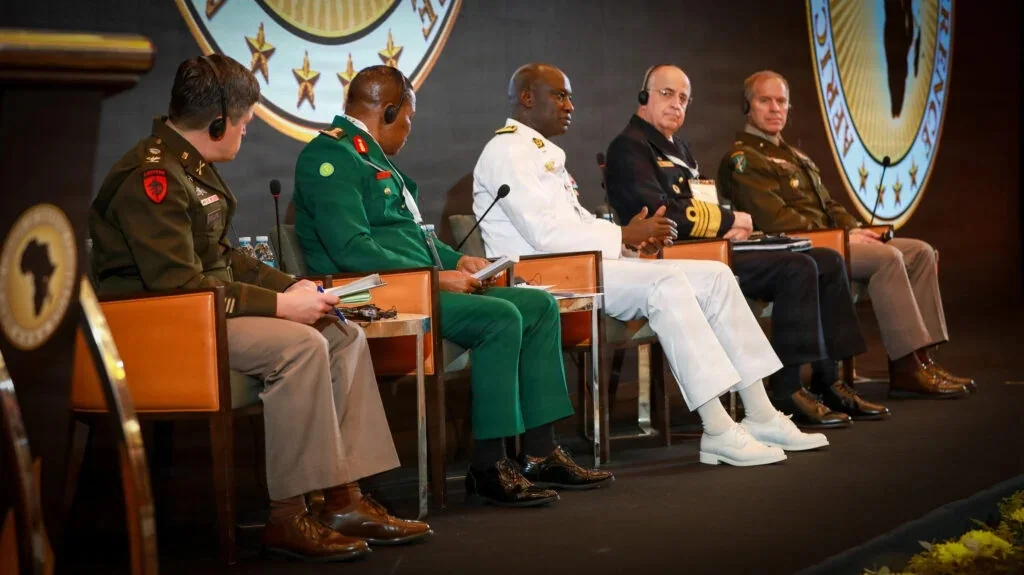
The African Chiefs of Defence Conference (ACHOD) 2026 has concluded in Luanda, Angola. Still, US Africa Command (AFRICOM) said the security priorities discussed during the summit will remain central to its engagement with African partners in the coming months and years.
Held from 1 July, the conference brought together African and US defence officials to discuss a range of regional security challenges. This year’s agenda placed new emphasis on the link between defence and economic development, exploring how partnerships, industry, and innovation can support security solutions both on and beyond the battlefield.
A new feature of this year’s conference was a dedicated discussion on defence economics, including an industry roundtable that brought together senior U.S. officials and African and American private-sector leaders to address barriers to defence-industrial cooperation.
“For the first time at ACHOD, we hosted an entire engagement dedicated specifically to innovation and defence economics,” said Levi Alexis of AFRICOM’s Office of Defence Economics, adding that the forum connected decision-makers and industry partners to explore solutions to Africa’s security challenges while creating economic opportunities.
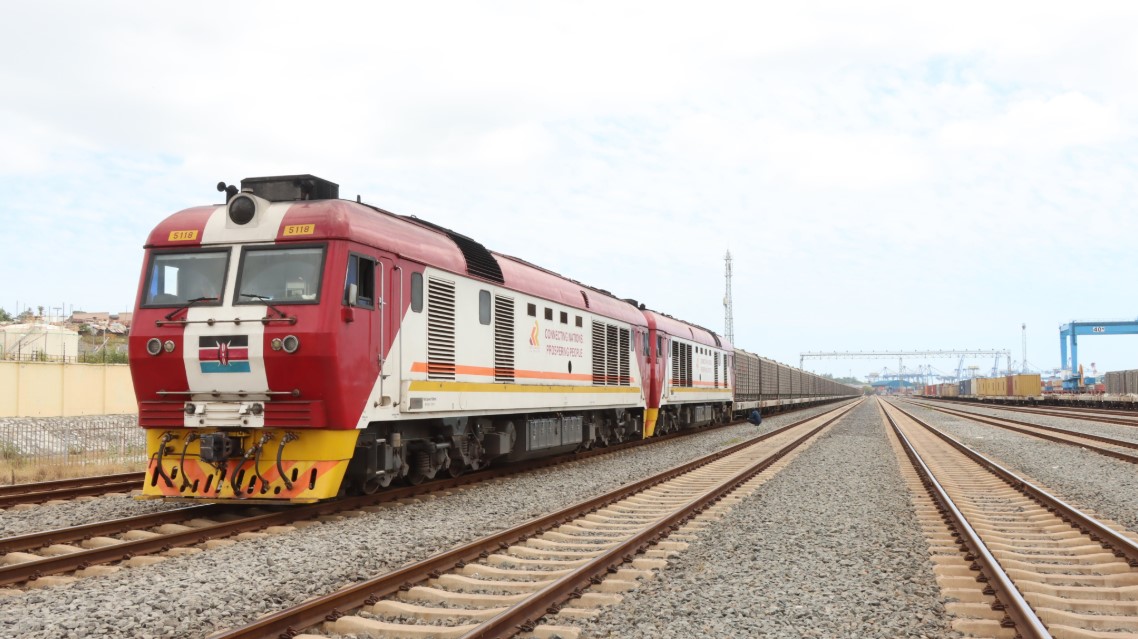
Participants identified capital risk, bureaucratic hurdles, limited defence budgets, and competition as key obstacles, while highlighting the US-backed Lobito Corridor railway linking Angola and the Democratic Republic of the Congo as a model for combining infrastructure investment with regional stability.
Speaking during the conference, Mark Mitchell, Deputy Assistant Secretary for the Office of Middle East and Africa Global Markets, said digital transformation, energy, critical minerals, and manufacturing “go hand in hand” in creating sustainable economic opportunities.
A separate innovation forum focused on partnerships between militaries and civilian technology firms, particularly in drone technology and building domestic defence industries.
“It is clear that Africa can’t keep relying on imported security architecture to defend itself against terrorism and insurgency but must develop a pan-African defence industrial base to bring lasting peace,” said Nathan Nwachuku, CEO of African drone manufacturer Terra Haptix.
Concluding the conference, AFRICOM Commander Gen. Dagvin Anderson said the discussions extended beyond military cooperation.
“These forums were not just focused on security; they sought to see how we enable African partners to find innovative solutions that work for them, and the key interaction between security and industry,” Anderson said, adding that the objective is to build “economic opportunity that creates lasting stability” across the continent.
AFRICOM had signalled a growing focus on connecting security partnerships with economic investment across Africa, as Washington seeks to address emerging threats while promoting stability and development.
In February, AFRICOM Commander Gen. Dagvin R.M. Anderson said the US was working to align security cooperation with economic opportunities during engagements in Ethiopia, Kenya, and Djibouti.
Speaking during a digital briefing, Anderson said his joint visit to East Africa with US Deputy Secretary of State Christopher Landau focused on counterterrorism, regional security, and the relationship between peace and economic growth.
During his visit to Ethiopia, Anderson attended the Black Lion Air Show, marking the 90th anniversary of the Ethiopian Air Force, highlighting decades of US-Ethiopia security cooperation.
He pointed to early US support in establishing the Ethiopian Air Force and later links to the development of Ethiopian Airlines as an example of how security partnerships can contribute to economic growth.
“This confluence of economics and security is not new for us, but it’s something we are beginning to explore more deliberately,” Anderson said.
In Kenya, Anderson visited Manda Bay in Lamu County for the groundbreaking of a jointly funded US-Kenya runway project, describing it as both a security investment and part of broader economic development efforts.
At the African Union headquarters, Anderson said discussions focused on aligning security initiatives with development priorities, while recognising the sacrifices made by African countries in peacekeeping operations.
The 2026 African Chiefs of Defence Conference brought together representatives from 35 African countries, alongside Brazil and the US National Guard state partnership programs from across the United States.
General Anderson said last week that this year’s conference introduced new formats, including keynote addresses from senior military and policy leaders. The US Vice Chairman of the Joint Chiefs of Staff opened the conference, while the Chairman of the Joint Chiefs of Staff delivered the closing remarks.
Dr Feijó from Angola also delivered a keynote address focusing on the link between economic development and security, and how integrating the two can produce greater strategic impact.
US Africa Command (AFRICOM), one of 11 US Department of Defence combatant commands, oversees US military engagement across 53 African countries. Its area of responsibility spans a continent of more than 800 different groups, over 1,000 languages, vast natural resources, and nearly 19,000 miles of coastline.
“Working with African partners, AFRICOM focuses on countering transnational threats, strengthening security institutions, and responding to regional crises”, it says.


























Comments
Sign in with Google to comment, reply, and like comments.
Continue with Google