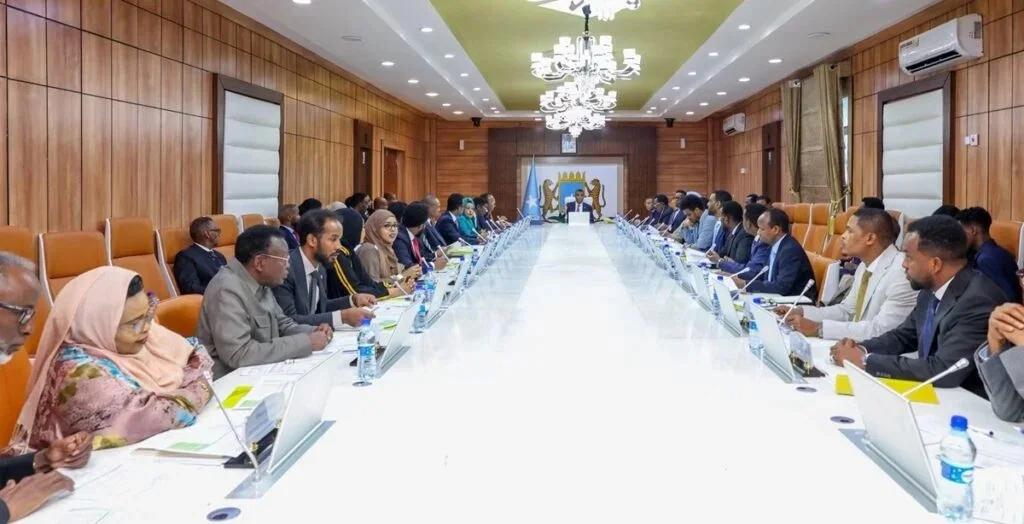
Somalia’s Council of Ministers has approved a memorandum of understanding (MoU) with Egypt aimed at strengthening cooperation in maritime transport and ports, a move that comes days after Cairo signed a maritime transport and Red Sea port connectivity agreement with Eritrea, signalling an expanding Egyptian push to deepen maritime partnerships across the Red Sea region.
According to the Somalia National News Agency (SONNA), the agreement, approved on Thursday, establishes a framework for cooperation between Egypt’s Ministry of Transport and Somalia’s Ministry of Ports and Marine Transport.
Somalia’s Minister of Ports and Marine Transport, Mohamed Nur, described the agreement as an important step in enhancing bilateral cooperation, saying it would support the country’s efforts to modernise its maritime infrastructure, advance its National Transformation Plan (NTP), and strengthen Somalia’s role in regional and global maritime trade.
The development follows the signing of a maritime transport and Red Sea port connectivity agreement between Egypt and Eritrea during a recent visit to Asmara by Egyptian Foreign Minister Badr Abdelatty and Transport Minister Kamel al-Wazir.
Following that agreement, Cairo and Asmara reaffirmed their position that the governance and security of the Red Sea and the Gulf of Aden should be the exclusive responsibility of Red Sea littoral states.
The agreement also comes amid heightened tensions between Ethiopia and Egypt over Addis Ababa’s pursuit of sea access.
In May, Ethiopia’s Ministry of Foreign Affairs accused Egypt of pursuing an “encirclement” strategy and intensifying actions aimed at undermining Ethiopia after Addis Ababa elevated sovereign sea access as a national priority, while reiterating that Ethiopia would continue pursuing its maritime access agenda through peaceful and diplomatic means.
Egypt has steadily expanded its political, security, and maritime engagement in the Horn of Africa over the past two years.
In October 2025, Addis Standard reported, citing statements from both governments, that Egyptian President Abdel Fattah El-Sisi and Eritrean President Isaias Afwerki held extensive talks in Cairo focused on strengthening bilateral relations and coordinating efforts to promote stability in the Horn of Africa and the Red Sea region.
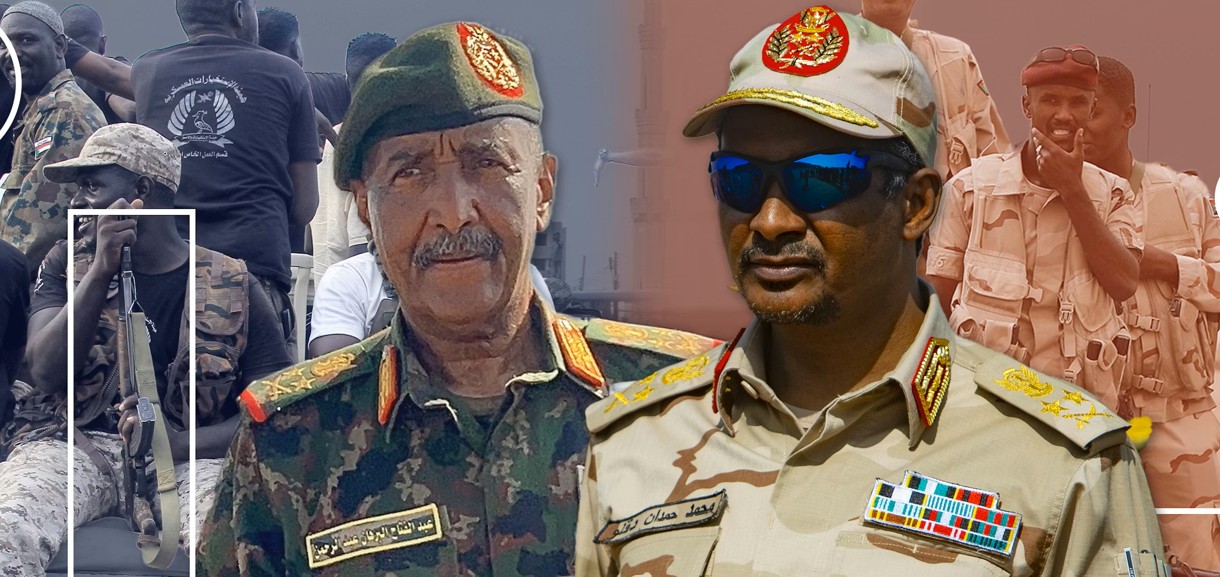
The two leaders also underscored what they described as a convergence of views on the conflicts in Sudan and Somalia, reaffirming their commitment to the territorial integrity of states, support for national institutions, particularly the Sudanese Armed Forces and opposition to the establishment of parallel governing entities.
The agreement adds to a pattern of expanding cooperation among Egypt, Eritrea, and Somalia previously documented by Addis Standard. The growing alignment in maritime, security, and diplomatic affairs has gained momentum since Ethiopia signed its January 2024 memorandum of understanding with Somaliland on commercial and naval sea access, a development Ethiopian officials have described as part of a broader effort to constrain the country’s regional ambitions.
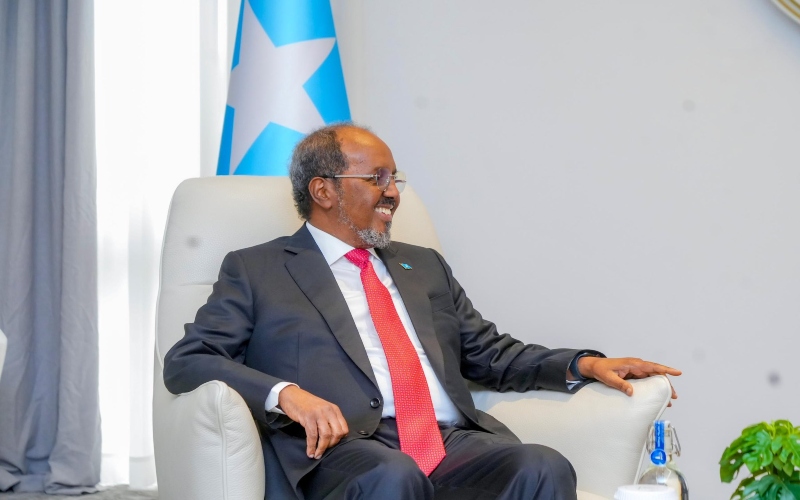
A central moment in that emerging alignment was the October 2024 tripartite summit in Asmara, where Presidents Abdel Fattah el-Sisi, Isaias Afwerki, and Somali President Hassan Sheikh Mohamud agreed to deepen cooperation on regional security and border protection.
Addis Standard previously reported that the summit emphasised “unequivocal respect for sovereignty and territorial integrity,” language widely interpreted as a direct rebuke to Ethiopia’s Somaliland deal.
Subsequent Addis Standard analyses described the Egypt-Eritrea-Somalia partnership as an emerging “axis of power” capable of exerting diplomatic, military, and economic pressure on Ethiopia from multiple fronts, particularly amid the unresolved dispute over the Grand Ethiopian Renaissance Dam (GERD).
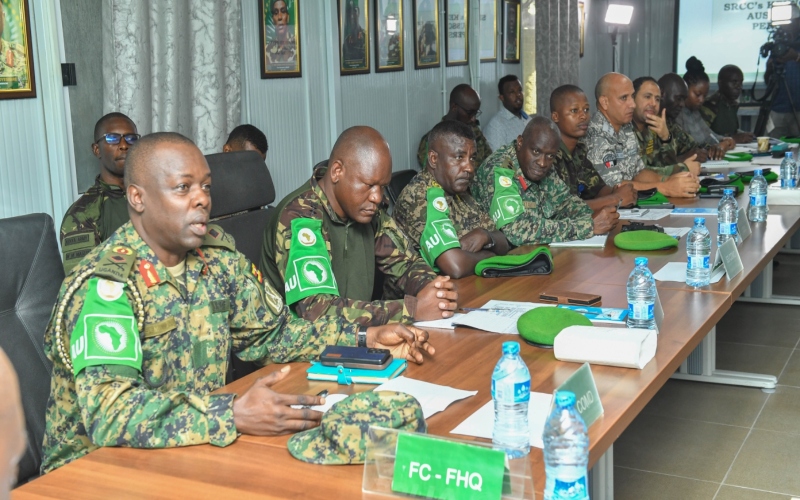
The publication also closely tracked Egypt’s expanding military footprint in Somalia under the African Union Support and Stabilisation Mission in Somalia (AUSSOM), including troop deployments, military training programs, arms shipments, and planned joint military exercises with Somali forces.
Ethiopia has warned that the developments risk destabilising the Horn of Africa and shifting the regional security balance.
Since the first time he publicly remarked on the topic in October 2023, Prime Minister Abiy Ahmed has insisted that Ethiopia’s pursuit of sea access will be conducted through peaceful dialogue and mutual understanding, while also describing direct access to the Red Sea as an existential matter tied to the country’s long-term economic and strategic survival.











































Comments
Sign in with Google to comment, reply, and like comments.
Continue with Google