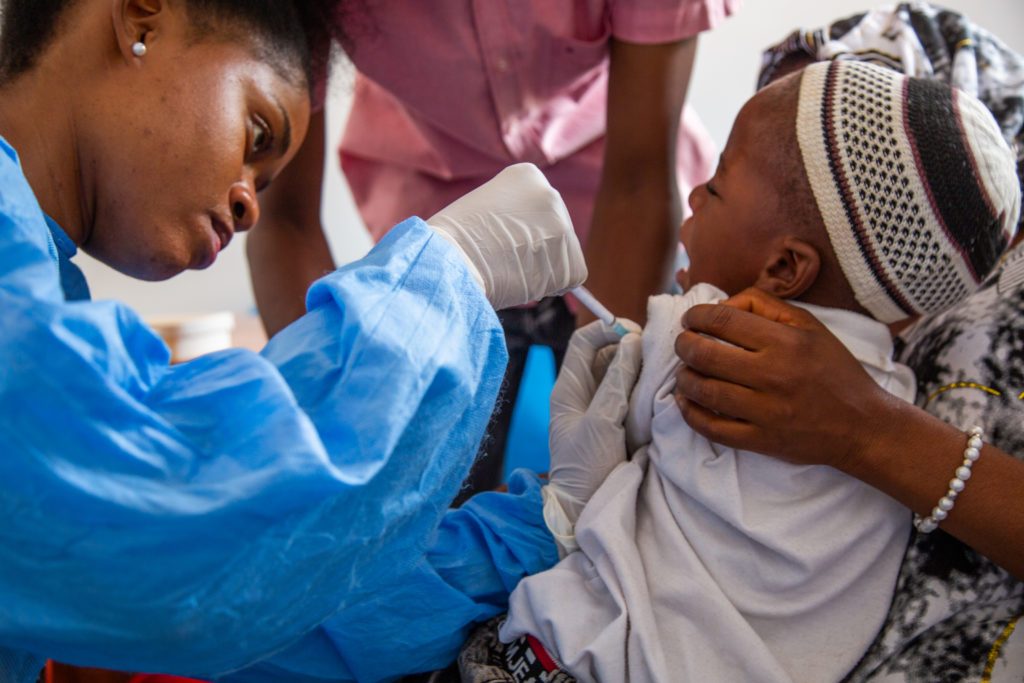
The global recovery in childhood vaccination has lost momentum, leaving 13.5 million infants without a single routine vaccine last year and contributing to a resurgence of measles outbreaks across dozens of countries, the World Health Organisation (WHO) and UNICEF warned on Wednesday.
After recovering from the sharp setbacks caused by the COVID-19 pandemic, immunisation rates have largely plateaued. WHO estimates show that 90 per cent of infants received at least one dose of the diphtheria, tetanus and pertussis (DTP) vaccine in 2025, while 85 per cent completed the full three-dose schedule.
Both figures remain below pre-pandemic levels, suggesting global efforts to restore routine vaccination are losing momentum.
The consequences are already becoming visible. Measles vaccination coverage remains below the 95 per cent level needed to stop the virus from spreading, with only 84 per cent of children receiving a first dose and 77 per cent getting the second.
WHO estimates show that 57 countries experienced large or disruptive measles outbreaks in 2025.
According to the agency, the challenge is no longer only reaching children who have never been vaccinated. Millions are starting their immunisation schedules but failing to complete them.
Around 7.3 million infants received their first DTP vaccine but never returned for their first measles shot in 2025, leaving them vulnerable to one of the world's most contagious diseases.
"Every child, whether born into wealth or poverty, peace or conflict, deserves the lifesaving protection that vaccines provide," WHO Director-General Dr Tedros Adhanom Ghebreyesus said.
Similarly, more than half of the world's "zero-dose" children live in countries affected by conflict, where health services have been disrupted by violence, displacement and chronic underfunding.
Syria's vaccination coverage, for instance, fell sharply over the past year, while Sudan recorded one of the world's biggest improvements after access to immunisation services expanded despite the conflict.
According to the WHO, falling vaccination rates are no longer confined to countries in crisis. Some middle- and high-income nations are also seeing decline as vaccine hesitancy, weakening political commitment and pressures on health systems erode years of progress.
“Governments and health workers have helped global vaccination rates bounce back after dropping significantly during the COVID-19 pandemic," said UNICEF Executive Director Catherine Russell.
"But millions of vulnerable children are still being left unprotected due to conflict, displacement, and poverty. We must reach every child, and we must rebuild trust where it is fraying. No child should suffer from a disease that a simple vaccine can prevent.”
Further, the agencies warned that recent cuts to international health funding could deepen the problem. While the impact has yet to show up fully in vaccination coverage, they said weakening surveillance and fewer national immunisation surveys risk making it harder to identify children who are missing vaccines before outbreaks occur.
The UN agencies subsequently called on governments and international partners to increase investment in immunisation programmes, strengthen vaccination services in conflict settings, counter misinformation and improve disease surveillance to prevent further decline.



























Comments
Sign in with Google to comment, reply, and like comments.
Continue with Google