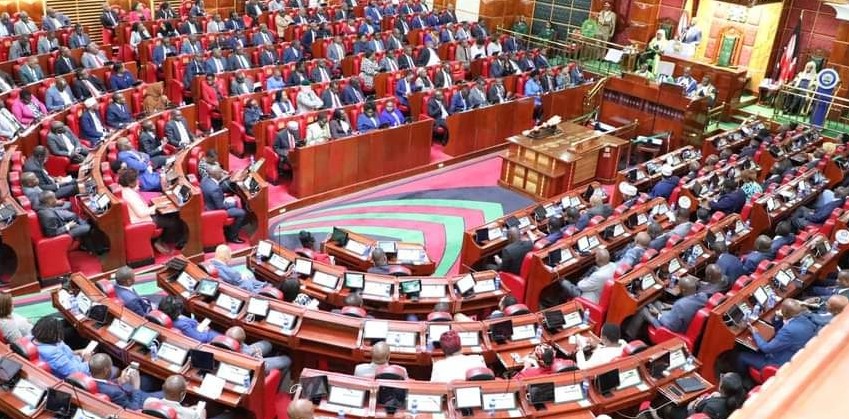
Parliament could soon have the final say on Kenya’s future financial commitments to the East African Development Bank (EADB) under a new Bill before the National Assembly.
The proposed law seeks to strengthen oversight of public funds and align such decisions with Parliament’s constitutional role.
Currently, the Cabinet Secretary for the National Treasury can authorise the release of public funds to the regional lender without the approval of the National Assembly, a provision that the proposed changes seek to amend.
The Bill, sponsored by Majority Leader Kimani Ichung’wah, proposes amendments to the East African Development Bank Act to require parliamentary approval before Kenya subscribes to additional capital or makes fresh financial commitments to the regional lender.
The proposed changes would limit the Treasury’s ability to commit taxpayer-funded resources to the bank without prior approval from legislators, giving the National Assembly a greater role in decisions involving Kenya’s financial obligations.
“The principal object of this Bill is to amend the East African Development Bank Act to require the approval of the National Assembly prior to the Cabinet Secretary authorising a charge or issuance of public funds from the Consolidated Fund to the EADB,” the Bill reads in part.
“The Act currently authorises the Cabinet Secretary for the National Treasury to commit and disburse funds from the Consolidated Fund to the EADB without the approval of the National Assembly.”
If approved, the changes would place EADB funding decisions under parliamentary scrutiny similar to other major public borrowing arrangements, sovereign guarantees and international financial commitments.
The proposal is anchored on Article 95 of the Constitution, which gives the National Assembly the responsibility of overseeing national revenue and expenditure while approving taxation, public debt measures and other key financial decisions.
The move comes amid increased attention on Kenya’s financial relationship with the regional lender, including questions around disclosure of payments and oversight of the country’s obligations to the institution.
Last year, the High Court directed Treasury Cabinet Secretary John Mbadi to disclose all payments Kenya had made to the EADB since 2014 after a petition raised concerns over limited public access to information on the contributions.
The court also ordered the Treasury to facilitate an independent audit to examine Kenya’s financial contributions and obligations to the regional bank during the same period.
The Treasury has maintained that Kenya’s participation in regional financial institutions supports economic integration and provides financing for development projects across East Africa.
The EADB funds projects in sectors such as infrastructure, manufacturing, agriculture, education, healthcare, transport and energy across its member states.
The lender has also expanded its focus to climate finance, green infrastructure and regional value chains as East African countries seek to promote industrial growth and stronger cross-border economic cooperation.
Kenya remains one of the founding shareholders of the institution alongside Uganda, Tanzania and Rwanda, with the bank continuing to increase its lending activities across the region.
Established in 1967 under the Treaty for East African Cooperation, the EADB was initially created to support industrial development before expanding its mandate to cover wider economic sectors.
The institution raises funds from international development finance institutions and capital markets before providing long-term loans to both public and private sector projects.
Kenya has periodically participated in capital increases aimed at boosting the bank’s lending capacity as demand for regional development financing continues to rise.
Such capital subscriptions require member governments to provide additional resources to maintain their ownership interests while allowing the institution to expand its lending capacity.












































Comments
Sign in with Google to comment, reply, and like comments.
Continue with Google