As the Ebola Virus Disease (EVD) outbreak continues to persist in the Democratic Republic of the Congo (DRC) and Uganda works to contain confirmed cases, Kenya is intensifying measures to guard against the risk of the virus crossing its borders while also preparing healthcare workers and reinforcing emergency response systems to ensure the country is ready to respond to any eventuality.
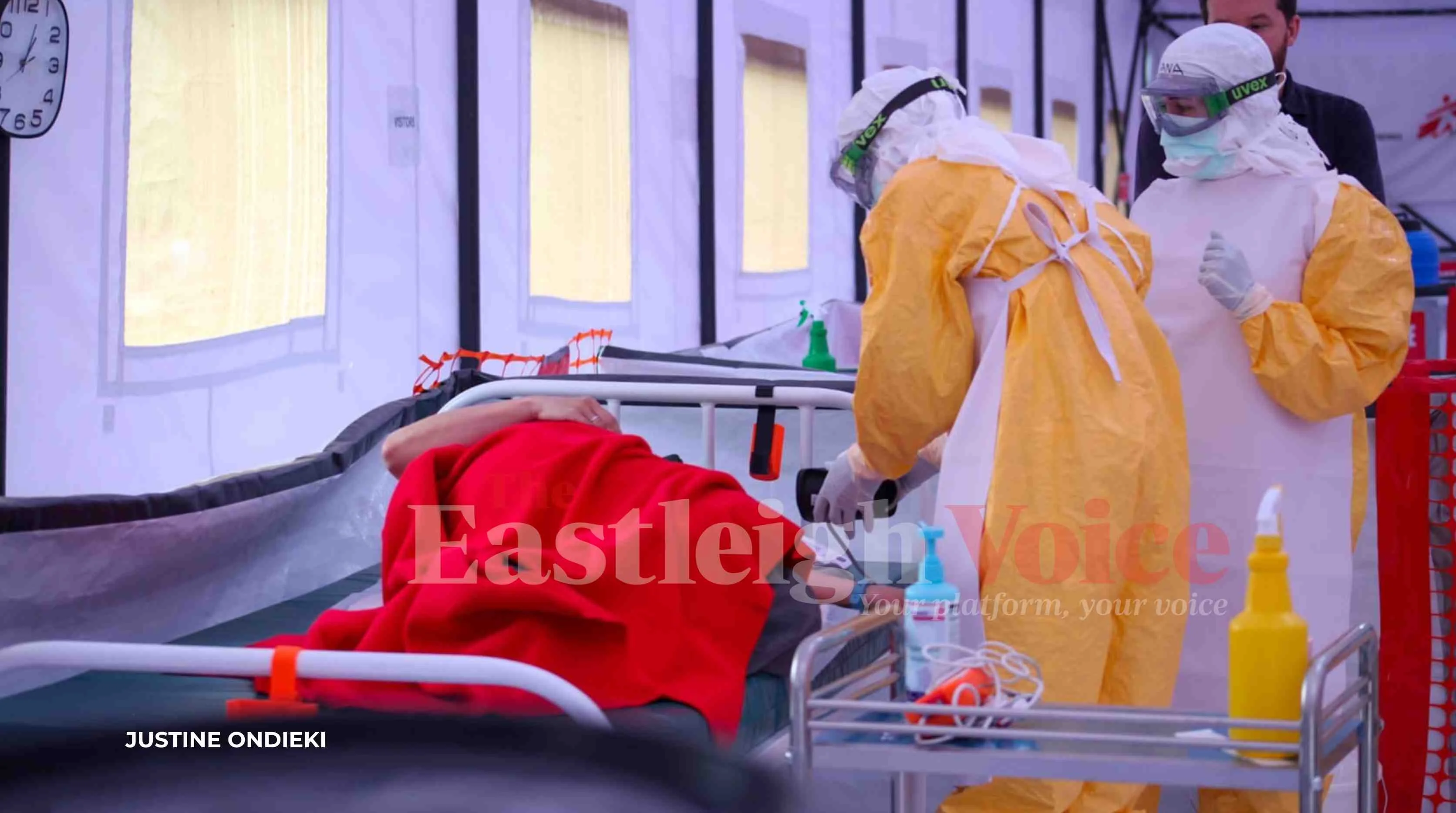
Over the last month, at least 100 frontline health workers have received specialised training on how to handle persons with Ebola symptoms, confirmed cases, and how to assist families in disposing of patients who succumb to the virus in adherence to health protocols at a specialised Médecins Sans Frontières (MSF) simulation facility set up in Rongai, Kajiado County.
MSF is a medical humanitarian organisation that has responded to all past Ebola outbreaks in the DRC and continued to offer help to patients in the country during the current epidemic. With its experience, it set up the simulation facility in mid‑June to build capacity for medical practitioners worldwide to gain skills on attending to and managing patients while observing strict safety protocols.
The first facility had earlier been set up in Brussels, Belgium, to cater to frontline workers from Europe and beyond.
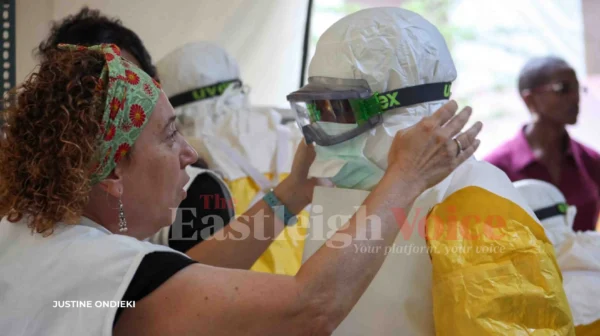 M. Dua, MSF's Outbreak Response Advisor, helps kit one of the trainees during the training on Friday. (Photo: Justine Ondieki)
“As you know, in Brussels you need a visa to go there; it's difficult for some of our colleagues to travel there, that is why we decided to set up the second one in Kenya,” Tawhidul Hamid, the MSF Country Director, told The Eastleigh Voice on Friday when we visited the facility in Rongai, Kajiado County.
So far, more than 100 frontline health workers have been equipped with the skills needed to manage the epidemic, the majority being MSF staff from across the world.
“In one month, we did eight sessions, out of which about 100 people got trained. Some of them have already been deployed to DRC. They were doctors, nurses, water and sanitation (WATSAN) specialists, Infection Prevention and Control Specialists (IPCS) and health promotion specialists,” he said.
The practitioners trained so far are volunteers responding to the epidemic from Asia, Europe, North America and neighbouring African states where the organisation operates. In the coming weeks, MSF will incorporate other international NGOs like the World Health Organisation (WHO) into the training.
On Friday, The Eastleigh Voice found a new team of MSF staff comprising doctors and WATSAN officers from West Africa undertaking the training in French, ahead of another team from the Ministry of Health scheduled to begin next week.
Dr Diana Corben, from Mexico but based in the Central African Republic as MSF’s Deputy Medical Coordinator, is one of this week’s trainees. She said the training is critical to anyone attending to Ebola patients or responding to the epidemic.
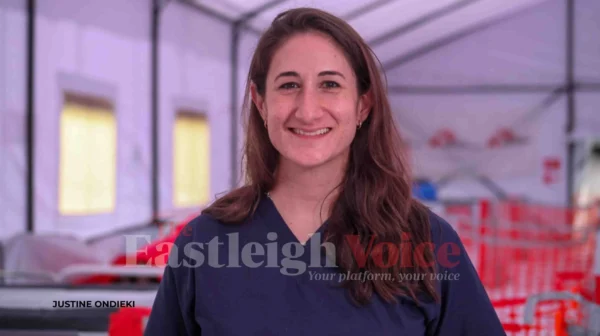 Dr Diana Corben, MSF's Deputy Medical Coordinator in the CAR. (Photo: Justine Ondieki)
“I feel more ready now when it arrives than I did before the training. When I go back to the mission, there is a lot to share with the teams that will be dealing with the patients to learn, but that is also one of the reasons why we are here, being trained to train when we go back. That’s the plan,” she said, adding that it’s better to prepare for the worst even while hoping it doesn't happen.
The training is offered twice a week in both French and English, combining theoretical and practical sessions for at least 100 trainees a month.
The initial plan was to run the facility from June to August, but with cases still spreading in eastern DRC, the organisation may be forced to review the timelines.
“It depends on the situation. By the end of July, we will make a decision on whether we will need to continue further,” Tawhidul adds.
The facility mimics a real Ebola treatment centre, complete with triage and screening sections, beds, dummies acting as patients, a laboratory, donning and doffing areas, office and admin points, and a mock mortuary.
“This is an absolutely dry facility; it only does simulation training. There are no patients here, no isolation involved, no treatment,” the official clarified.
The facility operates under strict infection prevention and control protocols, with a one‑way patient flow system guiding patients from admission through treatment to discharge, minimising the risk of cross‑infection.
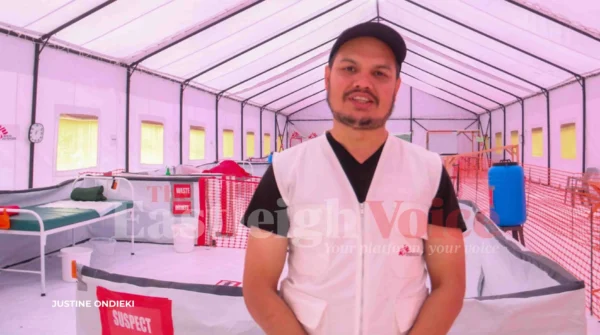 Tawhidul Hamid, MSF Country Director. (Photo: Justine Ondieki)
“When a patient comes to such a facility, they are taken through screening where their symptoms are analysed, and they are checked to see whether they have come into contact with an infected person(s). If they are deemed to be suspects, they are received at the treatment centre and received by healthcare workers in full personal protective equipment, and then they are triaged to see who to prioritise,” Angela Thiong’o, the Project Coordinator, explains.
Upon admission, patients are each provided with a pack containing a cup, spoon, plate, towel, toothpaste and other personal items to make them comfortable at the centre.
A PCR test is then done to confirm the virus. For patients who test positive, treatment is based on symptoms since the current Bundibugyo strain has no specific vaccine.
“The turnaround time can take some time up to 72 hours, and if the test is negative and the patient is still showing symptoms, the test is repeated. If positive, they are taken to the confirmed zone. We have a flow of how the patient goes because one critical thing about this treatment centre is that it follows a one‑way flow; you cannot go out the same way you came in. The protocols are very clear on how a patient is discharged,” she added.
In the unfortunate event that a patient succumbs to the disease, Angela, who is also a Public Health Specialist, says there is a Standard Operating Procedure on how to prepare the body for dignified burial.
“What is critical is also engaging the family members to ensure that the burial practices are respected while also ensuring that infection prevention and control measures are also respected,” she explains.
“The family members and community can be allowed to view the body, but from a safe two‑metre distance. We also respect the wishes of the family, if there is something they would want to incorporate in the burial process, for example, flowers, a doll for a child, etc., they are allowed to do that, but from a safe distance. That (flower/doll) is put in the bodybag before burial,” explained Thiong’o.
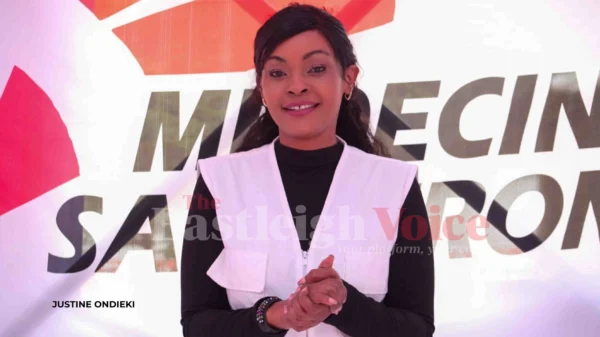 Angela Thiong'o, MSF Ebola Simulation Centre's Project Coordinator. (Photo: Justine Ondieki)
The official cautions that the team at the treatment centre should perform the burial rites.
When a patient dies, the body is decontaminated and lined using specialised chlorinated double‑body bags to prevent leakage of fluids.
“That is why the community needs to understand why it's important to ensure that there is a safe burial practice. Ebola is not airborne; it is transmitted through contact with body fluids. It is important for the public to be aware of how it is transmitted, its signs and symptoms, because with awareness, we can reduce the transmission,” she said.
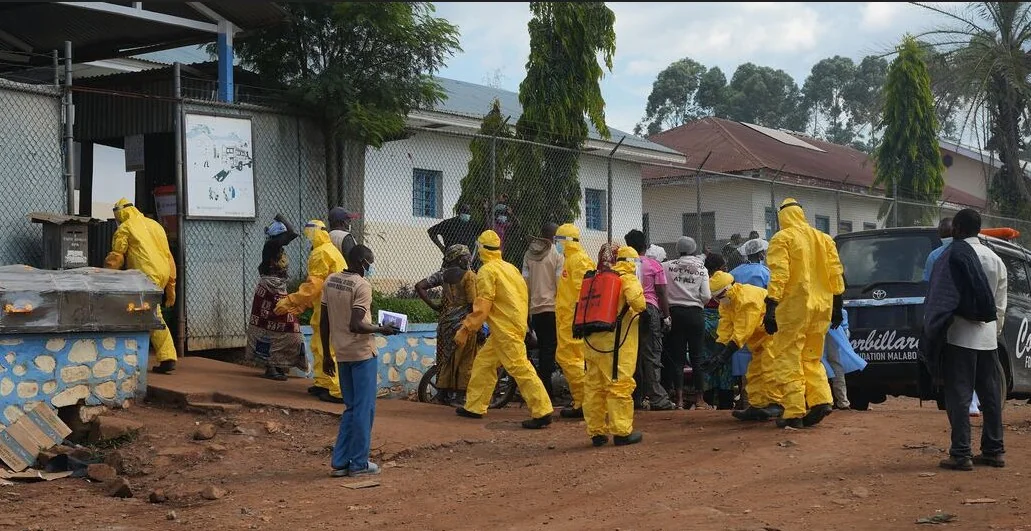
The protocols, being in sharp contrast with some African burial traditions, have, however, been a major challenge for responders in eastern DRC.
This is especially so for patients who arrived at treatment centres sick but unfortunately did not survive. Doctors say this has created room for speculation over organ trafficking and the mishandling of patients.
“In one instance, a centre had to lower the length of its windows to allow families a view of what’s happening inside from outside just to assure them that their relatives were being subjected to proper care. The challenge that this brought, however, was that chickens would make their way to the facility and get contaminated, so a chicken killer had to be hired to kill those that jumped in to control the spread of the disease to those outside. The chicken killer would wear the suit, get in, kill the chicken, then bury it as per the protocols,” the team recalled.





















Comments
Sign in with Google to comment, reply, and like comments.
Continue with Google