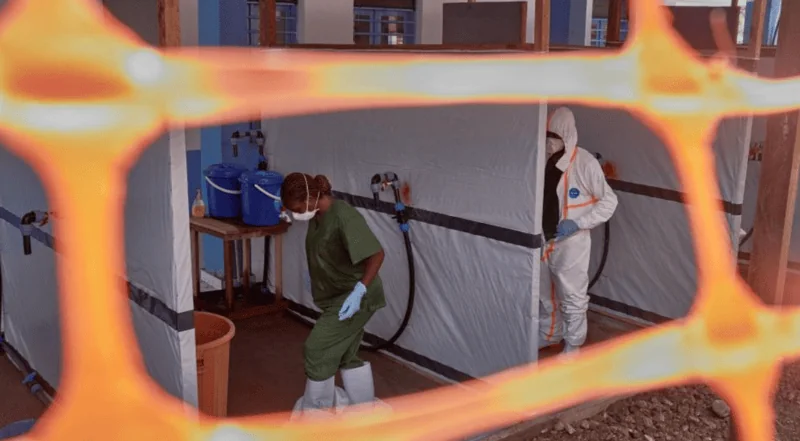
Aid groups are warning that the current Ebola outbreak in the Democratic Republic of Congo (DRC) is still developing and may continue for at least a year, as authorities struggle to determine how widely the virus has spread.
According to the International Federation of Red Cross and Red Crescent Societies (IFRC), the current situation remains uncertain, with transmission still active across multiple regions of DRC.
“The peak is, I think, not behind us, but in front of us,” IFRC Operations Manager Bruno Michon told journalists by videolink from eastern DRC on Tuesday, according to Al Jazeera.
“We are afraid that this could last one year to end this disease.”
Michon also pointed to insecurity and mistrust in some communities as major obstacles to response efforts, noting that both factors have made it harder for teams to carry out outreach, contact tracing and safe burial operations in affected areas
“Building trust takes time. It requires honesty, patience, and humility, but in this outbreak, it is not optional; it is life-saving,” he said.
The update comes against the backdrop of a worsening Ebola outbreak in the DRC, raising concerns over potential cross-border transmission in the region. The outbreak involves the Bundibugyo strain of the Ebola virus, which is especially challenging to manage because there is currently no approved vaccine or specific treatment available.
According to health authorities in the DRC, as of Monday, confirmed Ebola infections had risen to 808, with 192 deaths recorded since the outbreak began. On Sunday, officials reported 26 new cases and 11 additional deaths, pushing the case fatality rate to 23.8 per cent, according to Situation Report No. 31 on the Ebola virus disease outbreak.
Similarly, 363 patients were in isolation as of Sunday, while 48 people had recovered since the start of the outbreak, first declared on May 15. According to DRC officials, the outbreak is now present in 23 health zones across Ituri, North Kivu and South Kivu, highlighting how widely the disease has spread across the region.
Uganda, which neighbours the DRC, has also reported 19 confirmed cases and one probable case to date, with infections largely linked to transmission from the DRC.
According to aid group Médecins Sans Frontières (MSF), the disease is spreading faster than health authorities can fully track. In a statement earlier this month, the group said testing capacity in the region remains limited, with many suspected cases still awaiting confirmation. The delay, MSF says, is creating a major information gap, making it harder for health workers to determine the true scale of the outbreak.



























Comments
Sign in with Google to comment, reply, and like comments.
Continue with Google