Business groups, professional associations and political actors have intensified pressure on Parliament to scale back the Finance Bill 2026, warning that additional tax measures could worsen the cost of living, hurt businesses and trigger public unrest as Kenya seeks to raise Sh120 billion in new revenue.
The push comes ahead of debate on the Bill, with stakeholders urging legislators to adopt a compromise approach that balances revenue collection with the economic challenges facing households and firms.
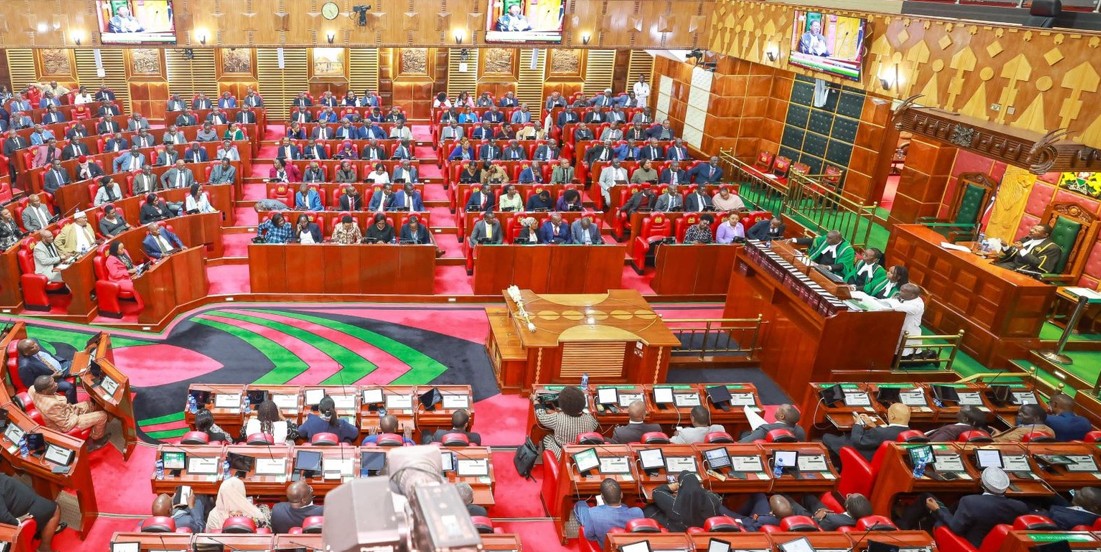
Legislators are expected to table the Budget and Finance Committee’s report in the National Assembly tomorrow, setting the stage for a heated debate on the Bill, which is aimed at helping bridge a wider Sh4.82 trillion budget financing gap and support the 2026/27 national budget.
The proposed law is designed to raise extra revenue, but it has already faced strong opposition from various groups who argue that parts of it would place further strain on citizens and businesses already dealing with high living costs.
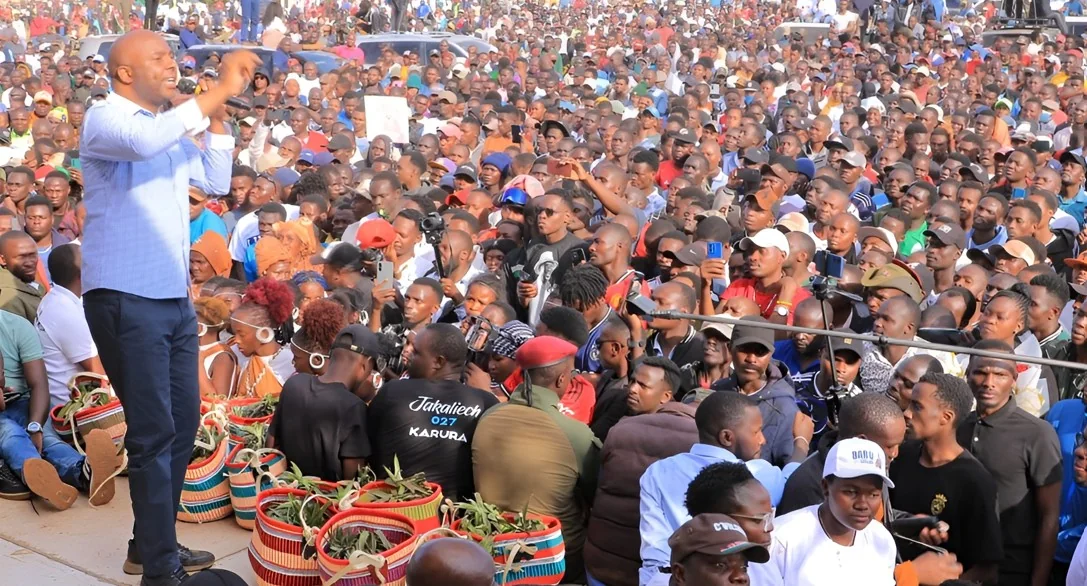
The growing resistance has also drawn comparisons to the Finance Bill 2024, which collapsed following widespread protests. Stakeholders have warned that failure to adjust the current proposals could lead to economic disruption and unrest similar to the June 2024 demonstrations, when protesters breached Parliament precincts shortly after the passage of the earlier revenue law.
At the centre of the debate is a difficult balance between raising enough revenue and avoiding additional pressure on households and firms at a time of global economic uncertainty. Treasury officials have maintained that spending cuts are limited, leaving Parliament with the option of either approving the revenue proposals or increasing borrowing.
Speaking before the National Assembly’s Budget and Appropriations Committee, chaired by Alego Usonga MP Samuel Atandi, Treasury Cabinet Secretary John Mbadi dismissed proposals to significantly reduce expenditure, warning that such a move would affect government operations and public sector wages.
“If you look at this budget, there is nothing to cut. Otherwise, I will be cutting salaries of government employees,” Mbadi told the committee.
He further noted that the government had already incorporated expected revenue from the Finance Bill 2026 as well as administrative reforms at the Kenya Revenue Authority to meet its fiscal targets.
Kiharu MP Ndindi Nyoro, however, called for a full review of government spending, arguing that global economic pressures, including rising oil prices linked to tensions in the Middle East, make a case for fiscal restraint instead of higher taxation.
His view reflects growing concern among some legislators that Kenya’s tax burden may be approaching a politically and economically sensitive level.
For the 2026/27 financial year, the National Treasury is targeting total revenue of Sh3.63 trillion, equivalent to about 17.4 per cent of gross domestic product. This compares to about Sh3.40 trillion, or 18.2 per cent of GDP, in the current financial year.
Of this projection, Sh2.99 trillion is expected from ordinary revenue, representing 14.3 per cent of GDP, while Sh644 billion is expected from Appropriation in Aid, reflecting a 4.8 per cent increase from the current year’s approved estimates. The Treasury has also revised its outlook downward, citing an expected revenue shortfall of Sh147.4 billion in the current financial year.
The Finance Bill 2026 has also attracted submissions from professional bodies representing accountants, lawyers, bankers and manufacturers, who are calling for a scaled-down version of the Bill that avoids steep increases in the cost of living and doing business.
Among the key proposals is a reduction in the marginal Pay-As-You-Earn tax rate to between 25 and 30 per cent, alongside the widening of income tax bands to ease pressure on salaried workers.
The Kenya Bankers Association argued that the country’s PAYE structure is too compressed, pushing workers into higher tax brackets much faster than in comparable economies.
The association noted that lower PAYE rates could stimulate economic activity by boosting disposable income, savings and investment.
“Kenya’s PAYE tax bands are narrow and steep, with high marginal rates applying at much lower incomes than in peer countries,” the association said in its submission to Parliament.
Stakeholders further argue that employees are already facing multiple statutory deductions that have reduced take-home pay. These include contributions to the Social Health Insurance Fund, the housing levy and increased pension contributions under the National Social Security Fund framework.
They note that the combined effect of these deductions has steadily eroded real wages.
Under the current arrangements, employees contribute 2.75 per cent of gross pay to the health fund, 1.5 per cent to the housing levy, which is matched by employers, and increased pension deductions introduced through recent reforms.
A simulation presented by banking sector stakeholders shows that a five per cent reduction in PAYE could inject more than Sh28 billion into the economy annually, increase GDP output by up to Sh42 billion and create tens of thousands of jobs through higher consumption and lending.
Tax experts from professional accounting bodies have supported the proposal, saying a more progressive PAYE structure would align with government commitments under its medium-term revenue strategy.
They argue that widening tax bands and lowering marginal rates would improve fairness while strengthening compliance.



































Comments
Sign in with Google to comment, reply, and like comments.
Continue with Google