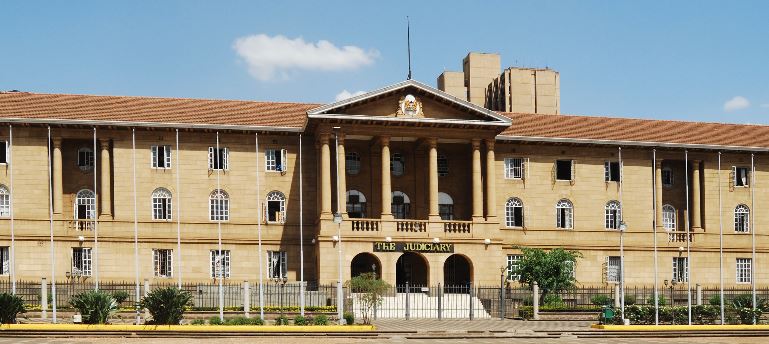
A fresh legal battle has erupted over the Government's plan to sell a 15 per cent stake in Safaricom PLC, with petitioners asking the High Court to declare the proposed transaction unconstitutional and stop its implementation.
In submissions before the Constitutional and Human Rights Division of the High Court, the petitioners argue that the National Treasury is unlawfully seeking to raise revenue by selling a strategic public asset without constitutional authority.
The case, filed by Tony Gachoka, Prof. Fredrick Onyango Ogola, Paul Maina Mugo and Samuel Kahara Macharia, seeks orders blocking the government's proposed transfer of the shares to the Vodacom Group.
Represented in court by Wiper Party leader Kalonzo Musyoka and Lempaa Suyiaka, the petitioners contend that the Constitution only allows the national government to raise revenue through taxation, levies, charges and borrowing—not by disposing of public assets.
"The National Treasury has no constitutional mandate to raise revenue through the sale of public assets. The Constitution only permits revenue to be raised through taxation, charges and borrowing," the petitioners state in their submissions.
They argue that the proposed transaction would reduce the Government of Kenya's stake in Safaricom from 35 per cent to 20 per cent while increasing Vodacom's effective ownership to about 55 per cent, effectively handing control of the country's largest telecommunications company to a foreign-linked entity.
According to the petitioners, Safaricom's importance extends far beyond the telecommunications sector, describing it as a critical national infrastructure that supports government digital services, financial transactions and even the transmission of election results.
"Safaricom is not merely a telecommunications company but a strategic national infrastructure platform supporting critical government functions, including digital payments, public service delivery and the transmission of election results," they argue.
The petitioners also challenge the proposed sale price of KSh34 per share, claiming it significantly undervalues the government's stake and could expose taxpayers to billions of shillings in losses.
They further argue that the proposed transaction raises broader constitutional issues concerning national sovereignty, security, data governance, competition, and the public trust doctrine, making it inappropriate to treat it as an ordinary commercial sale.
The petitioners seek a declaration from the High Court that the proposed sale violates Articles 1, 10, 35, 73, 75, 201, 227, 232, and 238 of the Constitution. They are also seeking permanent orders restraining the government from proceeding with the planned divestiture.






































Comments
Sign in with Google to comment, reply, and like comments.
Continue with Google