School operations funding from FY 2020/21 to FY 2024/25
Listen
Read this story aloud
Listen to the clean text version of this article.
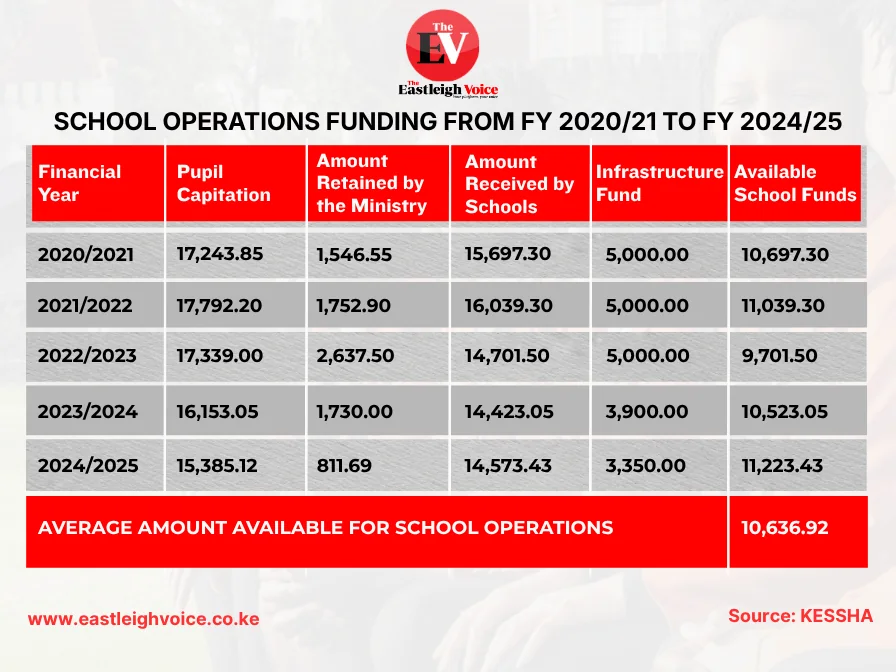
Average operational funding has remained almost unchanged since the launch of free secondary education in 2008, piling pressure on schools.
More To Read
- Court faults bursary allocation system, orders State to address gaps affecting vulnerable, marginalised learners
- Principals oppose single uniform design, cite risks to school culture and identity
- Principals distance themselves from school unrest as 18 learners die since April
- Governor Kang’ata calls for investment shift to jobs, education and health
- Education Committee launches inquiry into rising school fires, student unrest
- KICD directs schools to submit Grade 10 enrolment, textbook data by June 19
Latest Stories
- Court petition challenges government's constitutional authority to sell Safaricom shares
- Study links faster biological ageing to rising cancer cases in young adults
- Tana River violence: Governor Godhana urges government to free elders, hunt real instigators
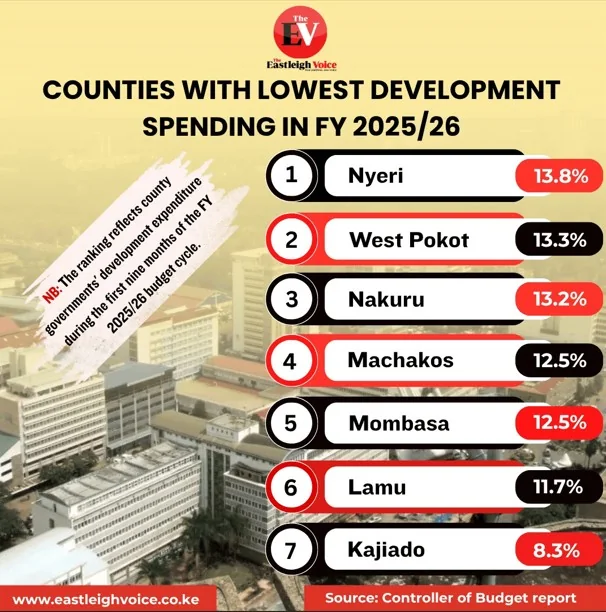
- Counties with the lowest development spending in FY 2025/26
Top Stories Today


























Comments
Sign in with Google to comment, reply, and like comments.
Continue with Google