Iran’s request for Yemen’s Houthis to prepare to close the Red Sea oil route has raised fresh concerns over the impact of renewed US-Iran hostilities on global energy supplies and African trade.
Houthi is an Iranian-backed political and military organisation belonging to the Zaidi branch of Shia Islam in Yemen.
Three sources familiar with the matter told an international daily on Thursday that Tehran had asked the Houthis to stand ready to disrupt the Red Sea route if the United States strikes Iranian power infrastructure.
The development opens the possibility of a return to the shipping crisis that disrupted one of Africa’s most important trade corridors in 2024 and 2025.
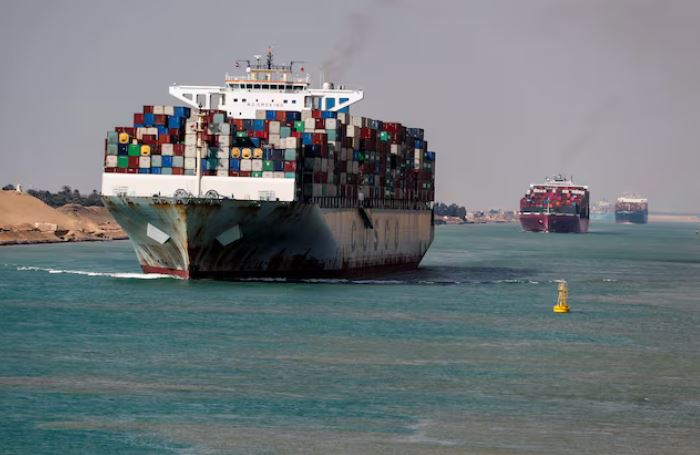
The Red Sea connects the Indian Ocean to the Mediterranean through the Suez Canal, Africa’s shortest maritime link to markets in the East and West.
During the previous Houthi attacks on commercial vessels, weekly shipping through the Suez Canal fell by more than 50 per cent, forcing vessels to take longer routes around the Cape of Good Hope.
As a result, container freight rates rose steadily during the period.
The looming disruption would come as the Strait of Hormuz, the main route for a significant share of global energy supplies, remains largely closed to commercial traffic amid the escalating US-Iran conflict.
The simultaneous disruption of Hormuz and the Red Sea would put pressure on global energy flows and raise the risk of higher transport, insurance and commodity costs.
A source close to the Houthis disclosed that the group had positioned missiles and drones near the Bab el-Mandeb Strait, the gateway to the Red Sea, and was awaiting orders to act.
The report said representatives of Iran’s Islamic Revolutionary Guard Corps in Yemen would control the decision on when to close the gateway.
The renewed threat is particularly significant for African economies that rely heavily on imported fuel, food and manufactured goods.
Kenya, for example, experienced higher shipping costs and delays during the previous Red Sea crisis as attacks forced carriers to avoid the Suez route.
The longer journey around southern Africa increased freight costs and created additional pressure on the prices of imported essential goods.
A repeat of that disruption could also undermine efforts to contain inflation across import-dependent economies, with the cost of shipping, fuel and goods potentially rising together.
Oil markets have already responded to the renewed hostilities.
Brent crude rose above $87 (Sh11,267) per barrel on Friday, its highest level in a month.
Prices have risen more than 14 per cent this week as fears grow that the conflict could widen.
The market is now facing the prospect of simultaneous pressure at the two major maritime chokepoints.
Hormuz handles a major share of global oil flows, while the Red Sea and Suez Canal provide a critical shortcut between Asian and European markets.
For Africa, another prolonged Red Sea disruption would mean longer shipping routes, higher freight bills and renewed risks to the cost and availability of imported commodities.













































Comments
Sign in with Google to comment, reply, and like comments.
Continue with Google