Humanitarian agencies coordinating shelter, camp management, and housing, land and property (HLP) responses in Ethiopia have warned that prolonged displacement, insecurity, climate shocks, and severe funding gaps are leaving hundreds of thousands of vulnerable people exposed ahead of the country’s main rainy season.
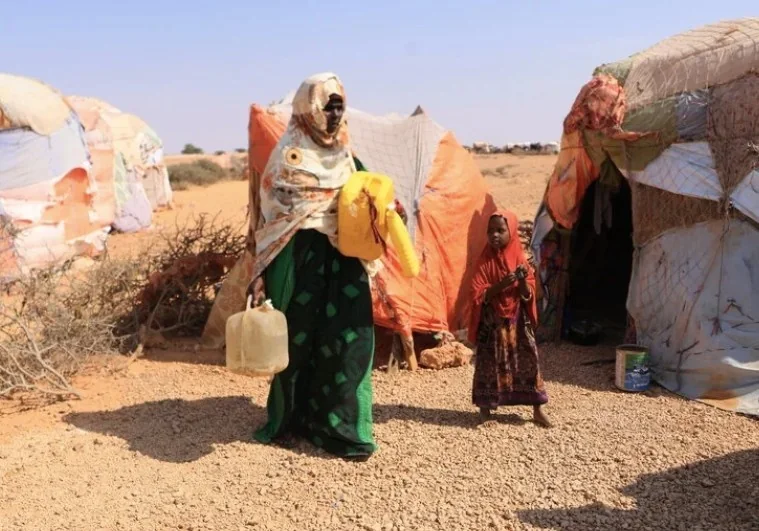
In their latest second-round 2026 prioritisation exercise released in late May, the Emergency Shelter and Non-Food Items (ES/NFI) Cluster, Camp Coordination and Camp Management (CCCM) Cluster, and HLP actors identified high-priority humanitarian hotspots across Tigray, Afar, Amhara, Oromia, Somali, and Benishangul-Gumuz regional states, citing deteriorating shelter conditions, overcrowded displacement sites, protection concerns, and gaps in humanitarian services.
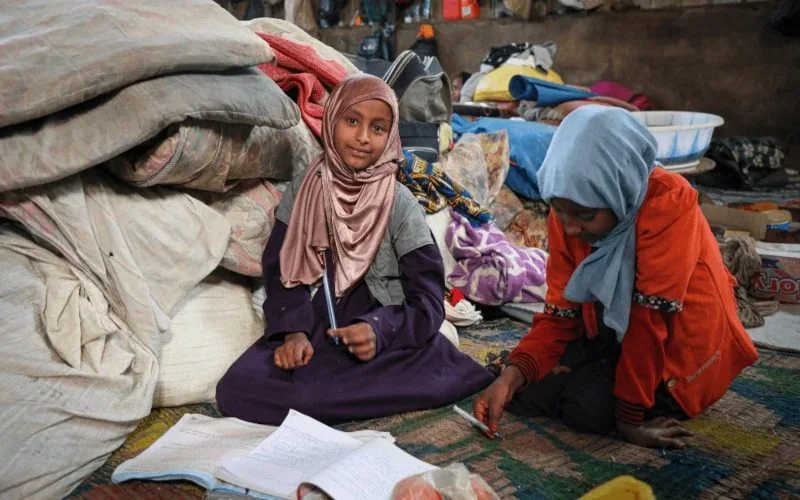
“Displacement, climate shocks, and resource gaps continue to strain vulnerable communities in Ethiopia, with shelter risks rising as the rainy season approaches,” the report said, adding many displaced households remain in collective centres, camps, and host communities where shelters are inadequate and access to essential household items remains limited.
According to the assessment, the Shelter/NFI response identified 20 Priority-1 and 46 Priority-2 woredas, while the CCCM exercise designated 67 Priority-1 and 76 Priority-2 displacement sites. Tigray and Afar regions host the highest concentration of Priority-1 sites under the CCCM response, while Amhara, Oromia, and Tigray regions account for the largest number of Priority-1 locations under the Shelter/NFI response.
The report said Priority-1 HLP concerns were identified in parts of Tigray, Somali, and Benishangul-Gumuz, where returnees and displaced communities face land access constraints, eviction risks, and relocation-related challenges.
Among the regions highlighted as most critical, the report stated that “Amhara, Afar, and Tigray continue to host most Priority 1 and 2 areas, reflecting acute shelter needs and strained living conditions”. It linked the situation to prolonged displacement, overcrowded collective centres, insecurity, environmental exposure, and the absence of durable solutions.
In Tigray, several Priority-1 locations remain concentrated in northwestern and central zones, including Tahtay Adiyabo, Sheraro town, Endabaguna town, Abiy Adi town, and Zalanbesa town.
In Afar, Megale remains a Priority-1 woreda, while Yalo continues to face significant humanitarian pressures linked to prolonged displacement and harsh environmental conditions. In Amhara, Raya Kobo, Quara, and Sekota towns were identified among the highest-priority areas due to continuing insecurity and new displacement.
The assessment also points to growing humanitarian pressures in Oromia and Benishangul-Gumuz. Six Priority-1 woredas were identified in Oromia, including Abaya, Dugda Dawa, Gelana, Wara Jarso, Jarte Jardega, and Liben, while three Priority-1 woredas were listed in Benishangul-Gumuz. Humanitarian actors noted that insecurity, displacement, environmental shocks, and limited humanitarian presence continue to hamper assistance in these regions.
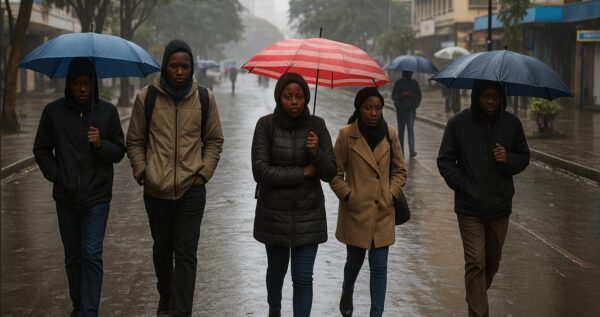
The report further warned that climate-related risks are compounding humanitarian needs. It described flooding as “one of the most severe consequences of climate change in Ethiopia,” noting that increasing flood events are driving displacement, destroying shelters, disrupting livelihoods, and straining response capacity.
Humanitarian agencies have already identified 67 displacement sites exposed to flooding and strong winds ahead of the upcoming Kiremt rainy season and are undertaking preparedness and contingency planning measures.
Despite the scale of needs, funding remains critically insufficient. The ES/NFI Cluster reported that of its $64 million (Sh8.2 billion) funding requirement, only $27.4 million (Sh3.5 billion), or 43 per cent, has been secured, leaving a gap of $36.4 million (Sh4.7 billion). Meanwhile, the CCCM Cluster reported that it has received only $2.8 million (Sh362 million) of the $14.2 million (Sh1.8 billion) required, leaving an 80 per cent funding shortfall.
Overall, shelter partners aim to reach approximately 294,126 displacement-affected people across 66 prioritised woredas, while CCCM actors plan to support 360,704 internally displaced persons (IDPs) in prioritised sites. An additional $1.86 million (Sh241 million) is required to strengthen HLP monitoring, coordination, and legal support activities in priority locations.
The prioritisation exercise was conducted jointly with regional and local authorities, humanitarian partners, HLP actors, and disaster management institutions to guide limited resources toward areas facing the most acute humanitarian needs.




































Comments
Sign in with Google to comment, reply, and like comments.
Continue with Google