LSK says court boycott will continue until Judiciary accountability concerns are addressed
Listen to article
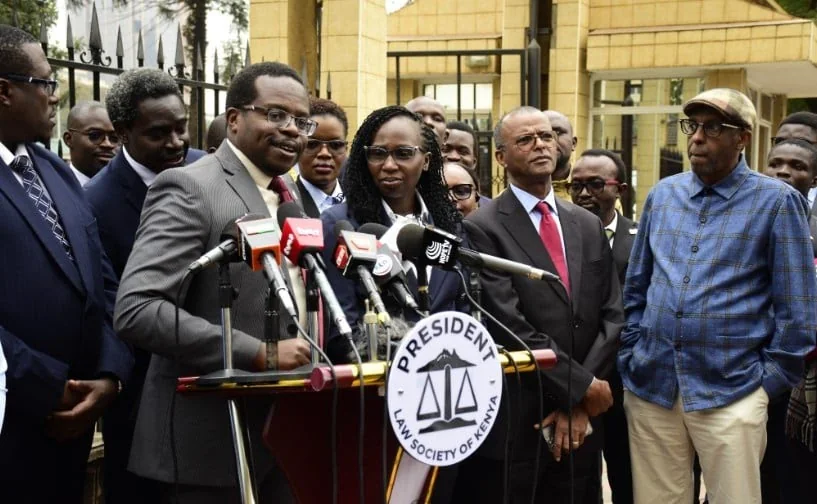
Kanjama announced that the LSK Council and members of the Senior Counsel Bar are scheduled to meet the Judicial Service Commission (JSC) on July 31, describing the engagement as an opportunity to address the issues that prompted the industrial action.
The Law Society of Kenya (LSK) has maintained that its nationwide boycott of court proceedings will continue, insisting the protest is intended to push for greater accountability within the Judiciary.
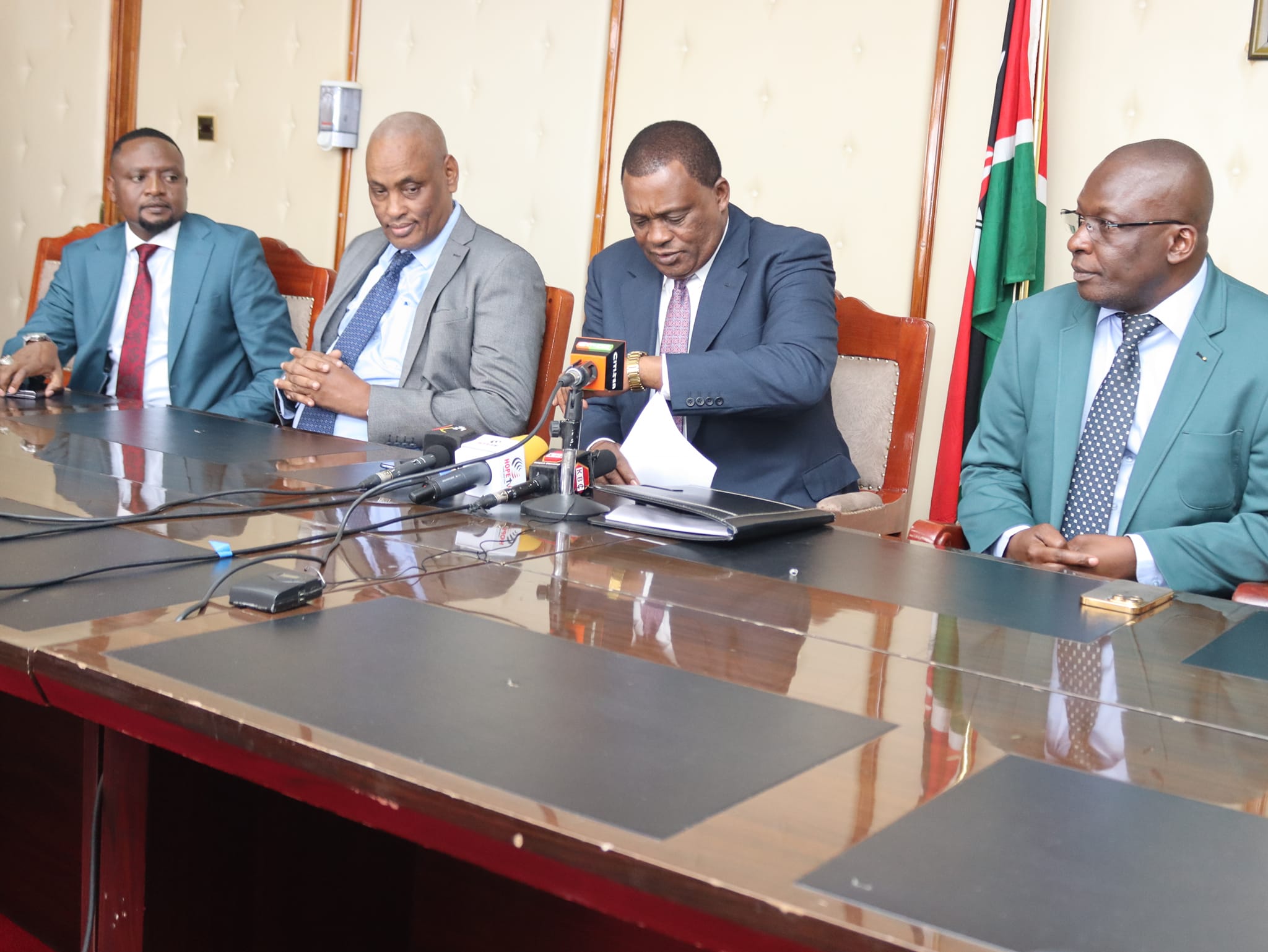
Addressing journalists outside the Supreme Court on Wednesday, LSK President Charles Kanjama said advocates across the country had largely complied with the boycott and urged members to remain steadfast until their concerns are addressed.
Kanjama announced that the LSK Council and members of the Senior Counsel Bar are scheduled to meet the Judicial Service Commission (JSC) on July 31, describing the engagement as an opportunity to address the issues that prompted the industrial action.
More To Read
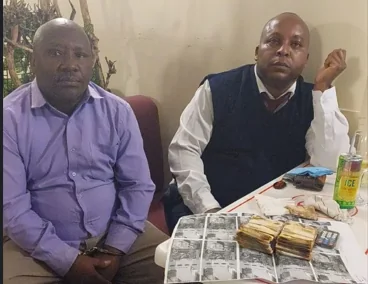
- Kangema Magistrate Martin Mutegi suspended after arrest over Sh170,000 bribe
- Judges urge LSK to drop proposed court boycott, warn litigants will bear greatest cost
- Lawyers announce nationwide court boycotts on July 22
- Petition filed to stop JSC from publishing judges' individual performance reports
- Supreme Court announces recess from August 1 to September 15, 2026
- FIDA-Kenya demands accountability following death of advocate Esther Wairimu Keige
"We encourage all advocates to continue observing the boycott. We shall engage the JSC on July 31, but our pursuit of accountability within the Judiciary will continue," Kanjama said.
The impact of the boycott was evident at the Milimani Law Courts in Nairobi, where court activity was minimal. Most matters scheduled for hearing were adjourned after advocates failed to appear in compliance with the LSK directive, forcing judicial officers to reschedule cases and issue fresh hearing dates.
A similar situation was witnessed at the Nakuru Law Courts, where proceedings were disrupted as many lawyers stayed away from courtrooms.
Latest Stories
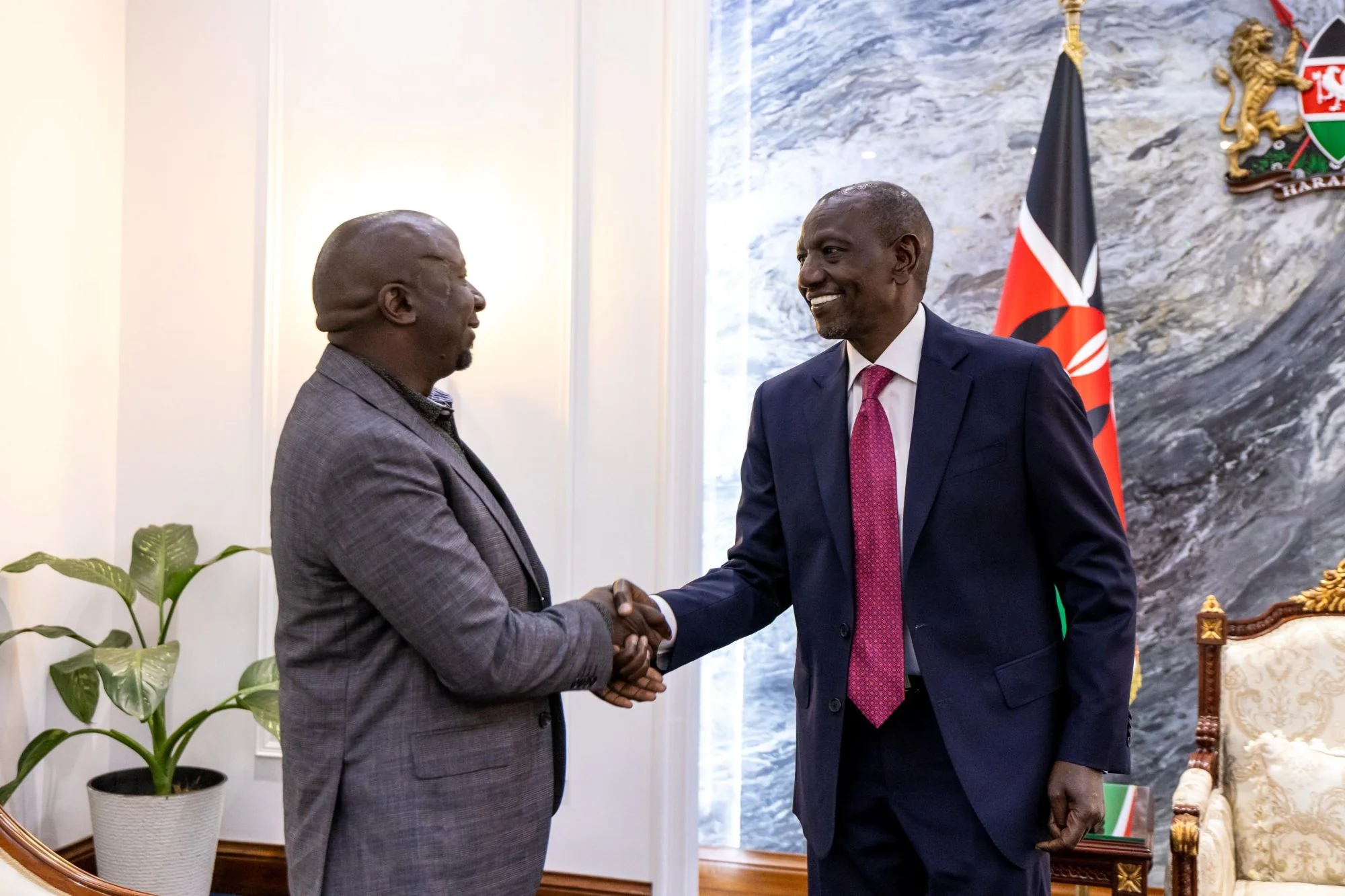
- Ruto appoints Samuel Muchina to Nairobi Rivers Commission days after Ol Kalou by-election defeat
- Kajiado County found liable for rights violations over "shoddy" road project, High Court rules
- Messi or Ronaldo? Kenya’s World Cup Google searches reveal GOAT debate that refuses to die
- Indian court sentences 44 Somali nationals to life over piracy attacks
Several cases could not proceed as planned, leaving litigants waiting for new hearing dates and highlighting the growing impact of the nationwide protest on court operations.
Senior Counsel Philip Murgor said the legal profession had united behind the campaign, arguing that judges and magistrates should be subject to the same standards of accountability they apply to others.
Former LSK President Faith Odhiambo questioned the Judiciary's commitment to transparency, accusing it of frustrating disciplinary processes against judicial officers.
"How can we trust our court if they can stop JSC hearings against corrupt judges and their own accountability? Their independence does not mean that they are above the law," Odhiambo said.
Senior Counsel Ahmednasir Abdullahi maintained that the boycott would remain in force until allegations of corruption within the courts are properly addressed.
Former LSK President Nelson Havi called for complaints previously lodged before the JSC against judicial officers to be reopened and determined afresh.
Havi also criticised Chief Justice Martha Koome for what he termed a lack of engagement with concerns raised by members of the legal profession, saying the boycott would not be lifted until action is taken.
Former LSK President Erick Theuri described the protest as a campaign to protect constitutional governance, urging Kenyans to support calls for greater transparency and accountability within the Judiciary.
The boycott also received regional backing from East Africa Law Society President Ramadhan Abubakar, who said the Judiciary should be held to the same standards of accountability it demands of the Executive and Parliament.
He further called on the Ethics and Anti-Corruption Commission (EACC) to investigate allegations of corruption involving judges and magistrates.
With Chief Justice Martha Koome currently out of the country, the LSK leadership said it would instead present its grievances before the JSC during next week's meeting.
The lawyers warned they are prepared to escalate their protests if their demands are not addressed.
Other Topics To Read
Top Stories Today





























Comments
Sign in with Google to comment, reply, and like comments.
Continue with Google