Kenya has called on Chinese companies to establish local manufacturing of clean energy equipment, saying the country's transition to renewable energy must create jobs, build local technical capacity and support industrial growth rather than rely solely on imported technologies.
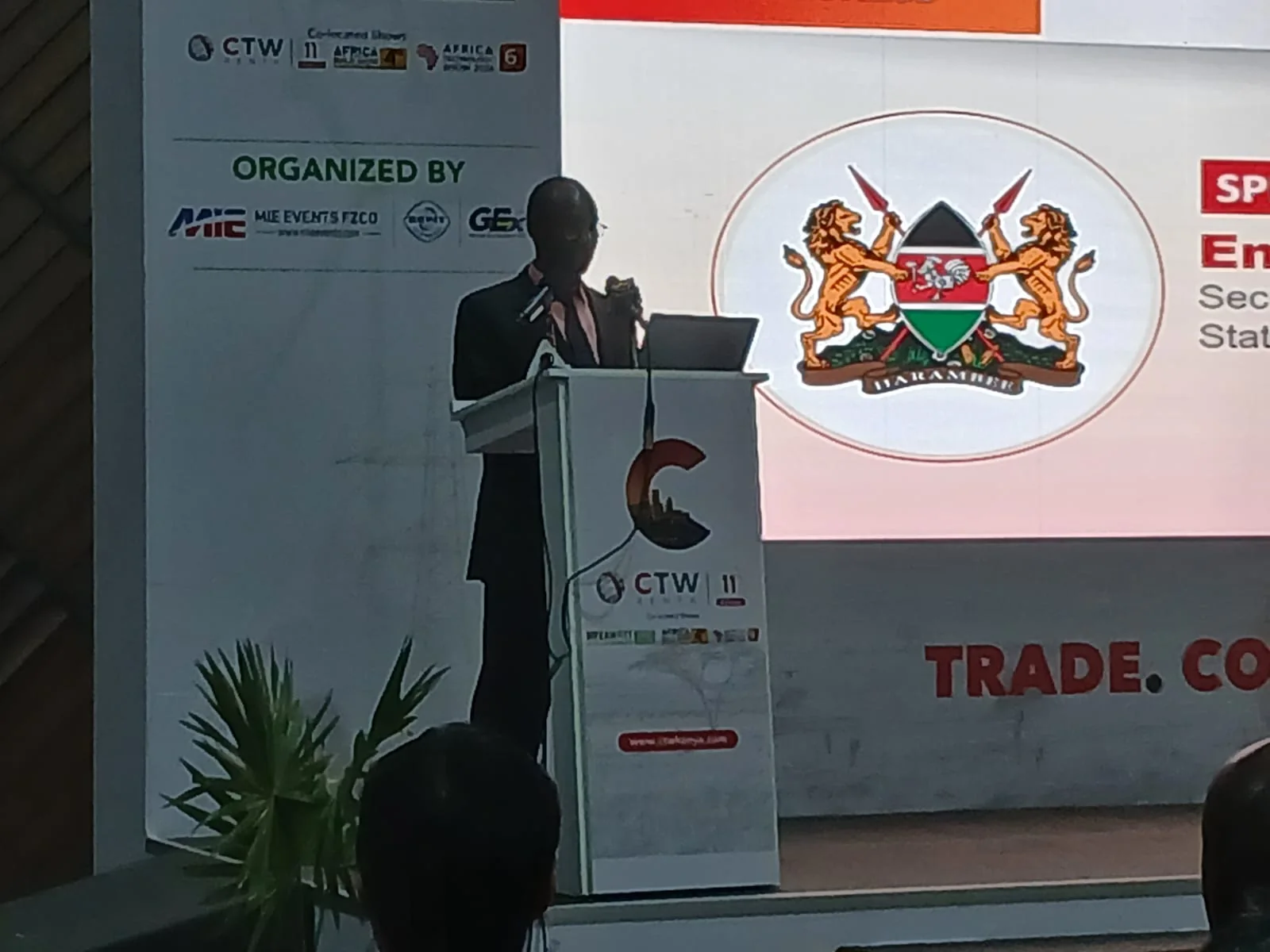
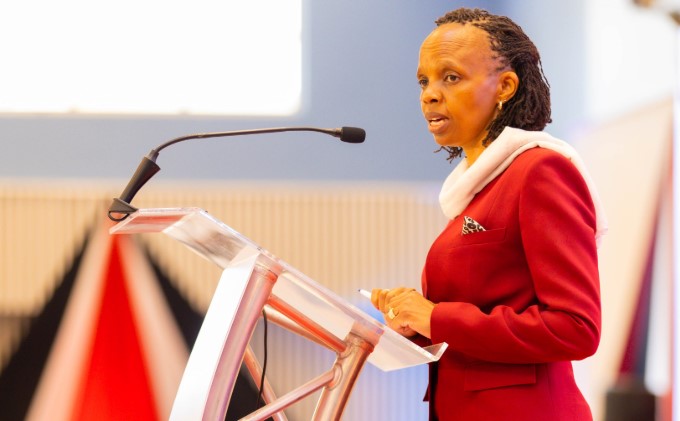
Speaking on behalf of Energy and Petroleum Cabinet Secretary Opiyo Wandayi during the opening of the 11th China Trade Week and Megawatt Africa Expo at the Kenyatta International Convention Centre (KICC) on Tuesday, Eng Thomas Karungu, Managing Director and Alternate Director to the Principal Secretary, State Department for Energy, said Kenya is seeking long-term industrial partnerships that will accelerate its clean energy ambitions while strengthening local manufacturing.
The three-day exhibition, running from July 22 to July 24, has brought together government officials, manufacturers, investors, project developers, technology providers and energy stakeholders from Kenya, China and other countries to explore opportunities in the energy sector.
Karungu said renewable energy sources, particularly wind and solar, already account for approximately 90 per cent of the electricity supplied to Kenya's national grid, with the government targeting 100 per cent clean electricity by 2030 under the Kenya Energy Compact.
"We are equally committed to achieving universal access to electricity and clean cooking by the same year, 2030," he said.
To support the country's growing energy demand, the government plans to expand the national transmission network by approximately 8,000 kilometres and install about 12,000 megavolt-amperes (MVA) of transformer capacity by 2030.
Karungu said achieving those targets would require substantial investment in electricity generation, transmission and distribution infrastructure, mini-grids, battery storage and off-grid energy solutions.
"These are not modest undertakings. They require capital, technology, technical expertise, strong institutions and sustained cooperation between the public and private sectors," he said.
He said Kenya's partnership with China should increasingly focus on productive investment that strengthens the country's manufacturing base and supports economic transformation.
"Kenya seeks partnerships that support local assembly, component manufacturing, technology transfer, research, technical training and the development of local supply chains," he said.
Karungu invited Chinese investors to establish manufacturing facilities for solar panels, transformers, smart meters, transmission equipment and electric vehicle charging infrastructure, while also partnering in geothermal development, mini-grid deployment, battery storage, clean cooking technologies, waste-to-energy projects and digital electricity management systems.
He said such investments would create employment, strengthen Kenya's engineering capabilities and position the country as a manufacturing and distribution hub for the East African region.
Addressing exhibitors at the trade fair, Karungu said Kenya offers more than a market for imported products.
"Kenya offers more than a market for your products. It offers an opportunity to establish long-term industrial partnerships," he said, urging companies to invest locally, work with Kenyan enterprises, build after-sales and maintenance capacity and adapt their technologies to African markets.
He added that the government is particularly interested in technologies that improve grid stability, reduce system losses, expand electricity access in underserved communities and lower the cost of power for households and businesses.
Karungu also urged investors and financiers to develop innovative financing models that would make clean energy projects commercially viable while ensuring electricity remains affordable.
He challenged Kenyan manufacturers, engineers, contractors and small and medium-sized enterprises to position themselves within the country's growing clean energy value chain.
"The transition to a modern energy system must not occur around Kenyan enterprises; it must be built with them," he said.
He warned that an energy transition that depends permanently on imported skills and equipment would deny Kenya the full economic benefits of its clean energy ambitions.
As electricity demand continues to rise with industrialisation, urbanisation, digitalisation and the growth of electric mobility, Karungu said Kenya remains committed to investing in energy solutions that are sustainable, affordable and capable of delivering long-term economic value while protecting the environment and benefiting local communities.












































Comments
Sign in with Google to comment, reply, and like comments.
Continue with Google