Uganda has officially declared itself Ebola-free after health authorities confirmed there had been no further transmission of the virus since the country's last confirmed patient was discharged more than six weeks ago.
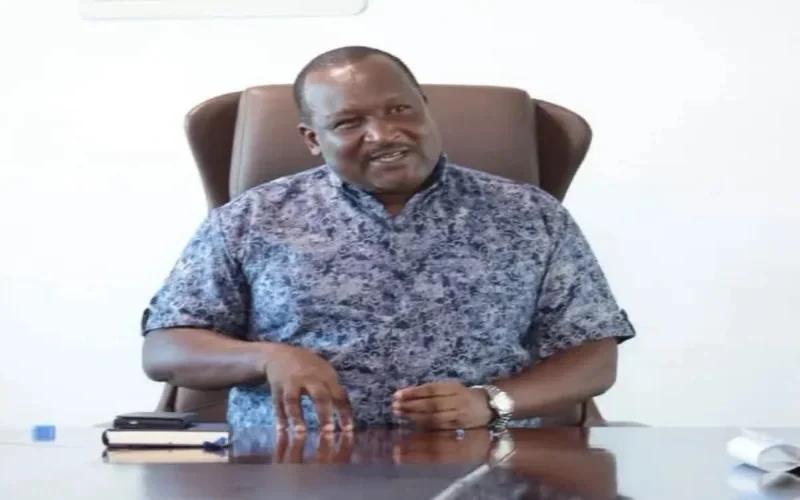
Health Minister Chris Baryomunsi made the announcement on Tuesday, exactly 42 days after Uganda discharged its last Ebola patient on June 16, in accordance with World Health Organisation (WHO) guidelines for declaring an Ebola outbreak over. Under WHO guidelines, an Ebola outbreak can be declared over after two full incubation periods, or 42 consecutive days, without a new confirmed case.
"Uganda is officially Ebola-free," Baryomunsi said in a statement.
However, WHO had not formally commented on Uganda's declaration at the time of publication.
Uganda declared the outbreak on May 15 after confirming Ebola cases linked to neighbouring Democratic Republic of Congo (DRC). Since the declaration, Uganda has recorded 20 confirmed cases and two deaths. Of the confirmed infections, 15 were imported from the DRC, while five resulted from local transmission.
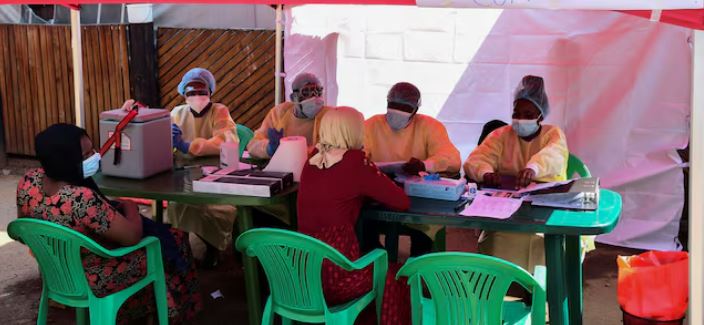
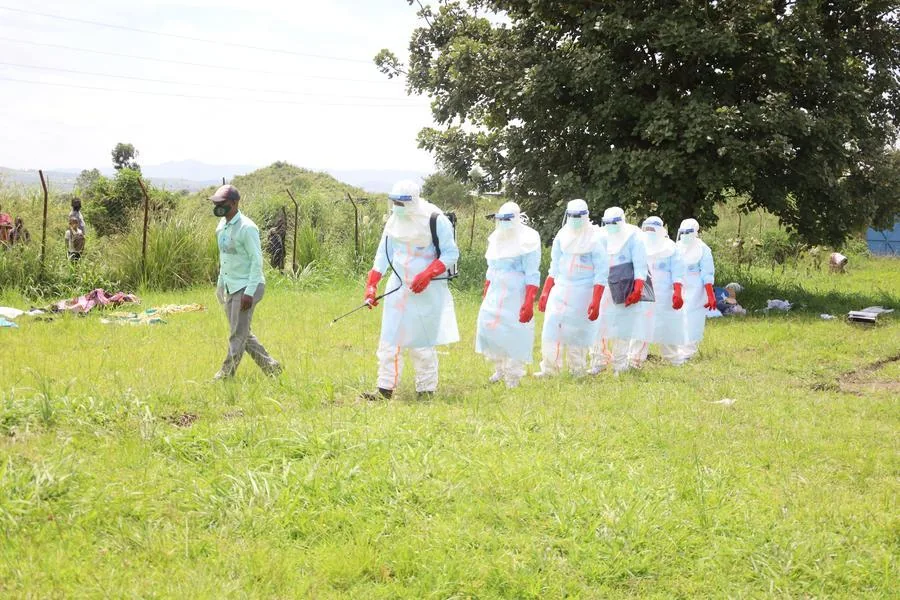
According to the ministry, the outbreak was successfully contained through intensive surveillance, contact tracing and quarantine measures, adding that officials were able to trace every confirmed infection back to the source case.
"Unlike previous Ebola outbreaks that informed the current 42-day declaration policy, Uganda's 2026 Ebola outbreak arose from a fully documented importation event," the ministry said.
It added that investigators identified the source of infection, established the route through which the virus entered Uganda and successfully linked every confirmed case, enabling response teams to reconstruct the entire chain of transmission.
Throughout the response, the UN health agency supported Uganda's surveillance, laboratory testing, contact tracing, infection prevention and case management efforts while urging continued vigilance because of Ebola activity in neighbouring DRC.
"All identified contacts were institutionally quarantined and completed the mandatory 21-day follow-up without evidence of further transmission. Enhanced surveillance has detected no unexplained community transmission," the ministry said.
Although Uganda has officially declared the outbreak over, health authorities are expected to maintain surveillance and preparedness measures to rapidly detect and respond to any future imported cases.





































Comments
Sign in with Google to comment, reply, and like comments.
Continue with Google