Imagine losing your wife, daughter or a new mother because a life-saving medicine costing about Sh95 was unavailable when she needed it most. It sounds unimaginable, yet for some families in Kenya, this is a heartbreaking reality.
Every day, midwives face the terrifying challenge of managing postpartum haemorrhage (PPH), one of the leading causes of maternal deaths. They know how to save women who develop severe bleeding after childbirth, but too often they are forced to work with empty shelves instead of the medicines and equipment that could mean the difference between life and death.
Health experts say every minute counts when a woman develops severe bleeding after giving birth. Without urgent treatment, a mother suffering from PPH can die in as little as 15 minutes.
For the midwife standing beside her, those minutes are filled with panic, difficult decisions and a desperate fight to keep her alive. Yet in many health facilities across Kenya, one of the medicines recommended to stop the bleeding is simply unavailable.
Heat-stable carbetocin, a life-saving medicine recommended by the Ministry of Health and the World Health Organisation, has experienced repeated stock-outs nationwide. The medicine costs about Sh95 after subsidy.
 Eunice Atsali, Vice President of the Midwives Association of Kenya and lecturer at Kenyatta University. (Photo: Charity Kilei)
"It is a very scary situation for any midwife whenever you encounter postpartum haemorrhage," says Eunice Atsali, Vice President of the Midwives Association of Kenya and a lecturer at Kenyatta University.
Atsali says training alone is not enough to save mothers' lives. While many midwives know exactly what to do when a woman begins bleeding heavily, they often lack the essential medicines and equipment required to follow national and international treatment guidelines.
"A midwife may have the knowledge and skills, but if the medicines are missing, she is left helpless," she says.
Current evidence recommends treating severe postpartum bleeding using oxytocin combined with misoprostol or heat-stable carbetocin combined with misoprostol. However, Atsali says many facilities continue to experience shortages of these medicines, particularly heat-stable carbetocin.
"In the recent past, we advocated for heat-stable carbetocin to be included in policy and treatment protocols, but today it is out of stock across the country. You are leaving that midwife incapacitated because she cannot provide the care that is required," she says.
The shortages are particularly devastating in remote counties where referral options may be limited, and every delay increases the risk of death.
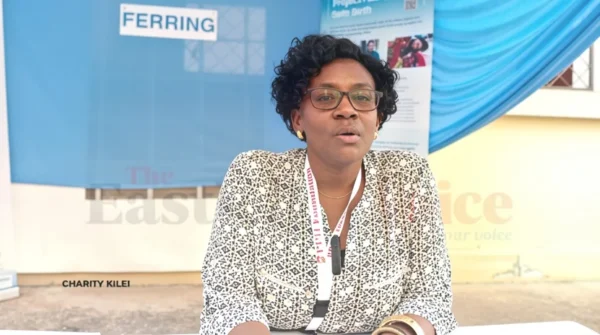 Atieno Jalang'o, Africa Coordinator for Project Family Safe Path at Ferring Pharmaceuticals. (Photo: Charity Kilei)
The problem extends beyond medicines. Many hospitals also lack simple tools used to measure how much blood a woman has lost after delivery. International guidelines recommend calibrated drapes that accurately collect and measure blood loss, allowing health workers to identify PPH early, before it becomes fatal.
Instead, many Kenyan facilities still rely on visual estimation.
"We call it 'macho meter,'" Atsali says with concern. "You simply use your eyes to estimate the blood loss."
The method is highly unreliable. Midwives can easily underestimate or overestimate bleeding, delaying life-saving treatment or leading to unnecessary interventions.
According to Atsali, calibrated drapes are rarely available in routine maternity care and are mostly found in hospitals participating in research projects.
"I supervise students across four counties, and whenever I visit facilities, I check for these drapes. They are simply not there," she says.
Women who survive severe PPH can also suffer long-term complications, including acute kidney injury, chronic kidney disease and other life-altering health problems that could have been prevented through timely treatment.
Despite these challenges, some counties have begun using combinations of oxytocin and misoprostol based on emerging research, including studies conducted in Kenya. Atsali believes the country should consider strengthening such treatment approaches while ensuring a reliable supply of essential medicines.
For her, the problem is no longer a lack of knowledge.
"We know why mothers are dying, yet we continue allowing them to die because we are not providing what is needed," she says.
She argues that while investments in theatre equipment, maternity beds and hospital infrastructure are important, they cannot replace basic life-saving commodities.
"Why should we have beautiful treatment protocols when implementation fails because of a simple medicine that costs less than one dollar?" she asks.
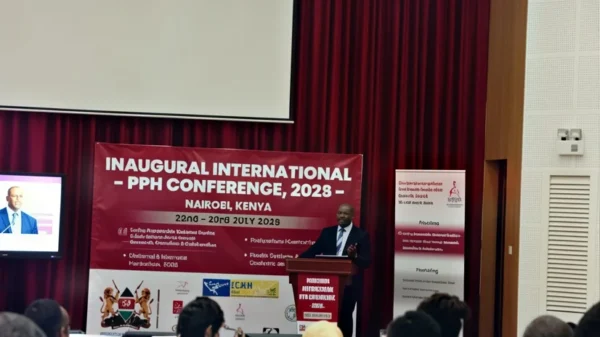 A presentation during the inaugural PPH conference in Nairobi. (Photo: Charity Kilei)
According to Atieno Jalango, Africa Coordinator for Project Family Safe Path at Ferring Pharmaceuticals, maintaining the cold chain for maternal medicines and persistent financial constraints remain two of the biggest barriers to providing life-saving treatment for PPH.
Jalango said heat-stable carbetocin was developed to overcome one of the country's biggest healthcare challenges. Unlike oxytocin, which requires continuous refrigeration from manufacture to administration, heat-stable carbetocin remains effective for up to 48 months at temperatures of 30 degrees Celsius.
This makes it suitable for Kenya's hot climate and health facilities with limited refrigeration capacity.
"Heat-stable carbetocin is a uterotonic that is given immediately after delivery to help the uterus contract and prevent excessive bleeding," she said. "Its greatest advantage is that it does not require refrigeration, making it suitable for low- and middle-income countries like Kenya, where maintaining the cold chain can be difficult."
Despite these advantages, access remains uneven because many counties struggle to finance procurement.
"Financial constraints remain a major challenge. While at least one facility in every county has access to heat-stable carbetocin, universal availability has not yet been achieved because some counties are unable to procure adequate supplies," Jalango said.
She said delayed ordering further worsens the problem. Since the medicine is in high global demand, procurement can take between 7 months and 1 year from the time an order is placed. Counties therefore need to forecast their needs early and make timely payments to avoid stock-outs.
Evidence from counties already using the medicine shows a significant impact. Jalango said facilities in Turkana have reported more than a 90 per cent reduction in PPH cases, while Likoni Sub-County Hospital in Mombasa has recorded a 52 per cent decline. Other maternal health programmes implemented in ten priority counties and Makueni have reported reductions ranging from 60 to 82 per cent.
Subsidised cost
Although the medicine is sold in the private sector for about Sh2,500 per dose under the brand name Pabal, Jalango said Ferring Pharmaceuticals, through a global access initiative, has made it available to Kenya's public health sector at a subsidised cost of about Sh90 to Sh95 per dose through the Kenya Medical Supplies Authority (KEMSA).
She stressed that affordable pricing alone is not enough to save mothers' lives. Counties must also invest in proper forecasting, timely procurement and reliable financing to ensure the medicine is available whenever a woman starts bleeding after childbirth.
"We already have the evidence, the policies, and an affordable medicine," she said. "The challenge now is ensuring that every health facility has access to it whenever a mother needs it."
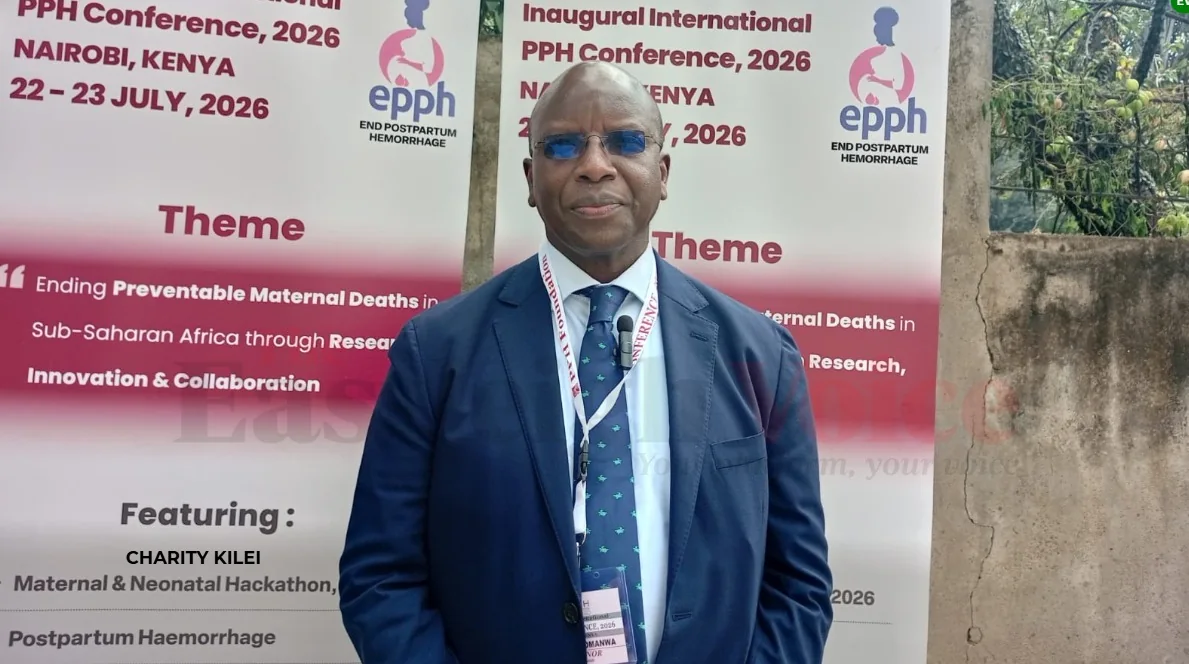
Speaking during the inaugural Postpartum Haemorrhage Conference, Dr Kireki Omanwa, a consultant obstetrician and gynaecologist, president of the Kenya Obstetrical and Gynaecological Society (KOGS) and senior lecturer at the University of Nairobi, called for greater investment in innovation, essential commodities and stronger health systems to tackle PPH.
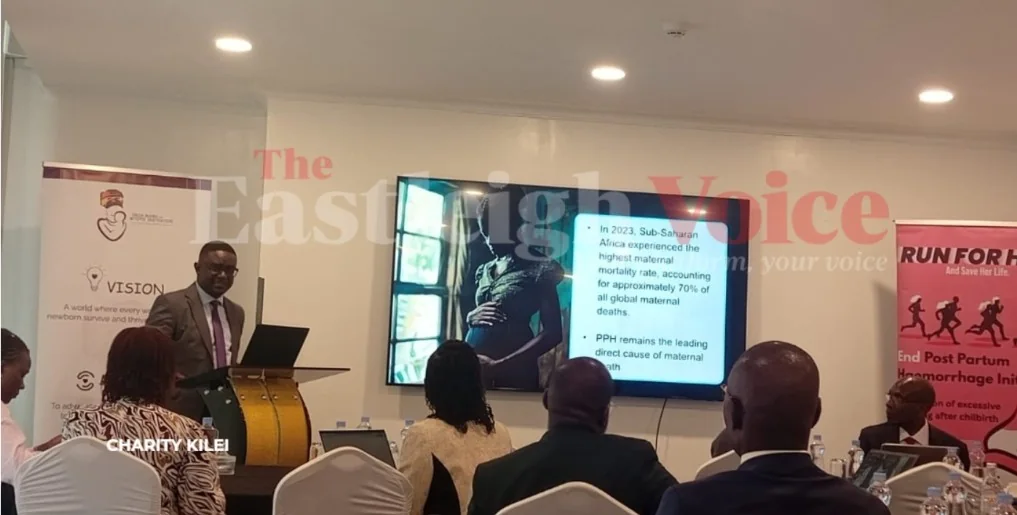
The conference brought together researchers, obstetricians, midwives, policymakers, innovators, development partners and healthcare workers from Kenya, Malawi, Uganda, Zambia and other African countries to share research findings and develop innovative approaches to preventing and managing PPH.
Address practical challenges
Dr Omanwa said innovation must address practical challenges faced by healthcare workers, particularly the quality of medicines and the early diagnosis of excessive bleeding after childbirth.
He praised young innovators for developing prototypes to address some of the key challenges contributing to PPH. One innovation is designed to monitor the quality of oxytocin, the medicine most commonly used to prevent and treat PPH.
Because oxytocin is highly sensitive to temperature, it must be stored under a continuous cold chain to remain effective. The innovation would help healthcare providers verify that the medicine has maintained the required storage conditions before it is administered.
"Many health facilities, especially in rural areas, do not have reliable electricity or backup generators. If power goes off even for an hour, the quality of oxytocin may already be compromised," he said.
Although the innovation still requires further refinement, Dr Omanwa said it demonstrates how young researchers are developing practical solutions to longstanding maternal health challenges.
"I think our young innovators are on the right track. This is exactly the kind of innovation we need," he said.
Dr Omanwa also highlighted the inability of many facilities to accurately measure blood loss after childbirth.
Calibrated blood collection drapes
He said findings from the landmark E-MOTIVE study, which followed more than 200,000 women, showed that calibrated blood collection drapes enabled healthcare workers to identify PPH much earlier and begin treatment immediately.
"The calibrated drapes allow healthcare workers to objectively measure blood loss. Once the blood reaches 300 millilitres, it triggers immediate assessment, medication, fluids, and other interventions before the bleeding becomes life-threatening," he said.
However, many Kenyan facilities continue to rely on visual estimation, commonly referred to by healthcare workers as the "macho meter".
"Our eyes cannot accurately quantify blood loss. A healthcare worker may think a woman has lost 400 millilitres when in reality she has lost nearly twice that amount," he said.
Other methods, such as estimating blood absorbed by surgical swabs or abdominal packs, are also imprecise and may delay diagnosis.
Severity of bleeding
Without calibrated drapes, Dr Omanwa warned, healthcare workers often underestimate the severity of bleeding, allowing mothers to deteriorate before treatment begins.
While some facilities received calibrated drapes during the E-MOTIVE research project, he said they remain unavailable in many hospitals across the country.
"I do not think every facility where women deliver has these drapes. This is where both the national and county governments must step in to ensure they are continuously available because stock-outs remain a major problem," he said.
Dr Omanwa also sought to dispel misconceptions surrounding excessive bleeding after childbirth. In some communities, women are encouraged to believe that passing large blood clots after delivery is the body's natural way of "cleaning itself."
"We have encountered mothers who are told that heavy bleeding with clots is normal because the body is cleansing itself. Unfortunately, by the time they realise something is wrong, they are already on a very slippery slope towards postpartum haemorrhage," he said.
Under the latest World Health Organisation guidelines, PPH is defined as blood loss of 300 millilitres or more following a vaginal delivery, accompanied by signs such as dizziness, light-headedness, cold clammy skin or a rapid heartbeat. Following a caesarean section, excessive bleeding is defined as blood loss of one litre or more.
Risk factors
Dr Omanwa said risk factors include teenage pregnancy; pregnancy among women aged 35 years and above; severe anaemia; carrying twins or triplets; delivering very large babies; multiple previous births; uterine fibroids; and untreated tears to the birth canal after delivery.
He expressed particular concern about severe anaemia among pregnant women, saying some arrive at health facilities with dangerously low haemoglobin levels.
"Every pregnant woman should have a haemoglobin level of between 11 and 12 grams per deciliter. Unfortunately, we sometimes receive mothers with levels as low as 2.1 grams. These women are at extremely high risk because even small amounts of blood loss can become life-threatening," he said.



















































Comments
Sign in with Google to comment, reply, and like comments.
Continue with Google