State Ministries, including the State House, Immigration, and the Office of the President, are set to receive increased funding in the 2025-26 supplementary budget, exceeding the 10 per cent limit.
According to the National Treasury, the additional allocations respond to previous overspending and commitments to settle arrears, with Parliament now required to approve the extra expenditure.
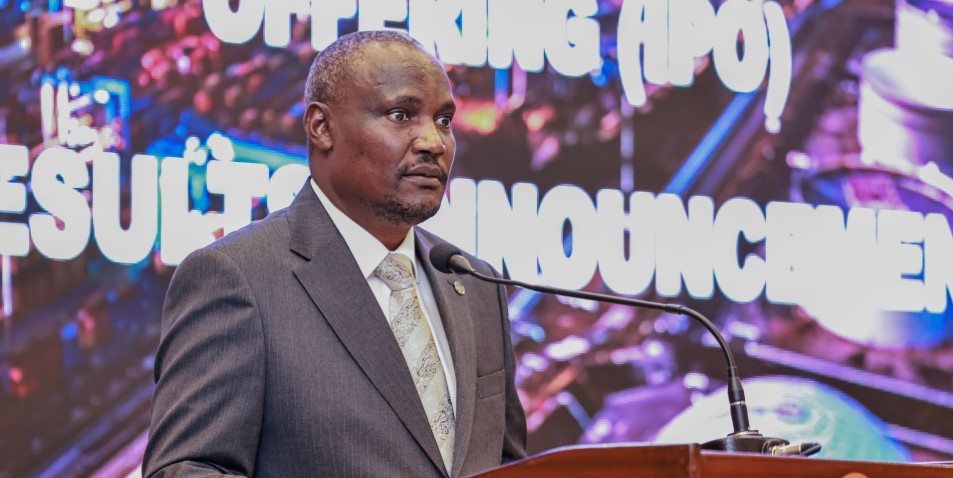
Treasury Cabinet Secretary John Mbadi said the ministry plans to raise ministerial spending by Sh287.4 billion, an 11.3 per cent increase from the original allocation, surpassing the limit set under Article 223 of the Constitution.
“The gross ministerial expenditure in the full year 2025-26 supplementary estimates number 1 has increased by Sh287.4 billion, reflecting an increase of 11.3 per cent from the original approved ministerial estimates exceeding the limit set under Article 223 of the Constitution of Kenya,” Mbadi told the National Assembly's Budget and Appropriations Committee while presenting the 2026 Budget Policy Statement (BPS).
“In this regard, in line with the constitution, the National Treasury is requesting the Parliament for special approval of the full year 2025-26 supplementary estimates number 1.”
Including county government allocations, the total proposed increase rises to Sh316.7 billion, or 13.5 per cent.
Parliament has historically approved such increases to cover unexpected costs and surges in the prices of goods and services.
The main beneficiaries include the State House, which had exceeded its full-year recurrent budget by January, the seventh month of the financial year.
The allocation for State House affairs has been increased by Sh8.4 billion, equal to its initial annual allocation, highlighting the high cost of running the Presidency.
The Office of the President will also receive Sh1.3 billion to settle pending bills, providing relief for contractors who supplied the now-defunct Nairobi Metropolitan Services.
The Department of Immigration and Citizen Services is set to receive an additional Sh4.39 billion to support mobile programmes for issuing national identity cards, expected to increase ahead of the 2027 General Election.
Of the additional expenditure, Sh185.8 billion has already been disbursed. Among these allocations is Sh3.88 billion to settle outstanding arrears from the 2017 university lecturers’ collective bargaining agreement.
Analysis of spending in the first six months of the financial year shows that recurrent expenditure exceeded targets due to higher outlays on operations, maintenance, and debt service, while development and county disbursements lagged behind.
Persistent high recurrent costs, driven by wages, allowances, and operational expenses, have prompted the Treasury to urge ministries, departments, and agencies to adhere to quarterly ceilings.
Officials warned that early exhaustion of budgets undermines fiscal planning and forces unplanned allocations.
Mbadi assured legislators that firm measures are in place to prevent further accumulation of pending bills by ministries, departments, and agencies (MDAs), while progressively clearing the existing backlog.
“The pending bills have accumulated over the years. This is not something we are going to sort out today because resources are limited and we cannot stop the country from moving while we are still settling pending bills,” he said.
“What we are doing first is to stop the accumulation of further pending bills. But those that have accumulated over the years, we will have to pay them, but in a standard manner so that they also don’t disrupt services.”
He noted that the Treasury Single Account (TSA) system is expected to enhance transparency, ensuring systematic payments that prioritise older invoices and reduce discretion at the institutional level.













Comments
Sign in with Google to comment, reply, and like comments.
Continue with Google