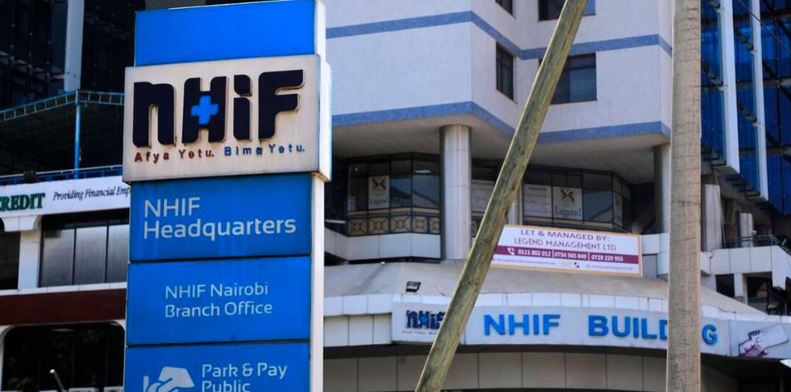
Auditor General Nancy Gathungu has been directed to undertake a forensic audit of the defunct National Hospital Insurance Fund (NHIF) reserve account holding Sh21 billion in Incurred But Not Reported claims, amid allegations of irregular payments.
The National Assembly Public Petitions Committee, in its report tabled in the House, said the audit is meant to establish how the funds were managed and whether any healthcare providers benefited from the payments.
The legislators noted that the review should cover all related reserves since the start of the system and trace how payments were eventually made.
“The committee recommends that the Office of the Auditor General conduct a forensic audit on the entirety of IBNR funds set aside since inception and eventual payments made within six months of tabling of this report,” reads the committee report.
The Incurred But Not Reported (IBNR) account is described as a reserve used in the insurance sector to cater for claims that have already happened but have not yet been reported to an insurer.
The recommendation follows a petition submitted to Parliament in March 2024 by fraud management consultant Bernard Muchere, who raised questions on the legitimacy of the IBNR reserves reflected in NHIF financial statements and alleged possible irregular payments.
He claimed the reserves were not properly supported and may have been used in a way that did not meet required financial standards.
While reviewing the matter, the committee noted that IBNR provisions are a standard and required part of insurance liabilities. However, it stressed that all entries must be backed by proper actuarial models and verified claims data.
“If supported, they may constitute false liabilities and violate International Public Sector Accounting Standards (IPSAS 19) on provisions and contingent liabilities,” the committee warned.
The committee also noted that proper estimation of IBNR provisions is important in ensuring the financial stability of an insurer, protecting contributors and maintaining confidence in the insurance system.
A forensic audit refers to a detailed financial investigation carried out to detect fraud, misuse of funds, or irregular financial activity within an organisation, including tracing how money was used and who benefited.
Through his petition, Muchere asked MPs to compel the former NHIF management board to present a clear and fair picture of the fund’s financial position, identify healthcare providers who may have received payments linked to the IBNR claims, and recover any funds found to have been wrongly paid.
According to the committee, the Sh21 billion reserve was drawn from several schemes, including civil servants’ schemes, which contributed Sh2.9 billion, the EduAfya Scheme Sh4.1 billion, county schemes Sh525.3 million, parastatals Sh780.7 million, retirees' schemes Sh191 million and Linda Mama Sh2.3 billion.
Muchere argued in his petition that the creation of the IBNR reserve deprived NHIF of funds through what he termed as ineligible claims during the financial year ending June 30, 2022.
He also stated that an analysis of NHIF financial statements did not provide evidence to support the IBNR claims and pointed to what he described as siphoning of taxpayers’ money through the Fund.
According to him, the Sh21 billion reserve contributed to a major crisis at NHIF, which left many patients unable to access treatment in different facilities.
He told the committee that the unbudgeted claims were charged against members’ contribution schemes, leading to financial pressure that affected payment of hospital bills for genuine contributors.
“The IBNR reserves were fraudulently created to enable siphoning of the Sh21 billion from NHIF funds as no reserves were set aside in the 2021/2022 financial year or the previous years,” the petitioner told the committee.
However, the Ministry of Health rejected the claims, saying no patients were denied services during the period in question.
“Under the NHIF mandate, members were entitled to receive care as long as their contributions were paid,” the ministry told the committee.
The ministry maintained that the establishment of an IBNR reserve does not interfere with access to healthcare services, stating that it is an accounting requirement meant to protect members’ contributions.
It further denied claims that the reserve was used to siphon Sh21 billion, saying the figures were carefully calculated to reflect actual liabilities.






























Comments
Sign in with Google to comment, reply, and like comments.
Continue with Google