The rise in the use of hired gangs by political actors seeking to intimidate rivals, disrupt demonstrations, and suppress civic activism is raising alarm ahead of the country’s 2027 General Elections.
Hired through neighbourhood contacts to avoid leaving any electronic fingerprints, potential recruits are often directed to gather in a specific, predetermined location ahead of an event and ordered to dress in matching outfits with a face covering.
They work in groups of 20-50, shepherded by a leader. The most daring, the most violent, the "person in the top gear", as one 23‑year‑old told The Eastleigh Voice, has a chance, albeit slim, of rising through the ranks.
Their rise is blamed on several issues, with unemployment listed as the biggest cause of youth vulnerability.
According to the Federation of Kenya Employers (FKE), youth aged 15-34 make up about 35 per cent of Kenya’s population. Yet, they experience an unemployment rate of around 67 per cent, which is five times the national average.
Each year, over one million young Kenyans enter the labour market, many lacking adequate skills or opportunities. This leads to a pronounced skills mismatch.
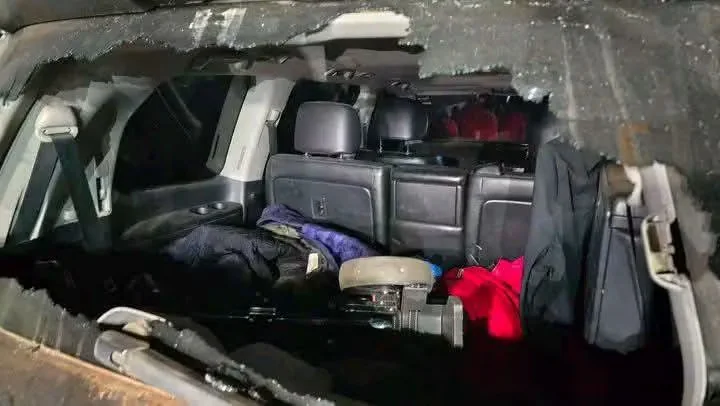
 One of the vehicles destroyed during the unrest in Nyahururu on July 12, 2026. Rising attacks by political goons have raised concerns over security and the risk of election-related violence ahead of the 2027 polls. Photo: X/Hon Caroli Omondi)
According to ManpowerGroup’s Global Talent Shortage survey, around 74 per cent of employers globally report difficulty finding skilled talent.
An FKE 2023 Skills Needs Survey found that 20 per cent of enterprises in Kenya report difficulty filling vacancies due to a lack of qualified candidates.
The 'goon phenomenon', according to the Executive Director of the International Commission of Jurists Kenya, Demas Kiprono, is a recurring feature of periods of intense political competition in the country.
"Whenever there is high political contestation in Kenya, there are things that happen to human rights and democratic freedoms that we find abhorrent,” he said, warning of the proliferation of goonism by individuals allegedly paid to violate the rights of others for political gain.
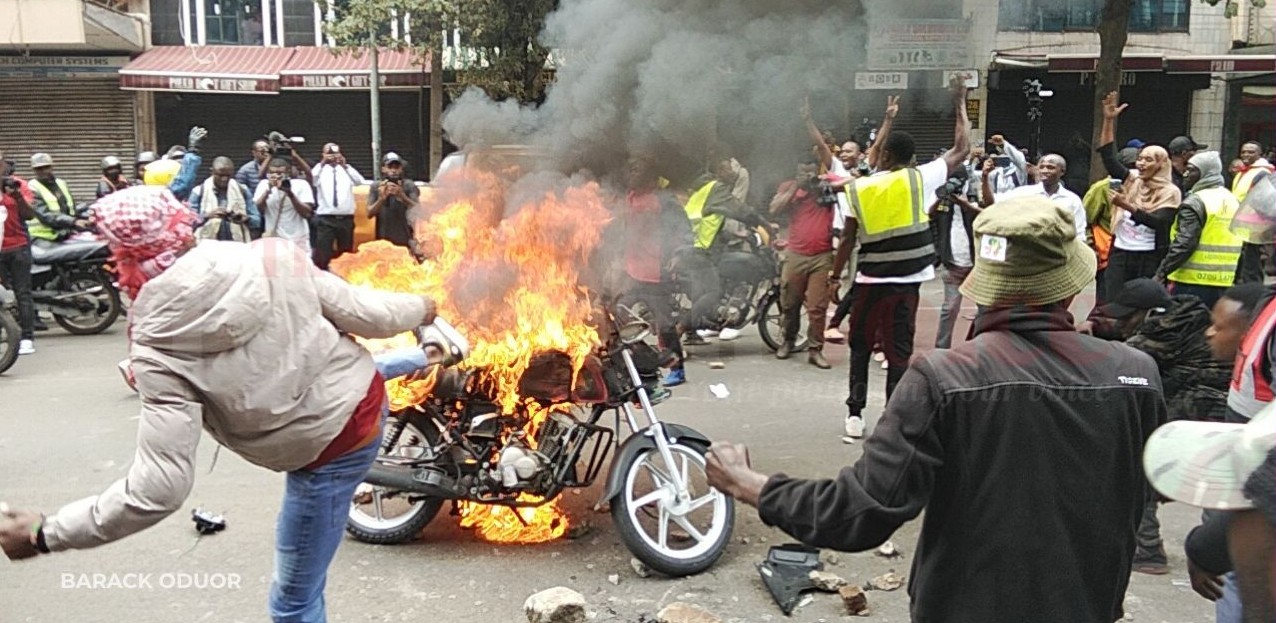 Protesters set ablaze a motorcycle belonging to an alleged goon during protests in Nairobion June 17, 2025. (Photo: Justine Ondieki)
A position echoed by the Kenya Human Rights Commission (KHRC), which has flagged that the use of politically sponsored gangs amounts to informal repression. “What you call goonism is what is scholarly known as informal repression,” KHRC’s Head of Communication, Ernest Oduor, said.
The Law Society of Kenya (LSK) has also called for investigations targeting the financiers of political violence instead of only arresting those directly involved in attacks.
LSK President Charles Kanjama urged authorities to pursue sponsors, coordinators, and organisers of criminal gangs with what he described as “bulldog tenacity”, saying dismantling the networks behind political violence is the only sustainable solution.
Kanjama further said the Society would work with human rights organisations and civil society groups to push for accountability, insisting that ending politically sponsored violence requires prosecuting those who fund, organise, and direct the attacks, not just the individuals hired to execute them.
The police, meanwhile, insist they are on course to stamp out the vice, but analysts say it is deeply entrenched on all sides.
During anti‑government protests last year, The Eastleigh Voice saw firsthand how hundreds of goons appeared to work directly alongside police to attack demonstrators, later looting and vandalising businesses in central Nairobi.
Last month, CCTV footage showed uniformed officers moving alongside an armed gang as they swarmed into the All Saints Church in Nairobi, violently interrupting a civil rights meeting.
Police spokesperson Michael Muchiri, however, told journalists that claims the force works alongside goons are "preposterous", suggesting the above incidents involved rogue officers who were now under investigation.
"The National Police Service is determined to ensure the 'goon culture' does not gain a foothold in this country," Muchiri said.


































Comments
Sign in with Google to comment, reply, and like comments.
Continue with Google