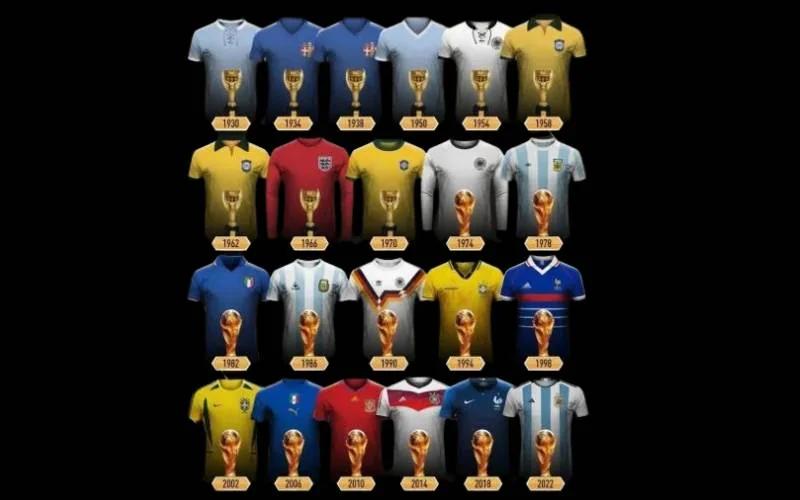
Every FIFA World Cup-winning jersey tells a story that extends far beyond the final whistle. While trophies are lifted by players, the shirts they wear become enduring symbols of sporting greatness, national pride and football history.
From Uruguay's plain sky-blue cotton jersey at the inaugural 1930 World Cup to Argentina's iconic striped Adidas kit worn by Lionel Messi and his teammates in 2022, champion shirts have evolved alongside the game itself.
The earliest World Cup kits were designed with functionality in mind. Heavy cotton fabrics, simple colours and minimal detailing defined the first decades of international football, with Uruguay's light blue and Italy's deep blue jerseys becoming some of the competition's earliest symbols of success.
By the 1950s, jerseys had begun reflecting national identity more deliberately. Brazil's famous yellow shirt, introduced after the disappointment of the 1950 World Cup, replaced the nation's previous white kit and went on to become the most successful jersey in tournament history, accompanying the Seleção to five world titles.
England's lone World Cup triumph in 1966 came in a memorable red away strip, proving that championship moments are not always written in a nation's traditional home colours.
As football entered the commercial era, kit manufacturers began leaving their mark. Adidas branding became increasingly prominent during West Germany's triumphs in 1974 and 1990, while advances in textile technology transformed jerseys from heavy cotton garments into lightweight, breathable performance wear.
The designs also became bolder. Argentina's sky-blue and white stripes, Italy's timeless Azzurri blue, France's modern interpretations of their traditional colours and Spain's vibrant red all became instantly recognisable images linked to World Cup glory.
Across nearly a century of competition, certain colours have come to define success. Brazil's yellow remains the tournament's most decorated, while blue has featured prominently in triumphs by Italy, Argentina and France. Away kits, however, have only occasionally reached the summit, making England's 1966 victory even more distinctive.
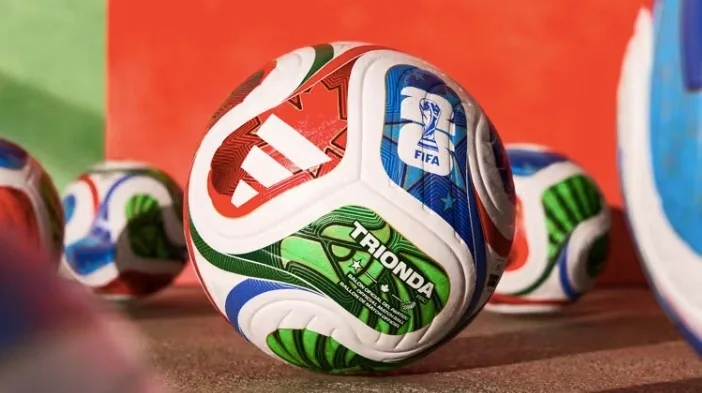
With the 2026 FIFA World Cup set to crown a new champion after Sunday's final, another jersey is poised to join football's most exclusive collection, adding a fresh chapter to a story that began with a simple sky-blue cotton shirt in Montevideo nearly a century ago.












































Comments
Sign in with Google to comment, reply, and like comments.
Continue with Google