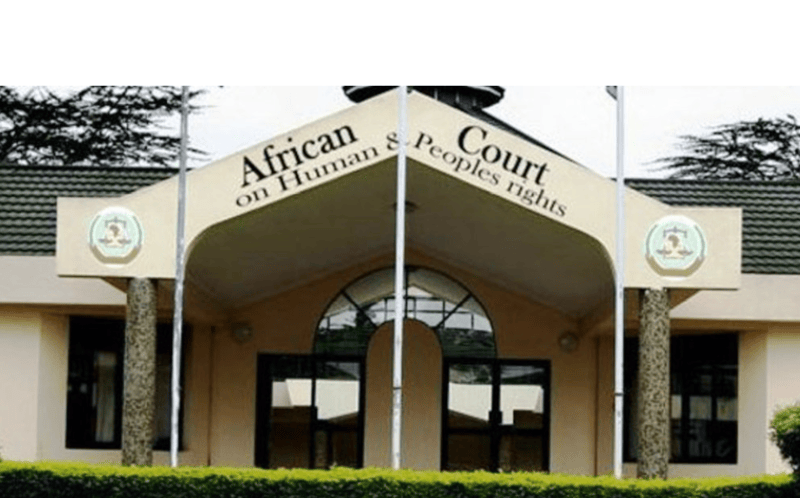
African Union (AU) member states have been urged to provide stronger political, legal and financial support for the African Court on Human and Peoples’ Rights (AfCHPR) as the regional tribunal marked 20 years of delivering justice for victims of rights violations across the continent on Friday.
The call was made by Amnesty International in a new report released to mark the Court’s anniversary, highlighting its contribution to protecting human rights while urging governments to expand access to the institution and ensure its decisions are implemented.
Since becoming operational in 2006, the African Court has finalised more than 250 cases, including decisions addressing fair trials, torture, media freedom, indigenous peoples’ rights, environmental protection and discrimination.
The Court, based in Arusha, Tanzania, has played a significant role through landmark judgments, including the 2017 decision recognising the rights of Kenya’s Ogiek indigenous community, rulings that strengthened media freedom in Burkina Faso, and a decision concerning environmental pollution linked to toxic waste dumping in Côte d’Ivoire.
However, according to Amnesty, the Court’s ability to serve as a regional tribunal for justice remains limited because many African countries have not fully embraced its system.
Only 34 of the AU’s 55 member states have ratified the protocol establishing the Court, while only seven currently allow individuals and non-governmental organisations to directly file complaints before it.
“It is vital that every AU member state ratifies the African Court Protocol and makes the declaration that would allow individuals and NGOs to directly access the Court, so that the African Court can continue to protect human rights in a meaningful way for decades to come,” Amnesty International’s Deputy Regional Director for East and Southern Africa, Japhet Biegon, said.
According to Amnesty, more needs to be done to ensure people across Africa can benefit from the Court’s work since restrictions on access have contributed to fewer cases from some regions, including Central Africa, North Africa and Southern Africa.
The rights group similarly raised concerns over delays by some governments in implementing judgments issued by the Court, despite the decisions being legally binding.
“Limited access remains one of the African Court’s biggest obstacles. We join with civil society organisations, bar associations, academic institutions, and people across the continent in calling for AU member states to enable the African Court to fully live up to its promise,” Biegon said.
“Enabling and protecting the Court would contribute to protecting the rights of the African people."































Comments
Sign in with Google to comment, reply, and like comments.
Continue with Google