“Bring the Kenyan tea. Please, I want my tea to come here.”
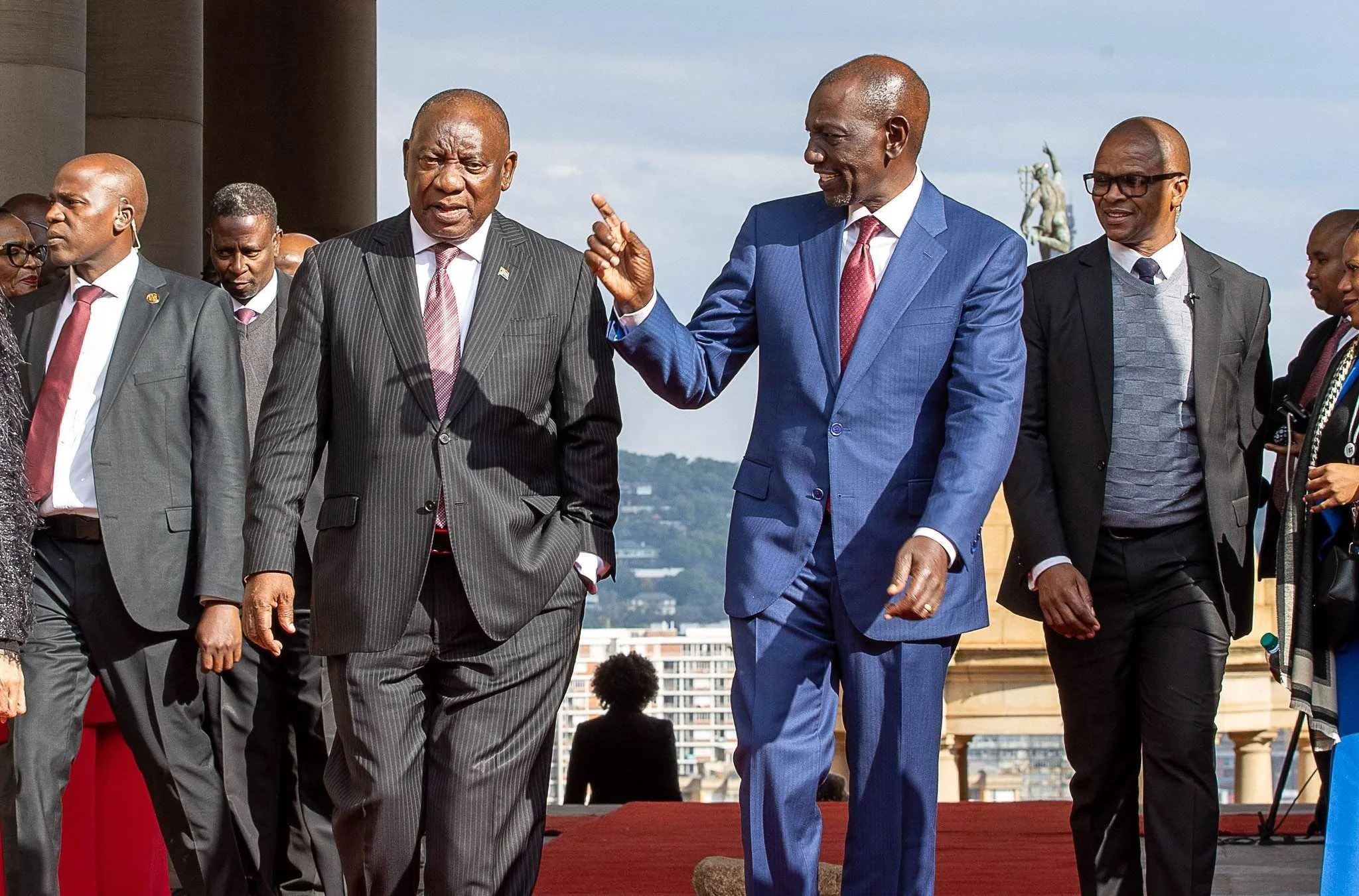
Those remarks by South African President Cyril Ramaphosa may prove to be one of the most consequential outcomes of President William Ruto’s state visit to Pretoria.
Speaking during a Kenya-South Africa business forum on Thursday, Ramaphosa announced that South Africa had agreed to reopen its market to Kenyan tea, coffee and spices, ending a dispute that had strained trade relations between the continent’s two largest economies in the East and South.
“We said, let’s stop this nonsense,” Ramaphosa said, referring to duties imposed on Kenyan tea and coffee after Nairobi introduced tariffs on South African steel imports.
He argued that trade disagreements should not be allowed to undermine broader economic relations between African countries.
“Let’s bring down the deficit between us. We should not behave like some big countries in the world that punish other countries because of disparities in tariffs,” he said in what appeared to be an indirect swipe at the growing use of tariffs in global trade disputes.
Ramaphosa further questioned the logic of linking industrial products with agricultural exports produced largely by smallholder farmers.
“We cannot reciprocate on steel and tea; tea that is grown by small-scale farmers,” he said. “I am saying to my people, let’s have a heart and allow tea from Kenya to come here in South Africa.”
Describing himself as a tea lover, Ramaphosa returned repeatedly to the subject. “Please, I want my tea to come here,” he said, drawing laughter from the audience.
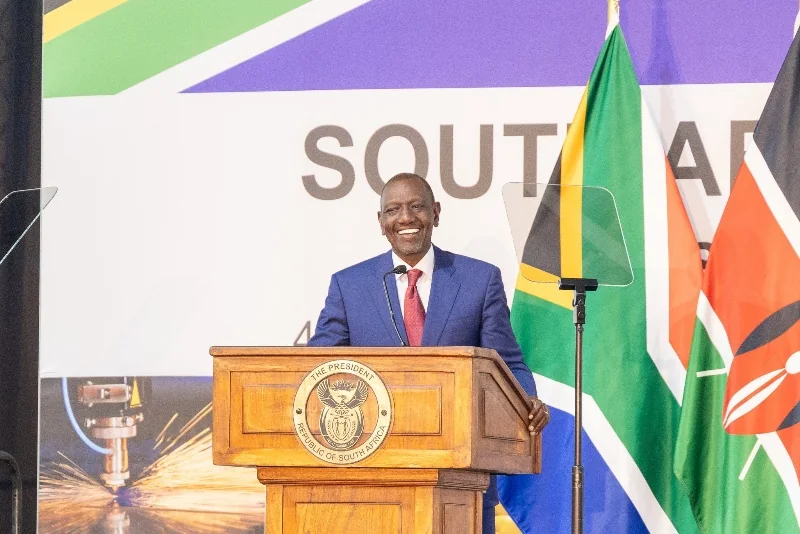
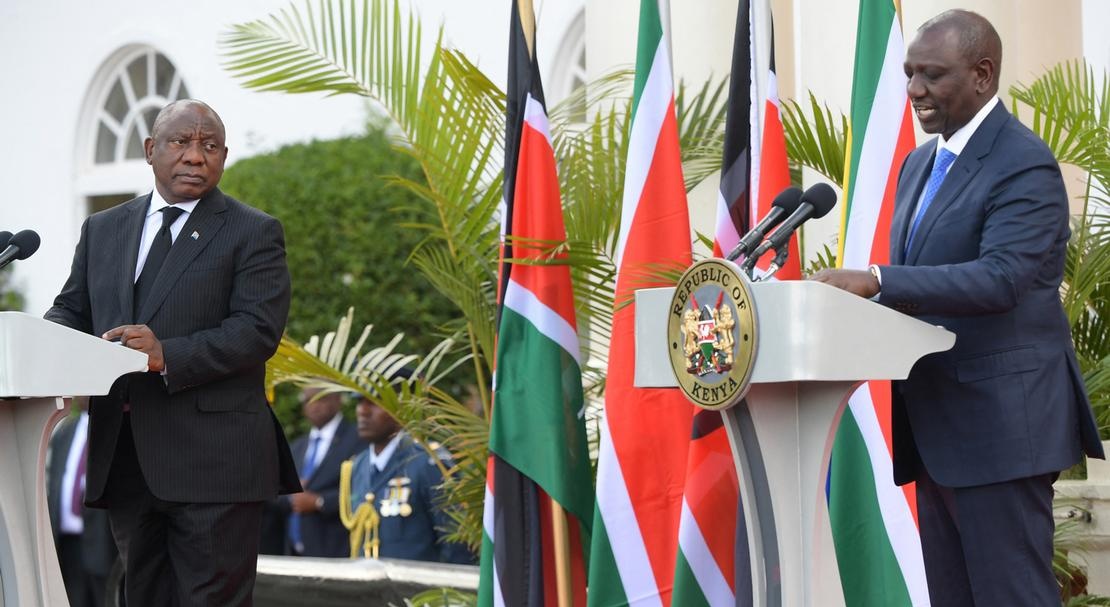
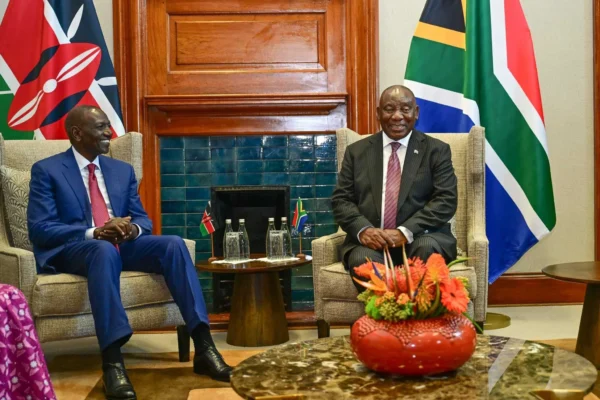 Kenyan President William Ruto, with his South African counterpart Cyril Ramaphosa, in Pretoria on June 4, 2026. (Photo: PCS)
The remarks were followed by confirmation from Kenya’s Ministry of Trade that Pretoria had lifted suspended duties imposed in November 2025 on Kenyan tea, coffee and spices under the Southern African Customs Union tariff framework.
“The concession is intended to strengthen trade ties between the two countries and reduce the trade imbalance that currently favours South Africa,” the Ministry said.
The decision addresses a longstanding complaint by Kenyan exporters, who have argued that tariff and non-tariff barriers have made it difficult for Kenyan products to access the South African market despite the close political relationship between the two countries.
Trade Cabinet Secretary Lee Kinyanjui welcomed the breakthrough, saying he was pleased the issues had received what he described as the “highest political approval.”
He described Kenya-South Africa relations as a unique partnership, noting the deep integration between the two economies and the number of Kenyans working within South African-owned businesses operating in Kenya.
Trade and investment dominated discussions at the business forum, where private sector leaders from both countries argued that economic ties have yet to match the potential of the relationship.
Representatives from Business Unity South Africa described bilateral trade as underdeveloped and said significant opportunities remained untapped.
The Kenya Private Sector Alliance (KEPSA) Chairman, Jaswinder Bedi, said the ratification of the Tripartite Free Trade Area linking COMESA, SADC and the East African Community placed a special responsibility on Kenya and South Africa to demonstrate that continental integration could deliver tangible commercial outcomes.
As discussions shifted from policy to implementation, Ramaphosa delivered a message that resonated strongly with business leaders.
“We are tired of speeches,” said the businessman-turned-president. “We need money, rands and shillings.”
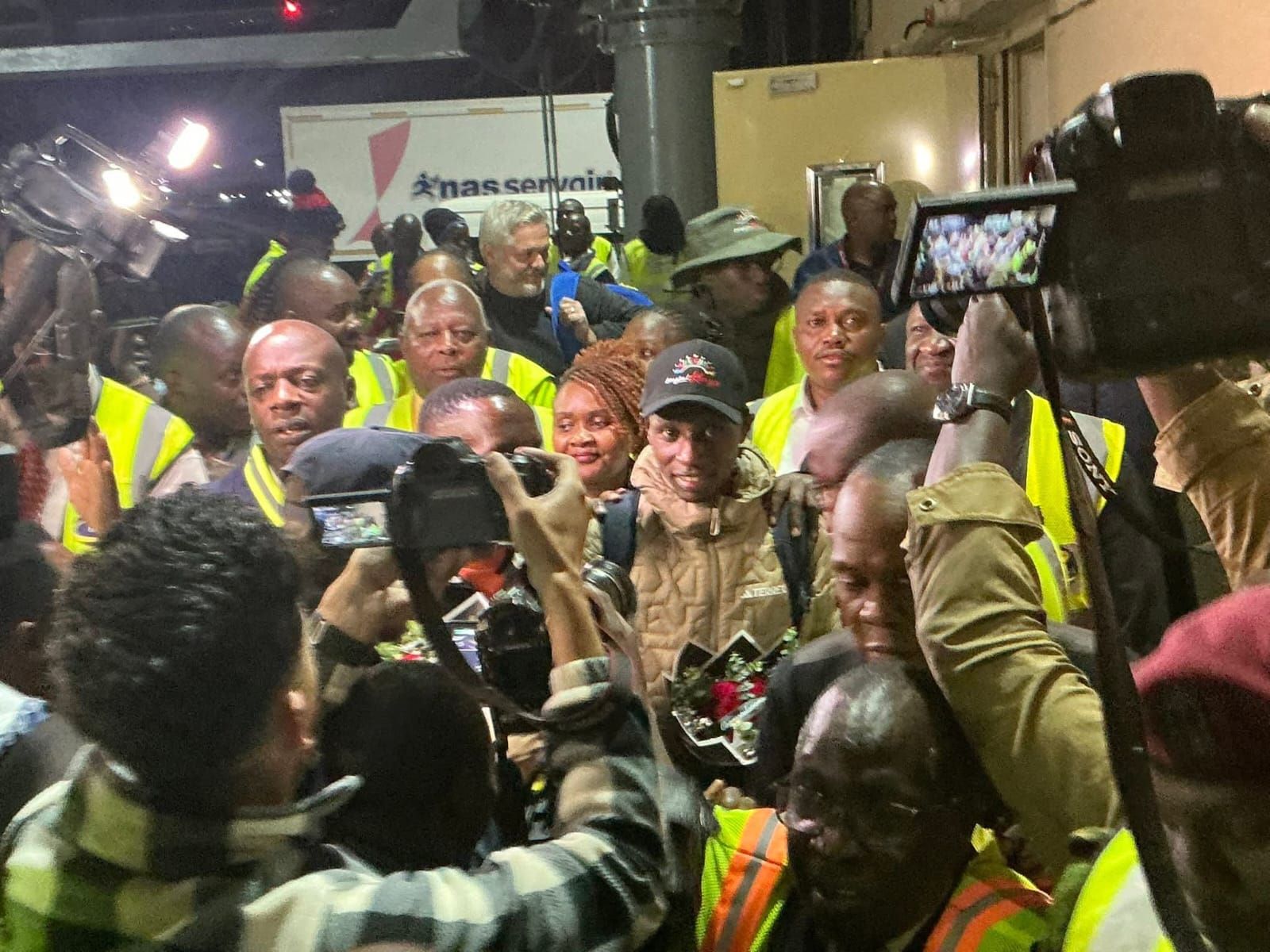
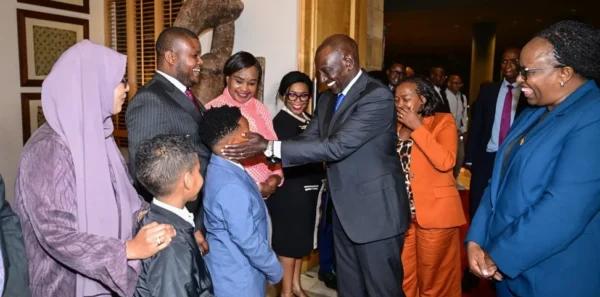 President William Ruto on arrival in Pretoria for a two‑day State Visit to South Africa. (Photo: PCS)
President Ruto echoed the sentiment, using the forum to encourage greater South African investment in Kenya and positioning Nairobi as a gateway for regional expansion.
Both leaders emphasised the importance of leveraging the African Continental Free Trade Area (AfCFTA) to boost intra-African commerce, which remains significantly below levels recorded in other regions of the world despite Africa’s vast market potential.
One example frequently cited during the discussions was Stanbic Bank, part of Johannesburg-headquartered Standard Bank Group, Africa’s largest bank by assets. Its Chief Executive, Joseph Oigara, was highlighted as a symbol of the deep commercial links already connecting the two economies.
While presidential speeches often dominate headlines during state visits, it was the business forum where some of the most substantive decisions were reached.
The two governments welcomed plans to establish a Kenya-South Africa Joint Business Council and agreed that the next business forum would be hosted in Nairobi to assess progress made since the Pretoria meeting.
For Kenya, the breakthrough comes as it seeks greater access for its exports into South Africa, a market where trade remains heavily skewed in Pretoria’s favour. For South Africa, opening the door to Kenyan tea, coffee and spices may represent a small concession.
For the broader relationship, however, it signals a willingness by both governments to move beyond political goodwill and tackle the commercial barriers that have long constrained trade between two of Africa’s most important economies.























Comments
Sign in with Google to comment, reply, and like comments.
Continue with Google