Marine experts have raised an alarm over the escalating impact of plastic pollution on the coast, warning that the accumulation of waste is placing increasing pressure on marine ecosystems that support livelihoods, tourism and biodiversity.
The concerns were raised during the third Diani Beach Zero Plastic Festival, held alongside World Oceans Day celebrations, where scientists, environmental organisations, government officials, private sector players, students and more than 3,000 volunteers gathered to advocate for stronger action against marine pollution.
Researchers say plastic waste remains one of the most visible environmental threats facing the ocean, with studies along the coast recording up to five pieces of plastic litter per square metre on some beaches.
Senior Scientist at the Kenya Marine and Fisheries Research Institute (KMFRI), Dr Eric Okuku, said oceans play a critical role in sustaining life, regulating weather patterns and supporting economic activities across the globe.
“Oceans regulate climate, protect our coastlines, provide food and support livelihoods for millions of people,” he said.
Dr Okuku warned that marine environments are increasingly under strain from what scientists describe as three interconnected global crises: biodiversity loss, climate change and pollution.
“Plastic pollution is the most visible form of pollution affecting our oceans today,” he said.
According to KMFRI, an estimated 37,000 tonnes of plastic waste find their way into oceans and other marine ecosystems every year.
Dr Okuku said Kenya has already put in place action plans aimed at tackling pollution originating from both land and sea-based activities, but stressed that government interventions alone would not be sufficient.
“Science alone cannot solve this challenge. We need partnerships with communities, schools, government agencies and the private sector,” he said.
He noted that preventing waste from reaching the sea remains the most practical and cost-effective approach.
“Once plastic enters the ocean, removing it becomes extremely difficult and expensive. The best approach is to stop it at the source,” he added.
Dr Okuku also highlighted the role of environmental education, particularly among children, saying young people can help influence responsible waste disposal practices within communities.
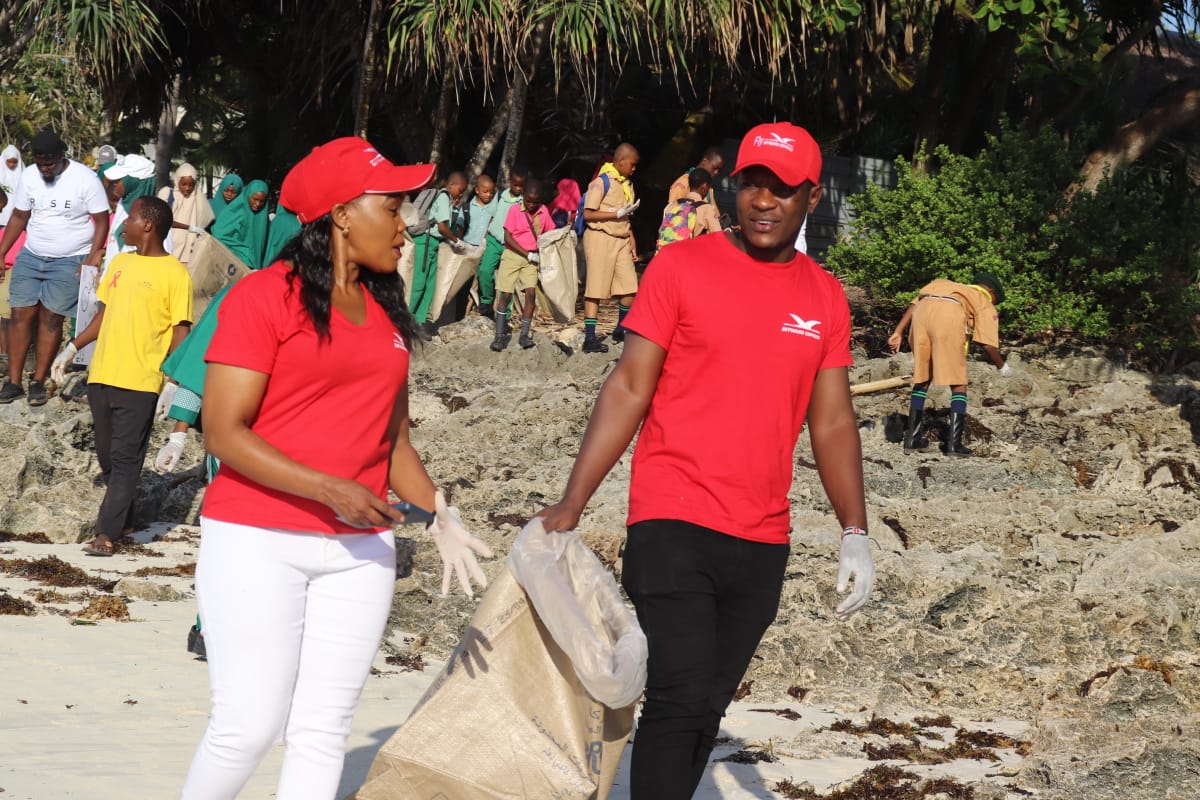 Members of the public take part in the Diani Beach Zero Plastic Festival, as World Ocean Day is marked, in Diani, Kwale County, on June 8, 2024. (Photo: Mishi Gongo/EV)
Samba Sports Youth Trust Executive Director Mohamed Ali Machausa said protecting marine ecosystems requires sustained public participation and collective responsibility.
“Our oceans cover most of the Earth’s surface and are vital to life. We all have a responsibility to protect them,” he said.
Mohamed cited global data indicating that plastic accounts for about 85 per cent of marine litter and warned that failure to curb pollution could have severe long-term consequences.
“If we fail to act, projections indicate that by 2060 there could be more plastic than fish in the ocean,” he warned.
Despite the concerns, he pointed to signs that awareness campaigns and community mobilisation efforts are beginning to produce results.
During the inaugural festival in 2024, organisers collected approximately seven tonnes of waste from the beach with the participation of 2,100 people. In 2025, participation rose to 3,000 people while the amount of waste collected fell to about 4.5 tonnes.
This year, organisers recorded more than 3,000 participants but recovered only three tonnes of plastic waste.
“The waste reduction collected shows that awareness efforts are bearing fruit. More people are becoming conscious of how they dispose of waste and the importance of protecting the environment,” Mohamed said.
Health Environment Research Institute-Kenya (HERI-Kenya) Executive Director Juma Nasoro described plastic pollution as one of the most pressing environmental challenges facing coastal communities.
“Plastic pollution is increasing every day. Research shows that if we do not take action, there could eventually be more plastic in the ocean than fish,” he said.
Nasoro explained that plastic materials can remain in marine environments for more than five centuries before breaking down into microplastics, which are often ingested by fish and other marine species.
“When fish consume plastic particles, the effects extend beyond marine life and eventually affect human health through the food chain,” he said.
He further warned that pollution poses a risk to Diani’s tourism sector, which depends heavily on clean beaches and healthy marine habitats.
Nasoro said HERI-Kenya is promoting Black Soldier Fly farming as part of efforts to address waste management challenges.
He noted that Diani produces more than 10 tonnes of waste each day, with nearly 70 per cent consisting of organic material.
“The larvae convert organic waste into protein-rich animal feed and organic fertiliser, creating environmental and economic benefits for communities,” he said.
The need for stronger partnerships was echoed by Samba Sports Youth Trust Partnership Lead Michael Timona, who said cooperation among different stakeholders remains essential in tackling pollution.
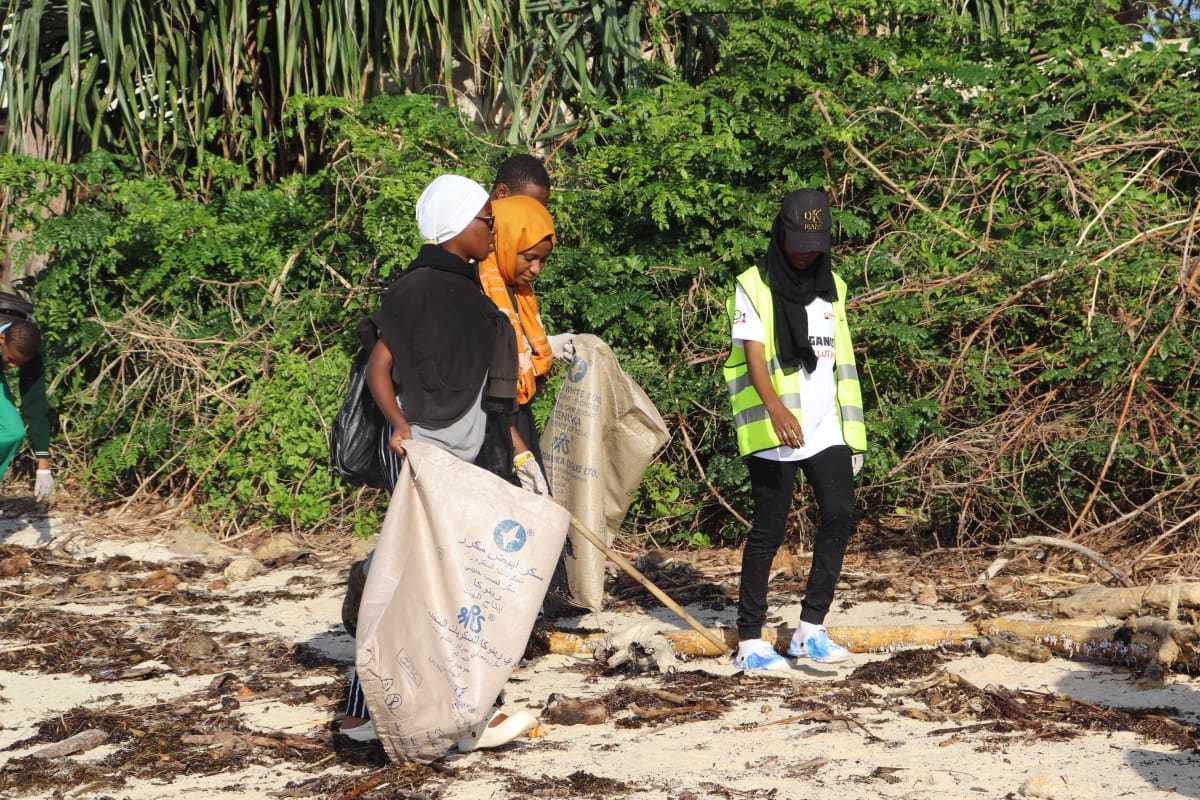 Members of the public take part in the Diani Beach Zero Plastic Festival, as World Ocean Day is marked, in Diani, Kwale County, on June 8, 2024. (Photo: Mishi Gongo/EV)
“No single organisation can address plastic pollution alone. It takes collaboration between government, communities, development partners and private companies to create meaningful impact,” he said.
Timona disclosed that organisers intend to expand their network of partners by 2027 to strengthen conservation activities and increase community participation.
Director in charge of Infrastructure and Urban Planning at the Diani Municipal Board, Jeremah Muchiri, commended residents and stakeholders who took part in the three-day World Environment Day activities, which included beach clean-ups and tree planting exercises.
He acknowledged previous challenges in waste collection caused by an inadequate number of garbage trucks, but said the county government had since expanded its fleet and planned to acquire more vehicles in the next budget cycle.
Muchiri also addressed concerns over waste disposal at the Mwabungo dumpsite, saying poor road conditions during rainy periods have often hampered access to the site.
“To solve this challenge, plans are underway to improve access roads to the dumpsite and ensure waste is transported more efficiently,” he said.
He added that public awareness remains one of the most effective tools in combating pollution and revealed plans to convert street lighting between Blue Jay and Mvindeni from conventional electricity to solar-powered systems.
The private sector also used the event to reaffirm its support for environmental conservation initiatives.
Skyward Express Diani Station Manager Roselyn Wangechi said the airline has backed the Diani Beach Zero Plastic Festival for the past three years because environmental protection is closely linked to the sustainability of tourism.
“Our participation is driven by the need to protect the environment and preserve the beauty and safety of Diani Beach for future generations,” she said.
Wangechi described Diani as one of Kenya’s leading tourist destinations, attracting visitors from across the world and supporting thousands of jobs and businesses along the coast.
“The prosperity of many families depends on a clean and healthy coastal environment. Keeping Diani clean is a collective responsibility that belongs to all of us,” she added.








































Comments
Sign in with Google to comment, reply, and like comments.
Continue with Google