Kagwe: Sugar mills set to supply power to National grid under new plan
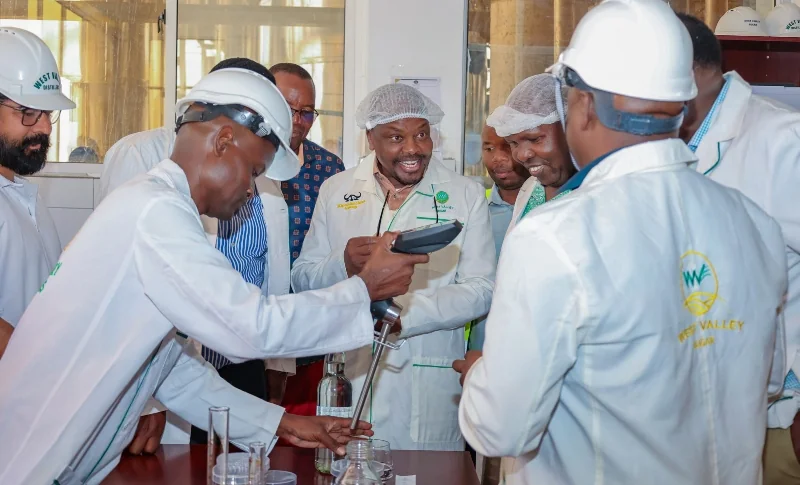
Citing West Valley Sugar Company, Kagwe noted that the facility currently produces about five megawatts of electricity using only a fraction of its available bagasse.
Agriculture Cabinet Secretary Mutahi Kagwe has said Kenya is moving to reposition its sugar industry as a key driver of electricity and biofuel production, with plans for sugar factories to supply power to the national grid and expand ethanol output to cut fuel imports and boost energy security.
Speaking during a visit to West Valley Sugar Company, a flagship investment under the Kipchimchim Group, Kagwe said the government is focused on maximising the full value of sugarcane beyond sugar production to include electricity generation, ethanol and other industrial products.
He said sugar factories already have significant untapped potential in power generation through bagasse, the fibrous by-product of sugarcane.
More To Read
- Treasury unveils fresh funding after strong growth in tea, coffee and sugar sectors
- Livestock emerges as fastest-growing pillar of global agriculture - report
- AI offers promise for agriculture, but smallholder farmers risk being left behind
- AfDB bets on agriculture to absorb Africa’s 11 million annual job seekers
- Agriculture CS Kagwe pushes ban on raw exports, wants all farm produce processed locally
- Government moves to ban unregulated raw milk trade in sweeping dairy reforms
Citing West Valley Sugar Company, Kagwe noted that the facility currently produces about five megawatts of electricity using only a fraction of its available bagasse.
“At full capacity, the factory could generate up to 15 megawatts. This presents a huge opportunity for Kenya’s energy sector,” he said.
The CS said the government is working on frameworks that will allow sugar millers to sell surplus electricity to the national grid, a move expected to create new revenue streams for factories and farmers while strengthening the country’s energy supply.
Latest Stories
- WHO reports 17 deaths among medics in ongoing DRC Ebola outbreak
- NTSA freezes licensing of new PSV operators for two years, stops route changes for a year
- Ebola death toll tops 200 as Africa CDC warns of critical gaps in regional response
- Court orders vetting of recruitment agencies, rejects bid to halt Middle East labour migration
Kagwe also underscored the importance of ethanol production, saying it would help reduce Kenya’s dependence on imported petroleum products and save foreign exchange.
He said the government supports ethanol blending programmes as part of broader efforts to enhance energy security.
“If we blend ethanol with fuel, we will save foreign exchange and significantly reduce our dependence on imported petroleum products,” he said.
West Valley Sugar Company currently produces about 20,000 litres of ethanol daily, a capacity Kagwe described as a model for the future of the industry.
The CS said ongoing reforms in the sugar sector have already led to increased production, which has risen by about 22 per cent over the past year following the leasing of state-owned mills and improved support to farmers.
He encouraged local investors to take advantage of opportunities in sugar production, ethanol manufacturing, power generation and value addition, noting that the sector should not be left to foreign investors alone.
Top Stories Today



















































Comments
Sign in with Google to comment, reply, and like comments.
Continue with Google