Kenyan farmers are paying more for agro-inputs sourced locally than for similar products imported directly, an expert has said.
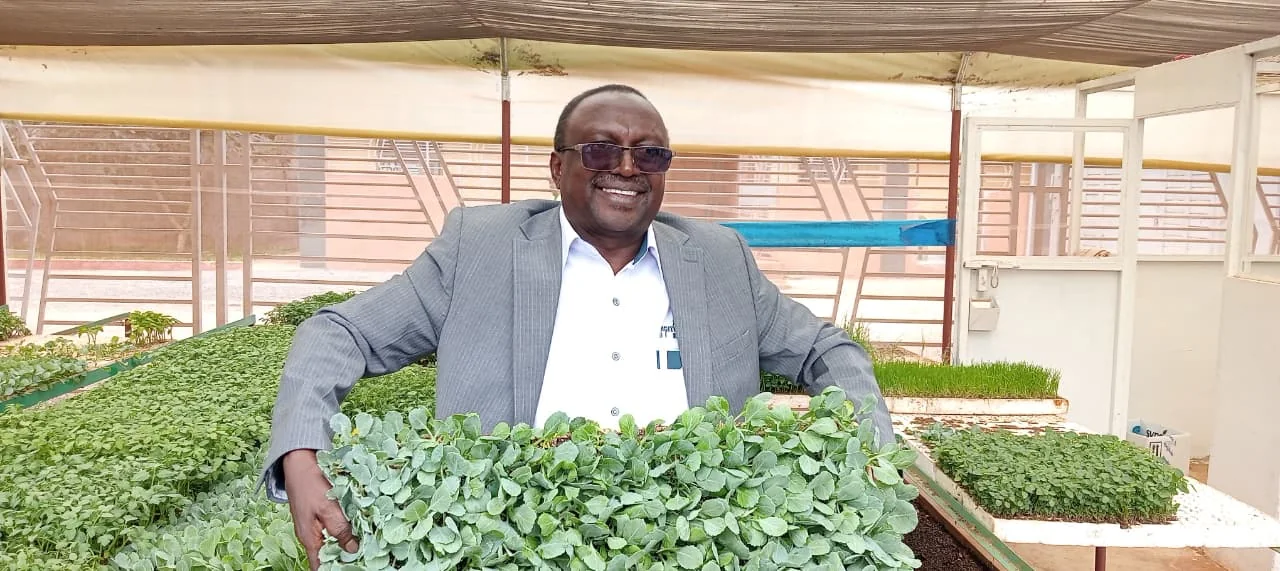
Peter Karanja, director of Mazao na Afya Limited, which distributes agro-inputs sourced from local producers, and Agrilife, its sister company that deals with imports, says his experience running the two businesses has shown that direct imports are way cheaper for farmers.
The comparison offers a real-time view of an unusual pricing dynamic in Kenya's agriculture sector, where products bought locally can cost more than those imported directly from abroad.
“I would actually go for the importation space because you know you are importing directly and coming and adding your margin. So in terms of sustainable business, the importation side is much better,” Karanja said.
He explains that the difference is partly driven by the structure of Kenya's agro-input supply chain.
Local distributors often compete to sell the same products while absorbing the costs of warehousing, transport and distribution, leaving them with increasingly thin margins.
For farmers, however, the more significant issue is the number of layers between the original manufacturer and the end user.
Karanja notes that many ‘local’ products sold in Kenya's agro-input market are not actually manufactured locally.
Instead, agrochemicals and other agricultural products are imported, repackaged and passed through several local distributors before reaching farmers.
The result, he argues, is that Kenya's local manufacturing in much of the agro-input space is largely “on paper”, with the country serving primarily as an importer, repackager and distributor.
Karanja insists, however, that the economic anomaly is particularly evident in the agriculture sector and should not automatically be generalised across the entire Kenyan economy.
For local production to translate into lower prices for farmers, Karanja says Kenya must move beyond simply bringing in products for local distribution and invest in genuine manufacturing capacity.
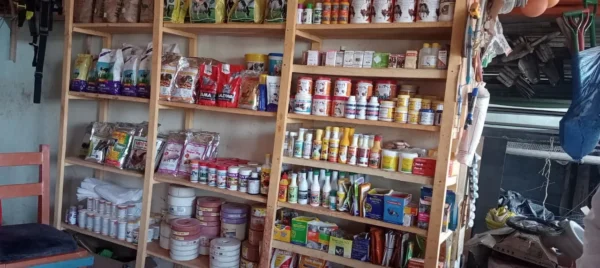 Agro-input products on display at an agrovet. (Alfred Onyango)
This would require government and private-sector collaboration to establish manufacturing and processing facilities, develop local supply chains and make greater use of domestic raw materials.
Such investments would reduce reliance on imported finished products and could allow the benefits of local production to reach farmers directly through lower prices.
They would also create jobs and retain more value within the Kenyan economy.
“Local manufacturing is the way to go. Literally every product. Of course it is going to take a while, but if we go that direction, we will have actually solved most of our problems,” Karanja said.
Beyond the pricing question, Karanja identified knowledge transfer as another major gap in Kenya's agriculture sector.
Farmers require more information on the correct use of agrochemicals, safe disposal of containers and observance of pre-harvest intervals.
Setting the pace, Mazao Group has responded through farmer training programmes conducted with suppliers, industry bodies and other partners, alongside agronomy support, seedling propagation, drone services and fumigation.
Karanja reiterates that genuine domestic manufacturing, combined with stronger farmer education, would be critical to ensuring that local production delivers tangible benefits to farmers rather than merely adding another layer to the distribution chain.













































Comments
Sign in with Google to comment, reply, and like comments.
Continue with Google